
You don’t need to fear healthy fats; they’re essential for brain function, hormones, and heart health. Prioritize unsaturated fats from whole foods like olive oil, avocados, nuts, seeds, and fatty fish, while watching portions and cooking methods. The evidence supports benefits when fats replace refined carbs and are part of a balanced pattern. If you’re skeptical, consider how your body responds to different fats over time—there’s more to learn, and your next choice matters.
Important Facts
- Healthy fats support brain function, hormone balance, and heart health when chosen for quality and balance, not eliminated.
- Emphasize whole-food fats (olive oil, avocados, nuts, seeds, fatty fish) for fiber, minerals, and antioxidants.
- Replacing refined carbs with healthy fats can modestly improve triglycerides and HDL, depending on overall diet and lifestyle.
- Focus on fat quality and processing: favor intact, minimally processed foods over ultra-processed fat sources.
- Use fats as a health tool within an individualized plan, monitoring response and avoiding universal, fear-based rules.
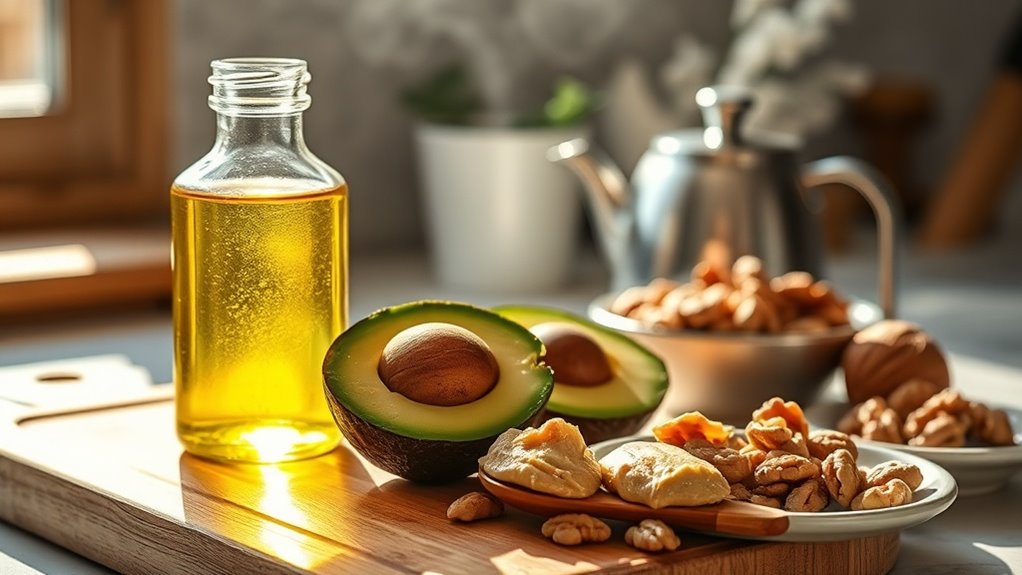
Healthy fats often get miscast as dietary villains, but the evidence shows they’re essential for brain function, hormone balance, and heart health. You don’t need to eliminate fats to protect your health; you need to choose quality and balance. In the literature, healthy fats support cell membranes, regulate inflammatory processes, and provide energy for everyday activities. When you’re evaluating dietary fats, consider not just total fat but the type and source, because different fats have distinct effects on metabolism, lipid profiles, and vascular function. The medical myths surrounding fats often hinge on oversimplified guidance, but nuanced data show that unsaturated fats—especially monounsaturated and polyunsaturated varieties—tend to associate with favorable markers, while excessive intake of highly processed omega-6–rich oils can tilt inflammatory balance if not countered by omega-3s.
You might wonder how to apply this in real life. Start by prioritizing whole-food sources: extra-virgin olive oil, avocados, nuts, seeds, and fatty fish. These foods provide a matrix of nutrients beyond fat, including fiber, minerals, and antioxidants, which modulate the impact of fat on health outcomes. When you cook, use fats that preserve quality and minimize oxidation, and be mindful of portion sizes that fit your energy needs. Don’t let fear drive choices; instead, base decisions on patterns seen in randomized trials and longitudinal cohorts. The goal is a sustainable pattern, not a single nutrient ban.
In clinical terms, the relationship between fats and heart disease is nuanced. Evidence supports replacing refined carbohydrates with healthy fats to improve triglycerides and HDL cholesterol modestly in many individuals. Yet, the magnitude of benefit depends on overall dietary context, genetics, activity level, and other risk factors. If you’re managing metabolic syndrome or insulin resistance, you may notice differential responses to fat type, emphasizing individualized assessment. It’s reasonable to monitor your lipid panel and inflammatory markers over time, adjusting fat sources accordingly rather than chasing one-size-fits-all rules. In this light, the medical myths around fats dissolve into practical questions: How much fat should you eat, and which fats should you emphasize?
You should also consider fat quality and food processing. Whole foods with intact matrices tend to offer synergistic benefits, whereas ultra-processed fats often accompany additives, excessive sodium, and refined carbohydrates that undermine health. By emphasizing quality and balance, you reduce risk while preserving satiety and flavor. Remember that dietary patterns, activity, sleep, and stress interact with fat metabolism. If a source claims a universal prescription, approach it with skepticism and look for corroboration across diverse populations. In short, healthy fats deserve a place in a thoughtful eating plan, not prohibition. You’ll navigate medical myths with a cautious, evidence-based mindset, using fats as a tool for health rather than a villain to fear.
Commonly Asked Questions
Do Healthy Fats Cause Weight Gain?
Healthy fats don’t inherently cause weight gain; excess calories do. You’ll find healthy fats misconceptions often stem from focusing on fat grams alone rather than total energy balance. When included in a balanced pattern, fat supports satiety, fat and hormones, and metabolic health. If you overconsume calories or pair fats with ultra-processed foods, weight gain can occur. So, portion, quality, and context matter more than avoiding fats.
Which Fats Are Truly Healthy to Eat?
Healthy fats that are truly healthy to eat include fatty fish, olive oil, nuts, seeds, and avocado. Think of your plate as a balanced budget: even healthy fat sources deserve fat moderation. Data show saturated vs unsaturated fats matter, with preferences toward unsaturated fats. Follow dietary guidelines that emphasize variety and limit processed fats. You’ll want evidence-based choices, not hype, to support heart and metabolic health while enjoying meals.
How Much Fat Should I Consume Daily?
You should aim for a moderate daily fat intake, tailored to your needs and health goals. Acknowledge that healthy portion size varies, but many adults target roughly 20–35% of daily calories from fat, with emphasis on unsaturated fats. Track daily fat targets calmly, adjusting for activity, weight, and conditions. Prioritize whole foods, avoid excess saturated fat, and monitor for digestive comfort. Seek personalized guidance if you have specific health concerns or dietary restrictions.
Can Fats Improve Heart Health Safely?
Fats can improve heart health, but only when you choose safe fat types. You’ll want to favor unsaturated fats and limit saturated fats; evidence-based guidance still urges moderation and context. When you replace refined carbs with better fats, your arteries aren’t suddenly shielded, but risk can shift downward. You should monitor overall diet, cholesterol, and risk factors, and consult a clinician. In short, fats and heart health depend on quality, not quantity alone.
Are All Fats Vegan-Friendly and Cholesterol-Free?
Not all fats are vegan-friendly or cholesterol-free. Some vegan fats, like palm oil, can raise cholesterol and have sustainability concerns, while others, such as olive oil and nuts, offer healthy fats. Cholesterol is absent in plant fats, but processed vegan fats may be partially hydrogenated or refined. So, while many healthy fats are vegan-friendly and cholesterol-free, you should scrutinize processing and sources to ensure both health and ethics.