
Ketogenic states hinge on fat as fuel, and ketosis can falter when carbs rise, when insulin spikes, when glycogen stores refill. You ingest carbs, your blood glucose climbs, and pyruvate shunts into the TCA cycle while acetyl-CoA diversion reduces ketone production. You may see ketones drop within 30–90 minutes and stay low for hours, especially with repeated meals or activity changes. Curious what daily choices set that balance and how to regain it quickly?
Important Facts
- Carbohydrates raise blood glucose and insulin, which inhibits lipolysis and ketogenesis, dropping ketone levels quickly.
- Insulin activates glycolysis and diverts acetyl-CoA away from ketone production, reducing ketosis.
- Post-meal ketone suppression can occur within 30–90 minutes and may persist 6–24 hours after a carb-rich meal.
- High net carbs shift liver metabolism toward glycogen replenishment and lipogenesis, decreasing only temporarily ketone flux.
- Repeated carb intake or high glycemic meals extend the suppression window, delaying ketosis reentry.
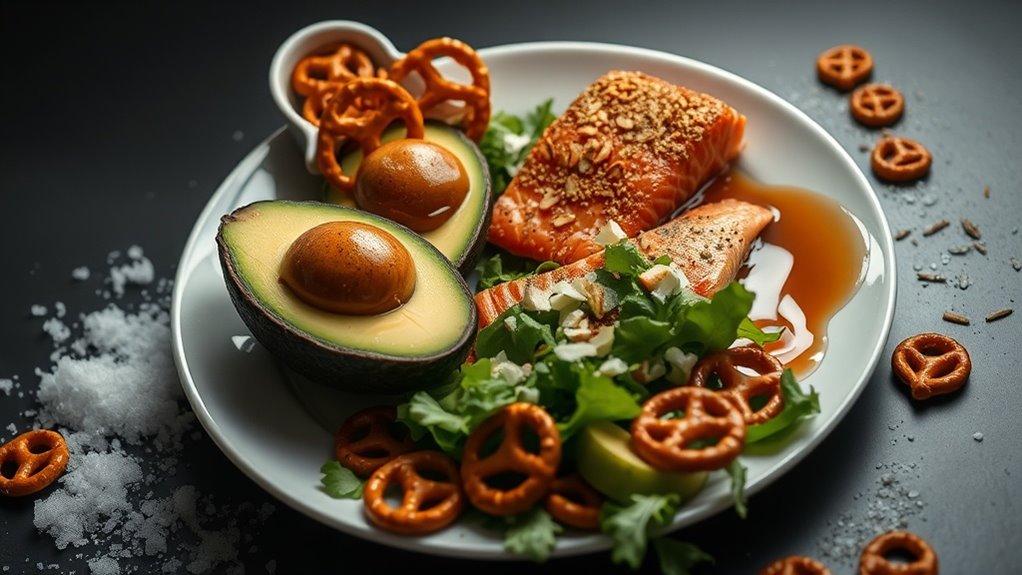
Some foods can push you out of ketosis within minutes, not hours. When you eat carbohydrates above a low threshold, liver glycogen begins to replenish, and that triggers a rise in insulin. Insulin suppresses lipolysis and ketogenesis, so your blood ketone concentration drops. In practical terms, a meal with enough net carbs—often as little as 5 to 20 grams for many people, depending on activity level and metabolic state—can shift substrate use from ketones to glucose. You’ll see a measurable decrease in beta-hydroxybutyrate, sometimes within 30 to 90 minutes, with nadirs typically after two to four hours if the meal is high enough in carbs and low enough in fat to maintain the glucose spike. Ketone production then ramps back up as insulin falls, but the delay matters: during that window, you’re no longer in a classical ketogenic state, even if you resume eating fat afterward.
From the perspective of ketosis mechanisms, the primacy is liver acetyl-CoA diversion. Insulin signaling promotes glycolysis and deactivates hormone-sensitive lipase, reducing free fatty acids available for ketogenesis. When glucose is in circulation, pyruvate enters the TCA cycle, and acetyl-CoA is drawn toward lipogenesis if energy surplus persists. Your body’s choice between glucose oxidation and ketone production hinges on plasma glucose, insulin, and cortisol, with cortisol potentially propping up gluconeogenesis during prolonged exposure to dietary carbs. In quantitative terms, ketone flux can drop by 50% to 80% within the first hour after a carb-rich meal in many individuals, and total ketone body concentration may briefly fall below 0.5 mmol/L. Recovery kinetics vary; athletic or fasting-adapted individuals often reestablish fasting ketone levels within 6 to 24 hours, absent repeated carbohydrate ingestion.
You should consider appetite signals as a secondary but consequential driver. Elevated insulin typically correlates with satiety, but the timing and magnitude differ by macronutrient composition. Carbohydrate-heavy meals raise glucose and insulin quickly, which can blunt ghrelin less predictably than protein-driven satiety. Your appetite signals, influenced by insulin and incretin hormones like GLP-1, may transiently dampen hunger, yet they don’t determine ketosis status. If you repeat carb exposure within a short interval, you extend the period away from ketosis, because repeated postprandial insulin pulses maintain suppressed hepatic ketogenesis longer than a single meal would. Practically, to minimize disruption, you should favor meals with a higher fat-to-carbohydrate ratio, monitor net carbs, and consider activity level, which shifts the carb tolerance threshold upward.
Commonly Asked Questions
Can Small Amounts Knock You Out of Ketosis?
Short answer: yes, small amounts can affect ketosis, but the impact is variable. Your ketosis impact depends on total daily carbs, fat-adaptation, and activity. For many, 5–20 grams of net carbs may nudge you toward marginal ketosis or stall fat burning for 24–48 hours. Recheck your ketone levels, track macros, and adjust. If you’re highly insulin-sensitive, even tiny amounts might delay ketosis; if you’re more fat-adapted, effects may be minimal.
Do Beverages Affect Ketosis Instantly?
“Time is money.” Do beverages affect ketosis instantly? Yes, but only if you drink enough carbohydrate-containing liquids to raise your blood glucose and insulin quickly. Most zero- or low-carb beverages don’t halt ketosis; those with sugar, juice, or milk do, and the effect varies with volume. Be mindful of beverage impact on ketone timing: even small amounts can delay, not stop, ketosis for several hours depending on metabolism and prior state.
How Long to Re-Enter Ketosis After a Slip?
You can re-enter ketosis in about 1–3 days after a slip, depending on your prior carb tolerance and activity. Track carbs strictly, fasted workouts can help, and monitor ketone levels to confirm. Weight loss myths aside, expect 0.5–1.5 mmol/L ketone rise within 24–48 hours if you resume a strict, under-20–gram daily carb plan. Metabolism changes may slow slightly initially, but consistency typically restores ketone production and accelerates fat-adaptation trends.
Do Artificial Sweeteners Trigger Ketosis Loss?
Do artificial sweeteners trigger ketosis loss? Generally, they don’t knock you out of ketosis for most people, but it depends on the sweetener. Evidence suggests minimal carbohydrate impact from most non-nutritive options, yet some with lax carbs can affect ketone levels slightly. You’ll see negligible ketosis impact in typical doses, though sugar alcohols like xylitol may raise insulin modestly. Monitor your own response, track ketones, and adjust if you notice deviations after specific products.
Do Fats in Meals Impact Ketosis Differently?
Fats in meals can affect ketosis differently, you’ll see. Higher fat intake doesn’t instantly spike insulin, but large portions slow ketone generation by delaying fatty acid oxidation. Fats assimilation varies with meal composition and fat type, altering ketone output. Your insulin response remains mild if you keep net carbs low; however, meals rich in long-chain triglycerides may transiently reduce ketone levels more than medium-chain fats. Track your blood ketone and glucose responses for precise, individualized guidance.