
Think of your keto plate like a budget: one ounce of aged cheese can deliver a hefty fat punch with minimal sugars, a pattern that mirrors how fat drives energy for ketosis. You’ll want to watch labels, since pre-shredded or “reduced-fat” options can carry starches or fillers that spike carbs. With mindful portions and a rotation for micronutrients, cheese can fit your macros rather than derail them — and there’s more to consider as you navigate lactose tolerance and aging effects.
Important Facts
- Cheese fat drives energy on keto, but most full-fat varieties deliver high fat with low carbs, supporting ketosis in controlled portions.
- Aging reduces lactose, so aged cheeses often fit tighter daily macros with less lactose impact.
- Calorie density matters: small portions of cheese can provide substantial energy without overshooting carbs.
- Read labels: some pre-shredded or reduced-fat cheeses add starches or additives that raise carbs or affect digestion.
- Rotate cheeses to balance micronutrients and vary flavors while monitoring lactose, portion size, and personal tolerance.
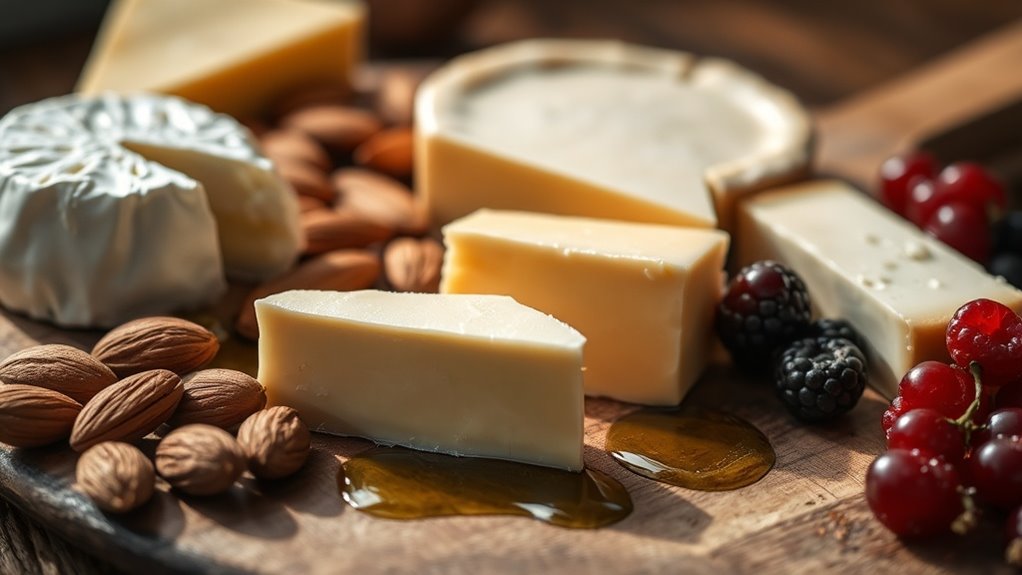
Cheese and Keto: how does this dairy staple fit into a ketogenic diet, and what should you watch out for? You’re evaluating cheese as a rational keto ally, not a indulgence, so you’ll weigh data on calories, fat, and carbs. While cheese brings flavor and satiety, you’ll want to consider how its nutrient profile varies across cheese varieties and aging processes. In practice, most full-fat cheeses supply high fat and low carbohydrate content, supporting ketosis, but some varieties carry more lactose or additives than you might expect. You’ll also notice that calorie density matters: a small portion can deliver substantial energy, so portion control becomes a key lever for daily targets.
From a data perspective, fat content is the primary driver, and it tends to be high across many cheese varieties. Yet, you’ll observe that protein can also contribute to fullness and metabolic signaling, aiding appetite management. Carbohydrate load is generally low, but lactose levels aren’t uniform: lactose intolerance varies by person and by cheese type, with aged cheeses often carrying less lactose than fresh ones. If you’re dairy sensitive, you’ll want to monitor symptoms and possibly choose lactose-reduced options or test tolerance gradually.
Fat content drives cheese energy; protein aids fullness, while lactose varies by type, with aging reducing lactose in many cheeses.
When you consider aging processes, you’ll find a clear pattern: longer aging typically reduces lactose content and can alter flavor and texture without dramatically changing fat or calorie density. This means some aged cheeses can fit more easily into tight daily macros while still delivering satisfying taste. Cheese texture matters too for portion perception; a crumbly, dense cheese might feel more substantial per bite than a smooth, soft option, affecting how much you eat in one sitting.
Dairy allergies add another layer of caution. If you’ve had reactions to dairy proteins, such as casein or whey, you’ll need to verify tolerance beyond lactose concerns. In this context, reading labels matters because some pre-shredded products include starches, anti-caking agents, or flavor enhancers that alter carbohydrate counts or digestion. You’ll also want to watch for fat content variations tied to processing: certain reduced-fat cheeses save calories but may spike carbohydrate or additive load, altering compatibility with keto goals.
For practical use, you’ll map your intake to daily targets, emphasizing portion control and consistent tracking. You’ll estimate calories per serving using standard nutrition data, then adjust portions to maintain ketosis while enjoying diverse cheese varieties. You’ll rotate cheeses to balance micronutrient intake and sensory variety, mindful of potential sensitivities to lactose, dairy proteins, or additives. In sum, cheese can be keto-friendly when you select varieties with low carbs, high fat and protein, and you monitor lactose content, aging effects, and portion size. By aligning choice, timing, and quantity with your personal tolerance and macros, you’ll integrate cheese into your ketogenic plan without it becoming an unintended excess.
Commonly Asked Questions
Is Cheese Truly Keto-Friendly for Strict Ketosis?
Cheese can fit in a strict ketosis plan, but it’s not a universal all-clear. You’ll want to track carbs per serving, since Cheese and ketosis effects vary by type and quantity. If you’re carb conscious dairy, choose high-fat, lower-carb options and count net carbs carefully. Stay mindful of dairy’s calorie density and potential insulin responses. In practice, moderation matters; you’ll likely succeed with measured portions and precise labeling to stay in ketosis.
How Does Cheese Affect Daily Carb Limits?
Cheese affects your daily carb limits modestly, depending on type and portion. You can fit small servings into your daily carb allowance, but high-moisture cheeses carry fewer carbs than flavored or processed varieties. Track cheese content carefully; you’ll likely allocate a portion early in the day to maintain accuracy. If your daily allotment is tight, opt for hard cheeses with lower carbs and pair them with zero-carb foods to minimize impact. Be mindful, monitor ketosis signals, adjust accordingly.
Can Cheese Hinder Weight Loss on Keto?
Cheese can hinder weight loss on keto if you overconsume, but it doesn’t doom your efforts. Think of your calories like a budget; cheese impact stacks if you’re not tracking portions. You’ll still get protein and fat, yet excess fats and calories can stall progress. Use measured servings and monitor total carbs. With mindful intake, cheese supports ketosis, but unchecked portions slow keto weight loss and leave you chasing goals.
Which Cheeses Are Lowest in Carbs and Fats?
Low-carb cheeses lowest in carbs and fats include feta, halloumi, and marscapone, then mozzarella, cheddar, and Gouda in modest portions. You’ll likely choose smaller servings to keep cheese fattening risks low. When you compare, consider ribonucleic patterns: dairy metabolism varies by person, so tracking macros matters. If you’re strict, opt for lower-fat options and stay mindful that even low-carb cheeses can affect ketosis. Use labeling to confirm carb counts and adjust portions accordingly.
Does Cheese Influence Ketosis Onset or Maintenance?
Cheese influences ketosis only modestly and largely depends on timing. Yes, cheese timing can affect how quickly you enter or maintain ketosis, especially if you’re near your carb ceiling. You’ll want to track dairy metabolism effects for your body, since responses vary. The data suggest small servings fit ketosis, but beware hidden carbs. If you measure and adjust, you’ll see steadier maintenance rather than dramatic shifts.