
You can simplify carb tracking by using familiar visual cues mapped to a standard plate: a protein palm-size, vegetables cupped hand, starch fist, and a fruit/dairy portion filling the rest. Pair these cues with common meals, and keep quick fridge checks to guide portions. Track loosely for 1–2 weeks to tune accuracy, then decide what tweaks fit your routine. The approach stays practical and evidence-informed, and you’ll uncover patterns that start to feel second nature, yet you’ll still want to adjust as you go.
Important Facts
- Use a standard plate visual: quarter for starch, quarter for protein, quarter for veggies, remaining quarter for fruit or dairy to gauge portions quickly.
- Employ simple cues like a fist-sized starch, cup of rice/pasta, palm-sized protein, and cupped handful of veggies/fruit for reference.
- Pair carb choices with predictable cues (meals, snacks, workouts) to create automatic portion-check reminders.
- Keep visuals and reminders on the fridge or table; track loosely for 1–2 weeks to fine-tune estimates.
- Adjust if carbs run high by reducing portions or swapping for higher-fiber options, guided by brief tracking feedback.
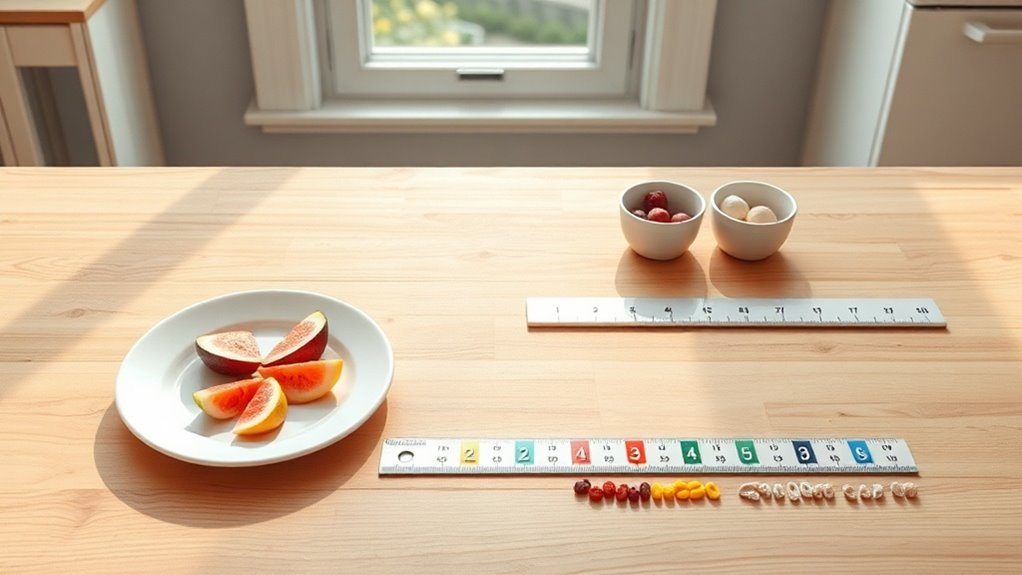
Ever wonder how to make carb-tracking effortless without a scale of math or a PhD in nutrition? You’ll learn to use simple cues and visuals that connect everyday meals to steady energy. This approach centers on practical habits you can apply right away, backed by research on portion perception and habit formation. Instead of counting every gram, you’ll rely on reliable landmarks—like plate proportions, known serving sizes, and familiar foods—to estimate carbs quickly and accurately over time. The goal isn’t perfect precision, but consistent, evidence-based accuracy that supports your goals.
Carb visuals become your first line of reference. You don’t need fancy tools; you need clear, repeatable pictures in your mind and on your table. Imagine a standard plate divided into quarters: one quarter for starches, one for protein, one for veggies, and the remaining quarter for fruit or dairy as appropriate. This visual framework maps to typical meals, helping you gauge portions without weighing or measuring. When you add a slice of bread, a cup of rice, or a cup of pasta, you can compare against those plate sections and adjust with mild, habitual changes. The point is consistency: the more you rehearse the mental image, the less you rely on scale-like numbers.
Cue strategies anchor your behavior in daily routines. By pairing carb choices with predictable cues—like lunch at 12:30, snacks at 3 p.m., or post-workout meals—you create automatic reminders to check portions before you eat. A practical cue is a quick, mental checklist: “Is half my plate veggies? Is the starch portion roughly the size of my fist?” This habit reduces decision fatigue and increases accuracy across meals. You can also place a simple visual reminder on your fridge or dining table, such as a small card showing common portion sizes in familiar units (fist, cupped handful, palm). Over weeks, these cues train your brain to estimate carbs without deliberate counting.
Integrating carb visuals with cue strategies supports evidence-based practice by aligning behavior with known patterns of appetite, satiety, and habit formation. You’ll notice steadier energy, fewer post-meal crashes, and less cognitive load when meals are predictable. To refine your approach, track a week or two of meals loosely—note how often your estimates align with your goals and adjust visuals accordingly. If you find rice often run a bit high, subtly reduce portion by a quarter next week or swap to a higher-fiber alternative that fills similarly.
Commonly Asked Questions
How Accurate Are Visual Cues for Carb Counting in Meals?
Visual cues aren’t perfectly precise, but they’re surprisingly reliable for everyday carb counting. You’ll feel the impact as you learn portions, compare labels, and estimate servings more confidently. Accuracy varies with food type, portion size, and labeling, yet consistent use improves estimates over time. Rely on visual cues alongside nutrition labels and meal planning tools for better accuracy. Stay curious, track outcomes, and adjust strategies; evidence supports gradual improvement through practice and education.
Do Visual Cues Work for Every Dietary Plan?
Visual cues can help many plans, but they don’t work for every dietary approach. You’ll likely see benefits with fixed portions and consistent meals, yet flexible or highly individualized plans may require different tools. For carb counting, visual cues support estimation and adherence, but accuracy varies by food type and labeling. You should pair cues with education, track outcomes, and adjust as needed. Use evidence-based methods, stay practical, and tailor visual cues to your specific carb-counting goals.
Can Color Codes Replace Exact Carb Measurements?
Color coding can’t fully replace exact carb measurements, you still need awareness of portions. Think of a map with shades guiding you, but you’ll need precise landmarks to stay on course. Color coding supports quick decisions and visual accuracy, especially for routine meals, but don’t abandon measurements for accuracy’s sake. Use it as a practical compass alongside gram or carb-count tracking, evidence-backed when you integrate it with your goals, portions, and health needs.
How Quickly Can I Adapt to Visual Cue Systems?
You can achieve quick adaptation within days to a couple of weeks, depending on consistency and cue clarity. Visual cue effectiveness hinges on distinct, repeatable signals and your routine. Start with simple pairs (meal plate, color chip, or icon) and log reactions to meals for 1–2 weeks. Expect steady improvement as you map foods to cues. Stay educated about limitations, adjust prompts as needed, and practice daily for reliable, practical carb-tracking results.
Are Visual Cues Helpful for Children or Beginners?
Visual cues are helpful for children and beginners. You’ll gain clarity by linking visual cues to portions and meals, making carb counting more accessible. Start with simple, consistent images or color codes and practice daily; gradual exposure builds confidence. Evidence suggests visual aids improve speed and accuracy in learning portion sizes. You’ll track carbs more reliably when cues align with your meal planning, enabling steadier glucose control and reinforcing healthy, practical eating habits.