
You might think you need fancy drinks to fix your electrolytes, but steady, practical changes through food and water often do enough. Base your daily fluid with water, and add electrolyte-rich foods like bananas, leafy greens, beans, nuts, and dairy or fortified alternatives. Include moderate sodium from meals or broth, and choose magnesium-rich options such as nuts, seeds, and whole grains. Use salt or electrolyte drinks after heavy sweat or illness, watch urine color as a cue, and pair fluids with balanced meals to support steady energy—there’s more to optimize than just salt.
Important Facts
- Hydrate with water adequate to activity while using modest electrolyte blends during heavy sweating to prevent hyponatremia or cramps.
- Prioritize mineral-rich foods daily: potassium from produce, magnesium from nuts/seeds, calcium from dairy or greens, and moderate sodium.
- Use salt or electrolyte powders strategically, reading labels to avoid excess sugar and additives; rely mainly on whole foods for minerals.
- Monitor hydration by urine color and thirst; plan sodium/potassium replenishment around long or hot activities.
- Rehydrate after sweating with higher-sodium beverages or broth, eat a balanced meal within a couple of hours, and seek medical guidance if symptoms worsen.
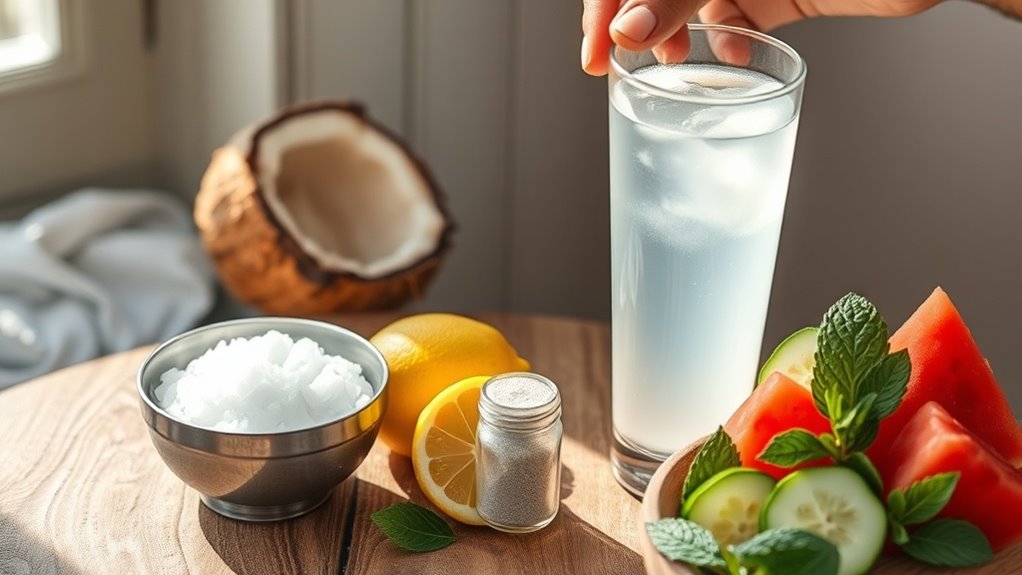
If you’ve been feeling tired, dizzy, or unusually thirsty, your body might be signaling that your electrolytes are off balance. Early signs like muscle cramping, headaches, or fatigue aren’t random; they point to shifts in fluid and mineral balance that can be addressed with practical, evidence-based steps. You’ll start with simple, reliable habits that support hydration science and keep mineral timing in mind, so you’re not guessing about what to sip or eat.
Begin with fluid intake that matches activity, climate, and body signals. Water remains essential, but electrolyte-rich options help maintain sodium, potassium, magnesium, and chloride levels during sweat loss. If you’re sweating heavily or exercising for extended periods, a beverage with a modest electrolyte blend can prevent hyponatremia and cramps. For daily hydration, pair a glass of water with meals and snacks that naturally contribute minerals, rather than relying on supplements as your sole source.
Begin with fluid intake matched to activity and climate, using electrolyte-rich options for ongoing sweat loss.
Food choices matter. Include sources of potassium like bananas, potatoes, leafy greens, and beans, while ensuring you get enough magnesium from nuts, seeds, whole grains, and dark chocolate in moderation. Moderate sodium from table salt, soups, and broth supports fluid balance, especially in warmer weather or high-output activities. Calcium from dairy, fortified alternatives, or leafy greens also plays a supporting role in nerve signaling and muscle function. Pair these with protein and fiber to sustain energy and reduce cravings that tempt you toward sugary drinks.
Salt and electrolyte powders can be useful, but use them strategically. Read labels to avoid excessive added sugars or artificial additives. If you rely on them, align doses with your body’s response, activity level, and travel or illness that may raise losses. For most people, a balanced intake from whole foods combined with a sensible electrolyte beverage around workouts provides adequate repletion without overdoing minerals.
Hydration science emphasizes matching intake to needs rather than rigid rules. Track urine color and frequency as practical feedback: pale straw urine typically indicates adequate hydration, while dark urine signals higher needs. Listen to your thirst, but don’t rely solely on it during intense activity or heat. For prolonged effort, plan sodium and potassium replenishment around sessions rather than afterward, to support continuous performance and reduce cramping.
Recovery matters too. After sweating, rehydrate with a small higher-sodium beverage or broth if you notice muscle soreness or headaches. Then, eat a balanced meal within a couple of hours to restore glycogen and minerals, rather than only sipping fluids. Consistency beats cramming: maintain steady hydration and mineral intake daily, with occasional adjustments for weather, altitude, or illness.
If symptoms worsen or you have a condition affecting electrolyte balance, such as kidney disease, diabetes, or adrenal issues, consult a clinician for personalized guidance. Your approach should be practical, evidence-based, and adaptable. By prioritizing hydration science-informed choices and mindful mineral timing, you’ll support stable fluid balance, steady energy, and reduced risk of cramps—without unnecessary fuss or guesswork.
Commonly Asked Questions
Can Medications Affect Electrolyte Balance and Interaction Effects?
Irony aside, yes—medications can affect electrolyte balance and cause interactions. You might see effects from diuretics, ACE inhibitors, or laxatives altering sodium, potassium, or magnesium levels. Drug interactions can amplify or lessen these changes, too, especially with supplements or OTC remedies. You should monitor symptoms like dizziness, weakness, or irregular heartbeat, and check with your clinician about medication interactions and electrolyte balance. Keep a current meds list, and report any concerning signs promptly.
Are Electrolytes Necessary for Non-Athletes During Mild Dehydration?
Yes, electrolytes are still relevant for you during mild dehydration, though your needs are smaller than an athlete’s. Electrolyte necessity depends on symptoms and fluids lost; most people recover with water and a light snack, but if you experience dizziness, cramps, or persistent thirst, consider an electrolyte drink. Dehydration thresholds vary, so monitor urine color and intake. If unsure, check with a clinician. Stay proactive, not reactive, with evidence-based hydration strategies.
How Do Caffeine and Alcohol Impact Electrolyte Levels?
Caffeine impact and alcohol effects on electrolytes vary you should know. Caffeine can mildly increase kidney fluid loss, but your total intake matters; moderate caffeine isn’t a huge electrolyte drain if you hydrate well. Alcohol tends to promote dehydration and shifts electrolytes, so limit intake and drink water. You’ll feel steadier if you monitor urine color, replace lost sodium and potassium, and pace beverages with meals. Stay consistent, adjust amounts, and recheck how you feel.
Which Medical Conditions Require Physician Supervision for Rebalancing?
You should seek physician supervision for rebalancing if you have medical conditions like kidney disease, heart failure, liver dysfunction, diabetes requiring insulin, adrenal or thyroid disorders, or a history of electrolyte disturbances. You also need supervision if you’re pregnant, elderly, malnourished, critically ill, or taking diuretics, ACE inhibitors, or electrolyte-altering medications. Medical conditions require careful monitoring to avoid rapid shifts. Always consult a clinician before starting any electrolyte changes to ensure safety and appropriate dosing.
Can You Rely on Supplements Over Food for Electrolytes?
Can you rely on supplements over food for electrolytes? Yes, but not as your only source. You’ll likely balance best by pairing foods with targeted supplements when needed. Reliance on supplements can help quickly if you’re deficient or exercising hard, yet foods supply essential cofactors and aren’t a drop-in replacement for chronic needs. Foods vs supplements matter; prioritize nutrient-rich options, monitor symptoms, and consult a clinician for personalized, evidence-based guidance.