
When life gets busy, carb creep can sneak in unless you lock in regular meals and start with a protein-forward option to curb cravings. Plan a simple weekly menu, set prep blocks, and keep portable staples like roasted veggies, grilled chicken, and hard-boiled eggs on hand. Use pre-portioned, high-protein snacks and hydrate before meals to boost fullness. A mindful cheat meal can fit in, but you’ll still want to stay on track most days—the next step helps you get there.
Important Facts
- Maintain consistent meal gaps (about every 4–5 hours) to stabilize blood sugar and curb cravings.
- Plan weekly meals with prep blocks and portion goals to reduce reliance on quick carbs.
- Use travel-friendly staples (roasted veggies, grilled chicken, hard-boiled eggs, yogurt) for quick, controlled meals.
- Choose high-protein, high-fiber snacks and pre-portion them to prevent impulse carb intake.
- Control portions at meals and dining out; start with salad or broth, and limit cheats to one mindful meal per week.
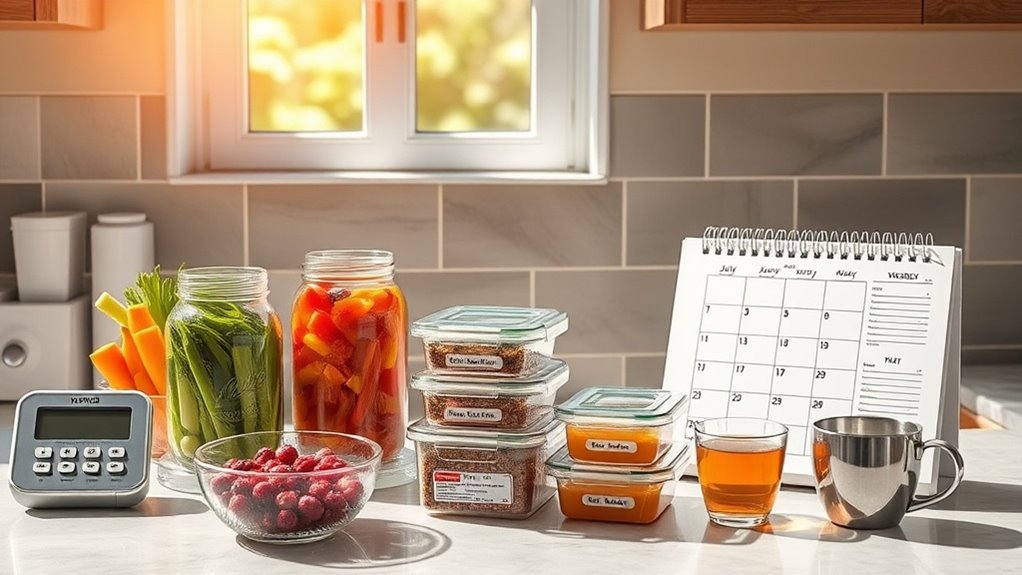
Busy weeks can derail even the most careful meal plan, but you don’t have to surrender to carb creep. When schedules tighten, your best defense is structure you can actually follow. Start with meal timing, because consistent meal gaps help stabilize blood sugar and curb cravings. If you skip meals, you’re more likely to reach for quick, refined carbs. Aim for regular intervals—roughly every 4–5 hours—and build in a small, protein-rich starter at each session to blunt appetite and steady energy. Consistency beats perfection, especially when you’re juggling meetings, kids, and commuting.
Structure you can actually follow: steady meal timing to curb cravings and steady energy.
Plan ahead with practical, evidence-backed strategies. First, map your week’s meals on a simple calendar, noting days when you’ll be away from home. Use this as your anchor for grocery lists and prep blocks. In the kitchen, batch-cresh foods that travel well and refuel your body quickly: roasted vegetables, grilled chicken, hard-boiled eggs, yogurt, and whole-grain wraps. When your routine shifts, you’ll still have options that align with portion control and nutrition goals rather than resorting to vending-machine snacks or drive-thru temptations.
Snack options matter as much as meals. Choose high-protein, fiber-rich snacks that provide lasting fullness to reduce late-afternoon cravings. Think Greek yogurt with berries, a small handful of nuts, apple slices with peanut butter, or cottage cheese with cucumber. Pre-portion these into single-serve containers so you don’t overeat in a moment of rush. Hydration and fiber also play a role; water before meals helps with satiety, and a high-fiber snack can curb spikes in hunger that often lead to carb binges.
Cheat meals can have a place, but keep them purposeful. If you choose to include them, plan them for times when you can enjoy without guilt and in portion-controlled sizes. A controlled cheat meal satisfies cravings and may help adherence over the long term, as part of a broader, balanced pattern. Set a limit, such as one cheat meal per week, and pair it with mindful eating—slow, savoring bites, and stopping when you’re comfortably full.
Portion control underpins all these tactics. Use plate setups to visually cue appropriate sizes: half vegetables, a quarter lean protein, a quarter complex carbohydrates. When you’re in a hurry, pre-portion meals into containers rather than dishing seconds from a larger package. If you dine out, start with a salad or broth-based soup to fill you up, and select a reasonable portion of carbohydrates, balancing with protein and vegetables. By prioritizing meal timing, snack options, cheat meals, and portion control, you create resilience against carb creep even during the busiest weeks.
Commonly Asked Questions
How Can I Plan Meals With Limited Time?
Sure—start with quick, concrete steps: you can plan meals with limited time by batching on a few prep days, using simple templates, and choosing flexible ingredients. You’ll save time through meal prepping, make errands efficient, and reduce decisions later. Draft a simple weekly plan, prep proteins and veggies ahead, and assemble meals in minutes. Keep evidence-based choices: lean proteins, fiber, and veggies. This approach supports you when planning meals and sticking with it.
What Snacks Curb Cravings During Rush Weeks?
Snack ideas that curb cravings during rush weeks include protein-rich options like Greek yogurt, hard-boiled eggs, string cheese, and a handful of almonds. Pair with fiber from fruit or veggies to boost fullness. For craving management, keep water or unsweetened tea handy and pre-portion snacks to prevent mindless munching. Choose balanced portions and built-in satiation, not deprivation, to support steady energy. Stay consistent, log trends, and adjust based on how you feel after meals.
Which Drinks Help Manage Appetite and Energy?
Sure, drinks that help manage appetite and energy include water or unsweetened beverages; they support calorie awareness and hydration impact. You’ll likely reach for coffee or green tea for a mild energy lift, but keep portions sensible. Add electrolyte-infused water during long days to curb fatigue, and consider a protein- or fiber-rich shake to stabilize hunger. Ironically, your best ally is steady sips rather than heroic sprinting; hydration and mindful choices beat crashes every time.
How Do I Grocery Shop Efficiently on Busy Days?
On busy days, you grocery shop efficiently by sticking to a simple plan. Start with a written list aligned to your weekly meals, using planning tips to prioritize staples and proteins. Do a quick batch cooking session on lighter days, then freeze portions for busy ones. Shop once, avoiding impulse buys. Choose versatile ingredients, prewash produce, and rely on quick batch cooking ideas to keep meals balanced even when time is tight.
Can I Meal Prep Without Specialized Equipment?
Yes, you can meal prep without specialized equipment. Start with a simple, no-tools approach: batch cook proteins in a skillet, steam veggies in a microwave-safe bowl, and portion into reusable containers. This is practical, evidence-based, and efficient. For meal planning, use simple no tools meal planning ideas like sheet-pan or one-pot dishes. Track portions and adjust portions to your needs. You’ll stay organized, save time, and avoid extra gear.