
You might believe meal prep has to feel easy or it’s not worth it, but research shows small, predictable routines beat chaos—so what if you start tiny? You can set a 30-minute weekly block, batch-cook a protein, a grain, and a veggie, then store them in friendly containers. Use a simple repeatable plan, a fixed shopping list, and quick sauces to cut decisions. If that sounds doable, you’ll see options you didn’t expect. Let’s start with one practical step.
Important Facts
- Start with a simple, enjoyable routine: pick a repeatable, life-fit meal task (e.g., one-pot dinners) to reduce resistance.
- Block a 30-minute weekly session and focus on three components: protein, grain/base, and at least one vegetable.
- Use one-pan or one-pot meals, batch-cook proteins, and vary with bases and veggies to keep prep low-effort.
- Containerize completed meals in ready-to-use portions and cool foods before storing to support easy access.
- Build quick flavor and emergency kits (seasoning blends, lemon-garlic oil, canned goods) to reduce decision fatigue on busy days.
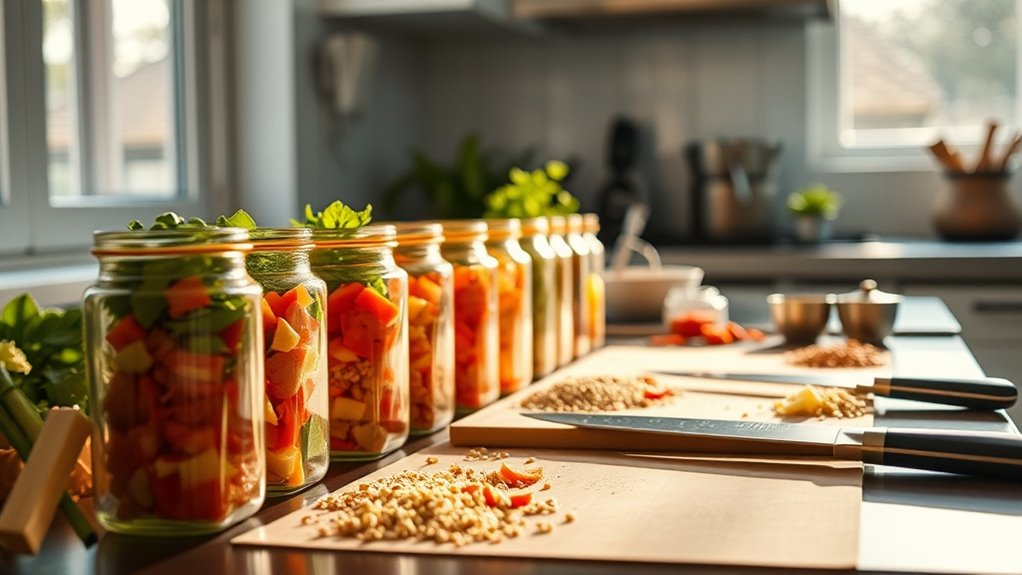
Struggling with meal prep doesn’t have to derail your week. You can shift from dread to doable by starting with small, steady steps that fit your life, not the other way around. First, acknowledge that you don’t love the process, and that’s valid. Then, pick a single, repeatable routine you actually enjoy. Maybe you like big pots of one-pot meals, or you prefer sheet-pan dinners you can pop in the oven. The key is to make it predictable: a fixed shopping list, a fixed prep window, and a fixed set of containers. When you remove decision fatigue at the start, you remove a big chunk of resistance.
Struggling with meal prep? Start small, repeat a routine, and remove decision fatigue.
Let’s talk about time-saving impatience with a practical plan. Block out a 30-minute session once a week. You’ll be surprised how far you can go when you don’t chase perfection. Start with three components: a protein, a grain or base, and at least one vegetable. Keep it simple. If you’re short on energy, opt for one-pan or one-pot meals. You can batch-cook proteins in bulk, then mix with different bases and veggies throughout the week to avoid monotony. When you’re done, cool and portion into containers that you actually enjoy using. The act of opening a ready-made container should feel like relief, not a reminder you failed.
Flavor hacks are your secret weapon. If you crave variety without extra effort, invest in a couple of reliable seasoning blends, a quick sauce, and a few herbs that travel well. Salt, pepper, paprika, garlic, and lemon zest can transform a bland base into something satisfying. A simple lemon-garlic olive oil mix can elevate roasted veggies in seconds. Keep a small stash of pantry staples that don’t need refrigeration, like canned tomatoes, chickpeas, or beans, and rotate them to create different profiles. A quick vinaigrette or drizzle can turn yesterday’s leftovers into a fresh meal. When you’re tempted to skip flavor, remember you’re competing with takeout—your own prepped meals should feel noticeably tastier and easier.
Emergency recipes become your safety net. When weeknights collapse, you need fast, reliable options. Build a couple of go-to combinations you can assemble in a few minutes: a veggie-forward bowl with protein, a grain-based remix with legumes, or a frittata you can finish in the oven alongside roasted veggies. These aren’t fancy; they’re dependable. Keep a short list of “emergency” ingredients you can grab on instinct, like frozen vegetables, eggs, a can of tuna, and a pre-cooked grain. The goal is to minimize decision-making when you’re tired or pressed for time.
Finally, track what works and what doesn’t without judgment. Note which meals you actually eat, which you skip, and why. Use that data to adjust your plan, not to punish yourself. Small, consistent tweaks beat big, sporadic attempts every time. You hate meal prep less when it serves you, not when you force yourself into a rigid routine.
Commonly Asked Questions
How Can I Start With Meal Prep Without Overwhelming Myself?
Start small: pick one simple meal and prep it for the week, then build from there. Batch basics means choosing a reliable recipe, portioning into containers, and labeling. Keep tasks under 30 minutes, and don’t overthink variety at first. If you feel overwhelmed, pause, breathe, and tweak quantities next time. Use leftovers creatively, and celebrate tiny wins. You’ll gain momentum as you repeat, turning meal prep from a chore into a sustainable habit.
What Tools Make Meal Prep Feel Less Tedious?
Tools make it easier, like a trusty sidekick in the kitchen. You’ll want sturdy containers, a reliable slicer, and a dependable blender for batch sauces. Embrace prep shortcuts, but stay organized with labels and a simple calendar. With quick assembly techniques, you can assemble meals in minutes, not hours. Focus on easy-to-clean surfaces, and keep a reusable grocery list handy. You’ll feel less overwhelmed and more in control, one practical step at a time.
How Long Can Prepped Meals Safely Sit in the Fridge?
You’re asking, how long can prepped meals safely sit in the fridge? Generally, most prepped meals can safely sit in the fridge for 3–4 days. To keep them fresh, store in airtight containers and reheat to steaming hot. If everything’s packed separately, you can stretch to 4 days for proteins and grains but not dairy-heavy dishes beyond 3 days. When in doubt, trust your senses and don’t risk safety.
Can I Meal Prep With Limited Cooking Skills?
Yes, you can. If you’ve got limited skills, start with beginner friendly tips and simple recipes. Imagine a gentle ladder: you climb step by step, not leaping. You’ll chop vegetables, batch cook proteins, and assemble meals in under an hour. Use labeled containers, plan a tiny menu, and reuse leftovers. Focus on fundamentals, stay patient, and adjust as you go. You’ll build confidence, one meal at a time, and you’ll feel more capable with every batch.
How Do I Avoid Meal Prep Burnout After a Busy Week?
You can avoid meal prep burnout after a busy week by honoring your limits and refueling first. Start with quick, comforting choices, then plan a lighter batch for the weekend to ease back in. Use burnout recovery strategies like short, single-task sessions and a simple cleanup routine. Do a realistic weekly planning, focusing on doable meals and flexible swaps. Give yourself permission to rest and rebuild momentum without pressure.