
Last week you swapped your usual breakfast for eggs and avocado and felt steady energy through the morning. You can design a keto day with zero stress by sticking to a simple eating window, batching core proteins and fats in 15–20 minutes, and keeping a small set of staples for quick meals. Use a brief daily checklist for macros, hydration, and sleep, and place easy protein snacks where you’ll see them to prevent energy dips—then you’ll see how small tweaks compound as the day unfolds.
Important Facts
- Establish a fixed eating window and two or three meals to reduce daily decisions and stabilize ketosis.
- Build a simple weekly template with staples: low-carb proteins, fats, and fibrous vegetables for quick meals.
- Batch-cook proteins or portion fats in 15–20 minutes and use single-serve containers to preserve macros.
- Plan protein-rich snacks to bridge gaps and prevent energy crashes, placing them where they’re easy to grab.
- Use a tiny daily checklist and a brief pre-bed review to reinforce tomorrow’s plan without adding stress.
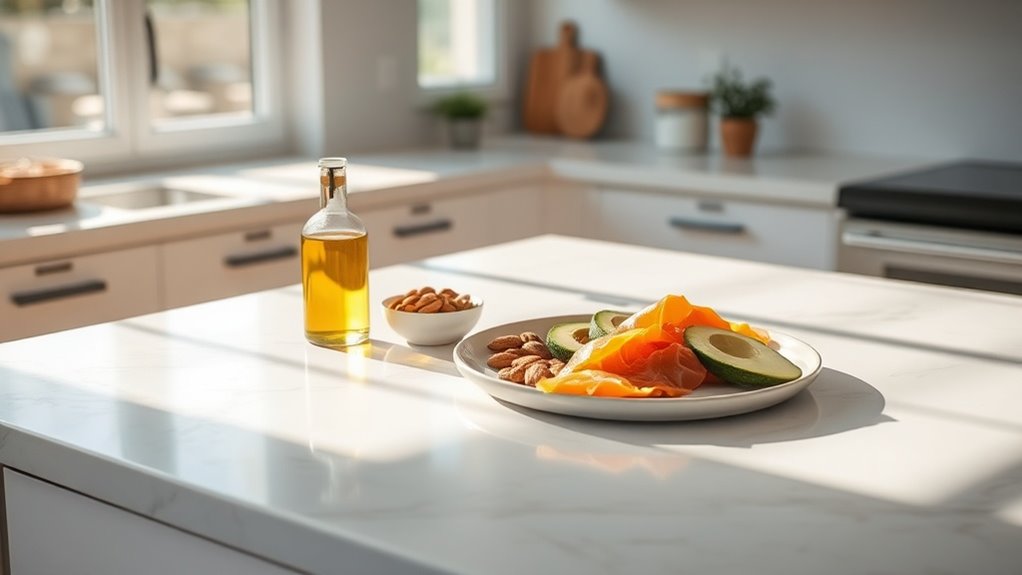
If you’ve ever started a keto day feeling overwhelmed, you’re not alone—and designing a stress-free routine is simpler than it sounds. The core idea is to build predictable structure around meals and energy, so you’re not improvising every hour. Start with a flexible framework: a reliable wake time, a routine for first meals, and a simple plan for snacks that don’t derail ketosis. You don’t need perfection to gain momentum; you need consistency that fits real life.
Evidence shows that a consistent eating window supports appetite regulation and metabolic stability on keto. To put this into practice, choose a practical meal cadence—many people thrive with two or three meals a day, plus optional, well-timed snacks. The key is to align your plan with your natural energy dips and your daily schedule. If mornings are busy, a nutrient-dense, quick-start breakfast can prevent grazing later. If you’re more productive mid-day, a substantial lunch followed by a lighter dinner can work just as well. The aim is to prevent decision fatigue by opting for a steady rhythm you can sustain.
A steady eating rhythm supports ketosis and reduces daily decision fatigue.
Meal planning is your ally. Create a simple weekly template that captures your staples: low-carb proteins, healthy fats, fibrous vegetables, and keto-friendly fats. Build a short grocery list from that template so you’re not scrambling. Batch-cook proteins or portion-out fats when you have a spare 15–20 minutes, then store them for quick assembly. Use single-serve containers for meals that stay consistent with your macros, so you’re not guessing at each bite. Planning also reduces the likelihood of high-carb temptations creeping in at the end of a stressful day.
Snack timing matters more than you might think. If you’re prone to mid-afternoon cravings, plan a protein-rich snack that satisfies without spiking insulin, such as cheese with olives or a small handful of nuts paired with a fat source. Place snacks in view or in a predictable location so you reach for them automatically rather than reach for convenience foods. If you prefer to skip snacks, ensure your meals are satiating enough to carry you through gaps. The goal is to prevent energy crashes that prompt impulsive, carb-rich choices.
Practical tools help translate theory into routine. A simple checklist for each day can remind you of macros, hydration, and sleep goals. A few minutes of review before bed reinforces tomorrow’s plan, reducing morning chaos. Track progress in a way that’s meaningful to you—whether that’s energy levels, mood, or weight stability—without turning data into pressure. You’ll find that stress decreases when your day unfolds with a tested routine, clear goals, and the flexibility to adapt to occasional shifts.
Commonly Asked Questions
Can I Snack Between Meals While Staying Keto?
Yes, you can snack between meals while staying keto, as long as you keep portions small and choose keto-friendly options to support snack timing and meal spacing. Focus on protein, healthy fats, and fiber, like cheese, nuts, or Greek yogurt. Track carbs to stay under your daily limit, and avoid grazing. Plan snacks around workouts or cravings, and listen to hunger cues to maintain steady energy without breaking ketosis.
Is It Okay to Skip Meals on a Busy Day?
Yes, you can skip meals on a busy day, but plan around your workout timing and energy needs. If you’re intermittent fasting, listen to hunger cues and stay hydrated; otherwise, opt for a light, balanced snack to prevent dips. From an evidence-based, practical standpoint, skip meals sparingly and avoid intense workouts on an empty stomach. Prioritize steady fat-adaptation benefits, and adjust meal timing to match your schedule and recovery demands.
How Strict Must Carb Limits Be for a Stress-Free Plan?
You don’t need perfect precision to stay stress free. Strict carb targets can flex a bit on tough days without wrecking results. Aim for a reasonable range that you can hit consistently, then adjust as needed. Follow stress free guidelines such as choosing whole foods, tracking enough, and avoiding ultra-processed carbs. If you’re off by a handful, don’t panic—your overall pattern matters more than a single meal. Consistency over perfection yields steady momentum.
What if I Crave Non-Keto Foods Occasionally?
If you crave non-keto foods occasionally, you can handle it without derailing your plan. Acknowledge the craving, pause, and choose a mindful portion using craving strategies like delaying, sipping water, or journaling. Then opt for non keto substitutions that satisfy texture or flavor, such as cauliflower rice instead of pilaf or berries with full-fat yogurt. Stay consistent overall, and reframe lapses as data to refine portions and meal timing.
Can Workouts Disrupt a Zero-Stress Keto Day?
Did you know 60% of daily energy is often spent on non-exercise activities, not workouts? Yes—workouts can disrupt a zero-stress keto day if timing and intensity aren’t aligned. To minimize this, plan workout implications around your meals and sleep, keeping stress free timing. Stay practical: moderate intensity, protein-focused post-workout, and adjust carbs only as needed. This evidence-based approach helps you maintain ketosis while supporting recovery and consistency.