
To build a keto meal that keeps you full, start with a palm-sized portion of protein and pair it with slow-digesting fats and plenty of fiber-rich greens or crucifers. Favor monounsaturated fats (olive oil, avocado) and steady fats from nuts or fatty fish, then load the plate with nonstarchy vegetables to boost volume and micronutrients. Keep portions modest at first, and if hunger returns after a few hours, adjust protein or veg balance the next meal. You’ll find the pattern works—but there’s more to optimize.
Important Facts
- Balance protein, fats, and nonstarchy fiber at every meal to sustain satiety and steady energy.
- Center meals on a palm-sized protein portion and distribute protein across meals for fullness.
- Choose steady-energy fats (olive oil, avocado, nuts, seeds) to complement protein without spikes.
- Add nonstarchy vegetables for fiber, volume, micronutrients, and appetite control.
- Plan with a simple base of protein, fats, and 2–3 cups of fiber-rich veggies; adjust if hunger returns.
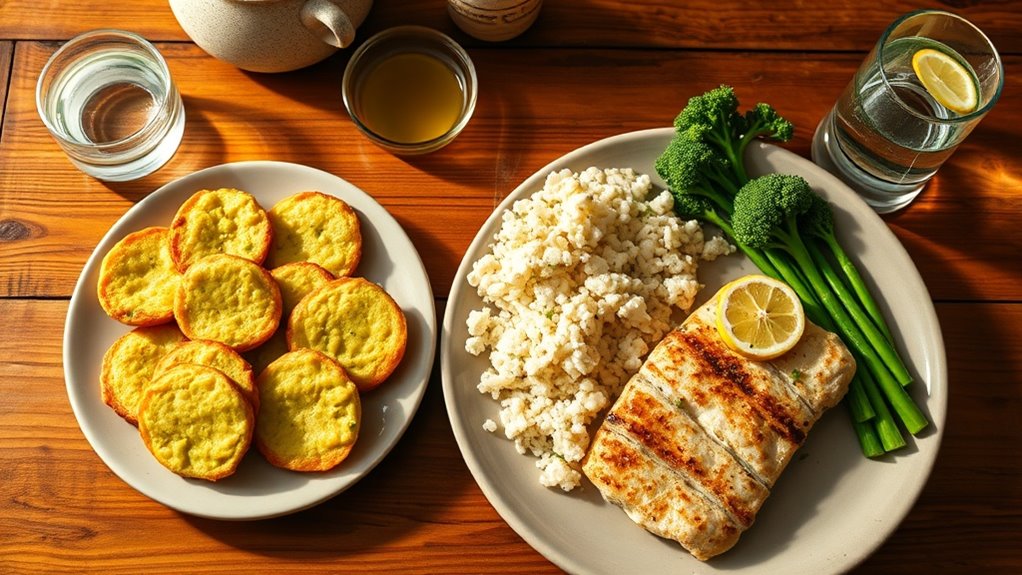
If you want a keto meal that actually sticks with you, start by balancing fats, protein, and fiber in a way that supports satiety rather than spikes your blood sugar. You’ll feel fuller longer when you pair high‑quality fats with adequate protein and nonstarchy fiber from vegetables or seeds. Prioritize fats that release energy steadily, such as monounsaturated and certain saturated fats from whole foods, and choose protein sources with complete amino acids to support muscle maintenance and appetite control. A fiber‑rich base helps slow glucose absorption and adds volume without many calories, aiding satiety.
To implement satiety focused planning, begin with portion guidance that centers on protein at every meal. Aim for a palm‑sized portion of lean or fatty animal protein or a plant‑based equivalent, spreading protein across meals to sustain fullness. Next, select fats that complement the protein so energy comes from a steady source rather than quick bursts. Include a vegetable portion to supply fiber, micronutrients, and volume. Vegetables should be nonstarchy, leafy greens, crucifers, or cruciferous cousins that stretch meals without piling on calories. This balance reduces appetite fluctuations and supports adherence.
Aim for a palm of protein, steady fats, and fiber-rich greens to curb cravings.
A practical approach is to design meals around macro macthing strategies, a concept that helps you align fats, protein, and fiber for consistent energy. Start by estimating protein needs per meal and pairing that with a fat target that maintains satiety without excess calories. Then add fiber via vegetables or low‑carb seeds to slow digestion. This trio—protein, fats, and fiber—works together to dampen post‑prandial glucose and insulin spikes, which are linked to appetite crashes later.
Meal timing matters too. If you train or have higher activity days, shift a portion of calories toward protein and fiber in the post‑workout meal to replenish and sustain fullness. On lighter days, moderate total calories but keep protein steady and fats reliable to maintain satiety. Consider meal variety within the keto framework to prevent menu fatigue; rotate protein sources (fish, poultry, eggs, tofu, or tempeh) and fat sources (olive oil, avocado, nuts, seeds) and keep greens and crucifers in regular rotation.
Practical tips to apply now: prep a simple base plate with 1) a protein source, 2) a serving of fats, and 3) 2–3 cups of fiber‑rich vegetables across meals. Use seasonings and low‑carb sauces to improve palatability without increasing carb load. Track your satiety signals rather than obsessing over calories alone; if you still feel hungry 2–3 hours after a meal, slightly increase protein portion or add a fiber‑forward side. With satiety focused planning and macro macthing strategies, you’ll build keto meals that not only align with ketosis but also keep you full, focused, and consistent over time.
Commonly Asked Questions
How Much Fiber Is Ideal on Keto for Fullness?
A practical range is about 25–38 grams of fiber per day for most keto dieters, aimed to support fullness without provoking GI distress. Start with 15–20 grams daily and increase gradually to find your fiber targets. Pair fiber with adequate protein and fats to boost satiety. Focus on soluble fibers from low-net-carb sources. Track how you feel, adjust, and use satiety strategies like fiber-rich veggies and fiber-rich seeds to sustain appetite control.
Can I Drink Coffee on a Full-Keto Meal Plan?
Brewing clarity, you can drink coffee on a full-keto plan. You’ll want to contemplate coffee timing and caffeine strategies to avoid appetite spikes and sleep disruption. Have it with meals or shortly after to support satiety without compromising ketosis, and limit additions that add carbs. If you’re sensitive, start with a small cup and track how it affects fullness and your energy. Stay consistent, stay mindful, and adjust timing to your routine.
Do Fats Alone Curb Hunger or Need Protein Too?
Fats alone can curb hunger temporarily, but you’ll get steadier fullness with both fats and protein. Protein supports satiety signals and preserves lean mass, while fats sustain energy. Fullness isn’t just how much you eat—it’s how long you feel satisfied. So, aim for a balanced keto plate that includes adequate protein plus healthy fats. Expect fullness versus hunger to improve when protein intake is consistent and paired with fiber and hydration.
Is Meal Timing Important for Staying Full on Keto?
Meal timing can matter, but staying full on keto hinges more on satiety than clock hours. Think of your day like a highway: you stall at peaks of protein and healthy fats, not at random speeds. Anecdote: I felt steadier when I spaced meals with 3–4 hours between, choosing satiating fats and fiber. Data show mixed results, but grazing can derail ketosis if portions spike. So plan regular, protein-fueled meals to stay full on keto.
Which Snacks Best Prevent Cravings Between Meals?
Snacks that best prevent cravings between meals emphasize balanced snack composition and lasting satisfaction. Aim for protein-rich options with healthy fats and fiber, like Greek yogurt with nuts, cheese and olives, or a small turkey wrap with veggies. Avoid simple carbs that spike craving duration and then crash. Set boundaries, and choose portions that fit your keto targets. Track how long cravings last after each snack, refining portions to extend craving duration control.