
You can build a keto lunch routine you won’t tire of by using a simple plate method: fill half with non-starchy vegetables, a quarter with quality protein, and a quarter with healthy fats, prioritizing olive oil and avocado. Use a small rotation of easy sheet-pan meals and batch-cook proteins to keep things convenient. Add herbs, citrus, garlic, or chili to keep flavors fresh, and reassess weekly to fine-tune portions—there’s more to optimize than you might think.
Important Facts
- Use a plate approach: 50% non-starchy vegetables, 25% protein, 25% healthy fats to support ketosis and satiety.
- Target daily macros of roughly 70–75% fat, 20–25% protein, 5–10% carbs, adjusted for activity and sleep.
- Build 3–4 reliable lunch recipes with simple spices, herbs, and textures to maintain variety without overwhelm.
- Batch-cook proteins and store equal portions in clear containers for quick, satisfying meals.
- Favor fibrous veg, moderate berries, and fats to sustain fullness and keep macro balance steady.
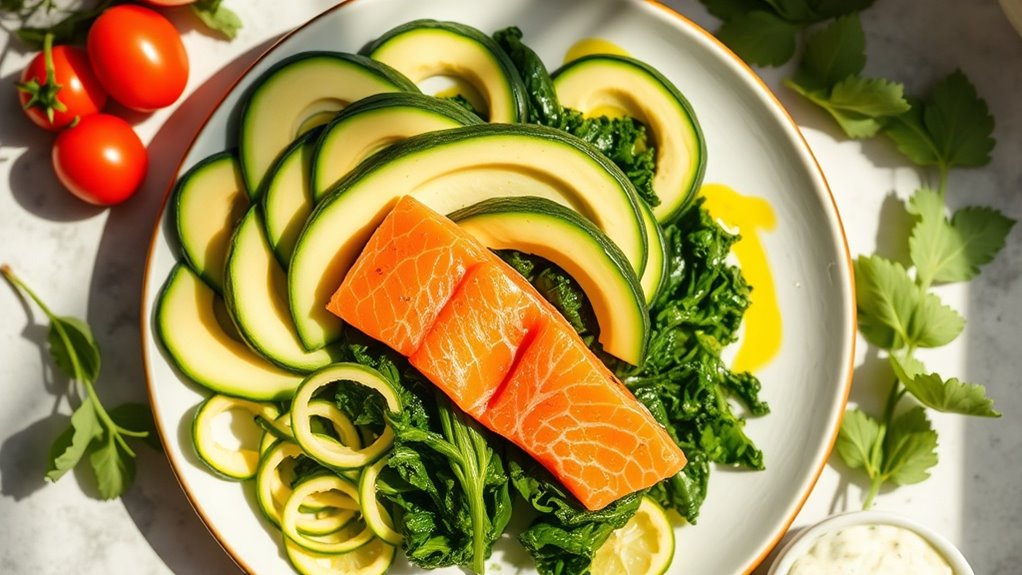
If you’re aiming for a keto-friendly lunch that’s both satisfying and sustainable, you can build a routine that sticks without feeling repetitive. You’ll want a practical framework that combines predictable macros with variety to prevent boredom. Start by anchoring your week with a few core habits: plan ahead, prep efficiently, and choose ingredients that travel well and reheat cleanly. Evidence shows that consistency with portion control and low-carb choices supports steady energy and adherence, especially when you keep meals simple and scalable.
A practical, sustainable keto lunch plan blends predictable macros with variety, backed by simple prep and smart shopping.
First, define the macro targets for lunch that fit a keto profile you can sustain. A typical range is 70–75% fat, 20–25% protein, and 5–10% carbs. Adjust to your needs based on activity, sleep, and appetite signals. Use a standard plate approach: half non-starchy vegetables, a quarter protein, a quarter fat. This visual cue helps you stay within limits without tracking obsessively. When you choose ingredients, prioritize high-quality fats (olive oil, avocado, fatty fish), moderate protein, and fiber-rich vegetables to support fullness and digestion. Avoid ultra-processed items that spike cravings or calories without nutrients.
Taste matters for long-term adherence, so build a repertoire of taste tested recipes you trust. Curate a small rotation of reliable dishes that you’ve tried and loved, and layer flavor with simple spices, herbs, and textures. For example, sheet-pan meals with roasted vegetables and salmon, a zesty chicken and avocado bowl, or a creamy egg mayo salad stuffed into lettuce cups. Keep seasonings minimal at first, then gradually add citrus, garlic, or chili to renew interest without adding carbs.
When you shop, use practical hacks to minimize waste and time. Create a weekly grocery list based on your chosen core meals, and batch-cook proteins in bulk (grill several chicken breasts, cook a pot of eggs, or prepare hard-boiled eggs for quick snacks). Store equal portions in clear containers to visualize leftovers. For fats, stock a few versatile options you actually enjoy, such as olive oil, avocado oil, cheese, and nuts, but portion them to prevent overconsumption. For carbs, stick to fibrous vegetables and a few berries if your daily limit allows.
To keep lunch simple yet satisfying, design a 3- to 4-meal rotation and swap protein sources or vegetables while keeping the macro balance steady. Track clues of satiety rather than chasing perfection: if you’re still hungry after an hour, adjust fat or protein slightly in your next choice. Reassess weekly based on energy, mood, and performance. With consistent planning, taste tested recipes, and smart shopping hacks, you can sustain a keto lunch routine that stays fresh, enjoyable, and effective.
Commonly Asked Questions
How Many Keto Lunches Fit a 20-40G Net Carb Range?
Aiming for 20–40g net carbs per lunch, you can fit roughly 1–2 keto lunches within that range depending on ingredients. Focus on protein, non-starchy veggies, and healthy fats to stay carb conscious. For variety, plan a keto lunch variety that keeps flavors interesting while staying low carb. Use carb conscious portions, measuring greens, berries, and dairy. Track macros, and adjust portions so you consistently hit your target without sacrificing satiety or satisfaction.
Can I Meal-Prep Keto Lunches for the Week?
Yes, you can meal-prep keto lunches for the week. Start with a core set of protein, fats, and low-carb veggies, then batch-cook several options. Use airtight containers and label by day to maintain freshness. For evidence-based practicality, focus on stable ingredients (eggs, chicken, salmon, tofu) and varied seasonings to keep weekly variety. Plan a rotation to prevent boredom, and save time with double batches. This supports consistent macros and reduces decision fatigue.
Are Dairy-Free Keto Lunches Still Effective Long-Term?
A dairy-free keto lunch can be effective long-term if you plan well. In a hypothetical case, you swap cheese for avocado and olive oil, keeping macros solid. You’ll rely on dairy free alternatives like coconut yogurt or almond milk, ensuring you meet fat and protein targets. For long term sustainability, prioritize variety, monitor electrolytes, and adjust portions. Evidence supports balanced fats, protein, and fiber; your results improve with consistent tracking and adjustment.
How to Handle Social Meals on a Keto Lunch Plan?
You can handle social meals on a keto lunch plan by planning ahead and choosing keto-friendly options. Use social eating strategies like pre-eating a protein snack, checking menus in advance, and politely steering portions. Do lunch timing adjustments, shifting meals earlier or later to fit events and hunger cues. Stay hydrated, track carbs, and have a backup keto swap. This keeps you compliant without feeling deprived or isolated in social settings.
What Are Budget-Friendly Keto Lunch Protein Options?
Budget friendly protein options include canned tuna, eggs, chicken thighs, and Greek yogurt. You’ll get high-quality protein without breaking the bank, helping you stay in ketosis and on track at lunch. Add beans or lentils only if your macro targets permit. For variety, mix in ground turkey, lean beef, or cottage cheese. Plan purchases weekly, look for sales, and batch-cook. You’ll save money while keeping meals satisfying and evidence-based for keto lunch routines.