
You can start a keto-friendly habit stack by anchoring it to a daily cue, like your morning coffee, and pairing it with a tiny action, such as 20–25 grams of protein or a quick 500 ml water boost. Track it to gain instant feedback, then wait 1–2 weeks before adding a second cue after another routine, like a post-workout keto snack. With weekly tweaks, you’ll keep momentum while dialing in carbs—and you’ll see what works best for you.
Important Facts
- Start with one anchored habit tied to a daily cue (e.g., after breakfast, verify protein portion).
- Pair each cue with a single concrete keto action to minimize decision fatigue.
- Use scalable growth: add a second habit after consistent completion for 1–2 weeks.
- Implement clear feedback: quick note, app log, or calendar checkbox to reinforce behavior.
- Review weekly to tighten carb targets and adapt anchors for sustainable progress.
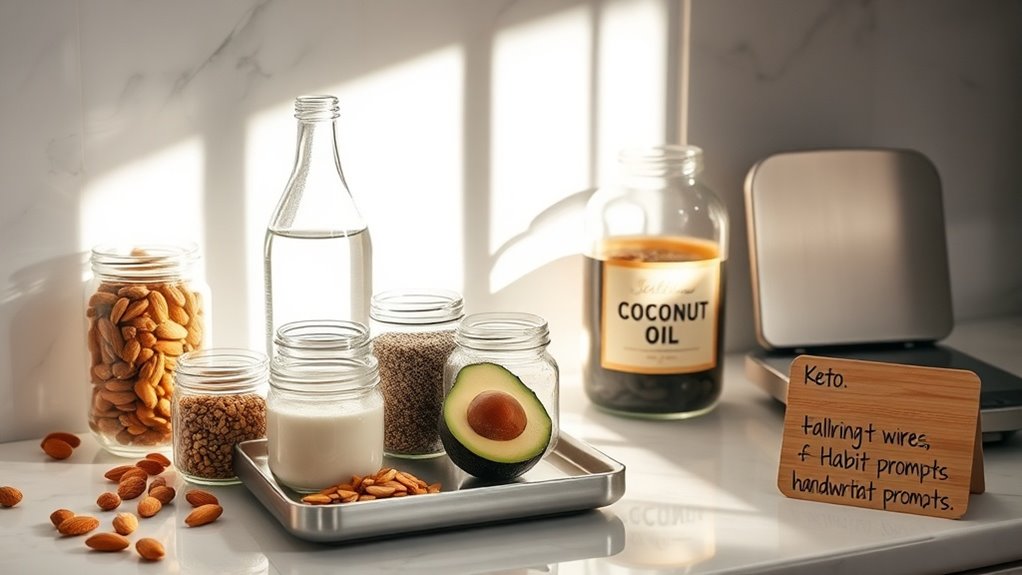
Ever wondered how small, deliberate routines can power your keto goals? You’re about to discover a simple way to build lasting change: a keto-friendly habit stack. The idea is to attach tiny, repeatable actions to the moments you already experience every day, so you don’t rely on sheer willpower alone. Start by mapping your day into a few reliable checkpoints—meals, workouts, and daily routines you already do like brushing your teeth or coffee time. At each checkpoint, add a single, concrete action that nudges you toward your keto parameters without overhauling your schedule. For example, you might pair a glass of water with your morning coffee and then add a 5-minute protein-focused snack plan before you leave the house. That one extra step creates a predictable pattern you can repeat.
To make this approach work, you need two things: clear behavior choices and instant feedback. Your choices should be specific enough to avoid decision fatigue. Instead of “eat healthier,” you choose “eat 20–25 grams of protein at breakfast” and “limit net carbs to 20–30 grams at lunch.” These targets become your keto parameters for that meal. With feedback, you confirm whether you followed through each time. A quick note on a sticky note, a habit-tracking app, or a simple checkbox on a calendar can provide that signal. The brain loves confirmation, and that positive reinforcement strengthens the routine.
Design your habit stack to be scalable. Start with one anchored habit, then add a second after you’ve consistently completed the first for a week or two. Each new habit should slot neatly after an existing cue—like after you finish a workout, you prep a keto-friendly snack for the next snack window, or after you finish cooking dinner, you log macronutrients for the day. This approach respects your time and reduces cognitive load, because you’re not starting from scratch each day. The key is consistency, not perfection; you’ll refine your stack as you learn what sticks and what doesn’t.
Incorporate habit anchors that tie directly to meals and movement. A simple anchor is a two-minute rule: after you sit down for breakfast, you verify your protein portion and add it to your tracking log. Another anchor: before you start a workout, you prepare a keto-appropriate pre-workout snack, then record the timing and feel of your energy. Over weeks, these anchors become automatic signals that nudge you toward your targets. By linking behavior to meaningful outcomes—satiety, steadier energy, fewer cravings—you reinforce the behavior with real payoff.
Finally, review and adjust weekly. If you notice your lunch net carbs drift higher, tighten that meal’s anchor or swap a high-carb side for a keto-friendly alternative. The habit stack should adapt, not collapse under friction. With deliberate, small routines anchored to your daily flow, you’ll sustain progress toward your keto goals without constant effort.
Commonly Asked Questions
Can I Start a Keto Habit Stack Mid-Week or on Any Day?
Yes, you can start a keto habit stack mid-week or any day. Pick a realistic start time and set a clear first step. Keep a simple, repeatable routine to maintain momentum. For a practical weekly cadence, choose one primary keto tweak per day and track progress. Evidence suggests consistency matters more than timing, so you’ll reinforce habits faster by sticking to your start time and maintaining steady, achievable milestones throughout the week.
How Long Does It Take to See Results From Stacking Keto Habits?
You’ll see results in about 2–4 weeks if you stay consistent with your keto habits. At first, you might doubt the scale, but you’ll notice energy and focus improvements with steady habit consistency. Satire aside, it’s practical: track macros, meals, and sleep, then adjust. Real progress comes from daily wins, not magical overnight shifts. Stay committed, review progress weekly, and keep stacking small, sustainable actions—seeing results compounds as your brain trusts the routine.
Do I Need to Track Macros When Using a Habit Stack?
You don’t strictly need to track macros when using a habit stack, but tracking calories and meal timing can help you stay keto-adherent. If you’re goal-focused, log what you eat to ensure you stay within your target calorie range and keep meals spaced to support ketosis. Use a simple routine: plan meals, time them consistently, and adjust portions as you observe progress. The key is consistency, not perfection.
Can Non-Keto Days Break a Keto-Friendly Habit Stack?
Yes, non-keto days don’t have to derail your habit stack, because habit flexibility matters. You can adapt by accepting minor deviations, then refocusing on keto-friendly choices next meal or day. Track trends, not perfection, and keep core routines intact (planning, meal prep, protein at each meal). Stay evidence-based: gradual consistency beats crash diets. You’ll rebalance without guilt, using non keto days as data to optimize, not punish.
What if I Have Shared Meals or Social Events on Keto Days?
Yes, you can handle shared meals or social events on keto days. Plan ahead by reviewing macros, opting for friendly meals with higher protein and fats, and choosing keto-friendly options when possible. If you slip, don’t panic—adjust your next meals to rebalance, and stay hydrated. Use strategies like boundary-setting, portion control, and mindful choices. Track portions, and remember consistency beats perfection on busy social calendars.