
Imagine you’re feeding a family of four and want keto without sacrificing flavor, like a real case where burgers meet broccoli and everyone asks for seconds. You’ll want simple staples—protein on hand, healthy fats, and a rainbow of non-starchy veggies—plus kid-friendly sauces that don’t sneak in hidden carbs. Start with a practical pantry layout and a rotating menu so weeknights stay smooth. Keep it flexible, and you’ll see how easy consistent keto meals can become.
Important Facts
- Prioritize whole, minimally processed foods with non-starchy vegetables as staples, plus quality proteins and healthy fats to support satiety.
- Build a rotation of kid-friendly veggies (greens, broccoli, peppers) and use frozen options for convenience and variety.
- Include diverse proteins (eggs, poultry, fish, beef, pork) and minimally processed options; repurpose leftovers creatively.
- Use extra-virgin olive oil, avocados, nuts, and seeds; pair low-sugar fruits with fat or protein for balanced snacks.
- Plan a rotating weekly menu, maintain a running shopping list, and read labels to avoid hidden carbs and starches.
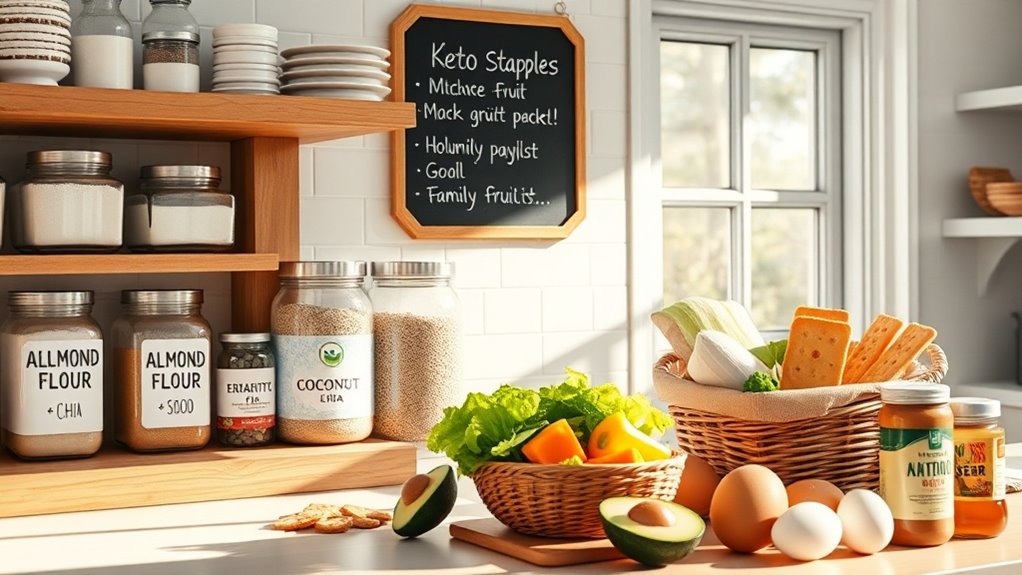
Stock up your kitchen with a family-friendly keto pantry by focusing on whole, minimally processed foods that kids and adults alike will enjoy. You’ll start with reliable staples: non-starchy vegetables, quality proteins, healthy fats, and low-sugar fruits in moderation. Think leafy greens, broccoli, cauliflower, zucchini, peppers, cucumbers, and mushrooms—foods that cook quickly, appeal to kids, and pair well with simple seasonings. For protein, choose eggs, poultry, fish, beef, and pork, aiming for variety to cover essential amino acids and micronutrients. Emphasize minimally processed options, like canned tuna in water, frozen vegetables, and plain Greek yogurt, which minimize added sugars while staying convenient.
Stock a family-friendly keto pantry with whole, minimally processed staples kids will crave.
Healthy fats are central to a keto pattern that supports energy and satiety. Include extra-virgin olive oil for dressings and cooking, avocados, nuts and seeds (in measured portions to control calories), and high-fat dairy if you tolerate it. For fruit, select berries in limited amounts and pair them with fat or protein to reduce glycemic impact. Emphasize whole foods over snacks that are ultra-processed or high in refined carbohydrates, which can derail adherence for busy families.
To keep meals kid-friendly and practical, build simple, nourishing dishes around proteins and veggies. A sheet-pan meal with chicken thighs, Brussels sprouts, and olive oil, or fish with lemon-butter and green beans, can please diverse tastes. Stir-fries with colorful vegetables and beef or tofu, wrapped in large lettuce leaves, offer texture and familiarity. Batch-cook on Sundays: roast several vegetables, hard-boil eggs, and prepare a couple of proteins for quick weeknight meals. This approach reduces last-minute sourcing stress and supports consistent eating patterns.
Meal planning is your ally. Create a rotating weekly menu that emphasizes familiar textures and flavors while introducing one or two keto-friendly tweaks each week. Keep a running shopping list aligned with the plan, and track pantry items to avoid overbuying perishables. When you shop, prioritize sales on proteins and frozen vegetables, and buy in bulk for non-perishables like nuts, seeds, and olive oil. Budget tips include choosing whole cuts of meat, using bone-in options for flavor and cost efficiency, and using leftovers creatively—turn roast chicken into salads, wraps with lettuce, or a frittata for quick, kid-approved meals.
Incorporate spices and low-sugar condiments to widen flavor profiles without adding hiding sugars. Read labels to avoid hidden carbs and starches, especially in marinades and sauces. Hydration matters too; water, unsweetened teas, and black coffee can complement meals without affecting ketosis. Finally, monitor portions, especially with higher-fat foods and dairy, to fit your family’s energy needs. By prioritizing whole foods, sensible portioning, and steady planning, you create a sustainable, family-friendly keto pantry that supports both nutrition and budget.
Commonly Asked Questions
How Do I Involve Kids in Keto-Friendly Meal Planning?
Yes—you can involve kids in keto-friendly meal planning by turning it into a collaborative activity. Let them help brainstorm meals, choose recipes, and create a simple weekly plan. Use kid-friendly tasks during meal prep to boost engagement. Include Budget tips and grocery shopping lists they can tally. Encourage small wins, like counting carbs together or labeling ingredients. This practical approach builds ownership, supports healthier choices, and keeps everyone motivated while sticking to family goals.
What Are Kid-Approved Snacks on a Keto Pantry?
Kid-friendly keto snack ideas include cheese sticks, hard-boiled eggs, cucumber slices with ranch, olives, and nut butter packs, all kid approved and easy to grab. For pantry snacks, stock unsweetened yogurt, deviled eggs, pepperoni, jerky, and almond flour crackers. Build a routine around balanced portions and flavor variety to keep kids engaged. Evidence-based tips show variety and appealing textures boost adherence, so rotate options and label kid-friendly keto choices clearly for quick, practical decisions.
Can a Family Stay on Keto During Holidays or Parties?
Yes, you can stay keto during holidays and parties with planning and steadiness. Anachronism: You’ll feel like you’re riding a neon dinosaur into a crowded banquet. For family holiday keto challenges, focus on prep and flexible recipes, and keep kid friendly party ideas accessible. You’ll track macros, offer keto-friendly swaps, and emphasize protein, veggies, and healthy fats. Practical, evidence-based tips help you balance celebrations while staying true to your goals.
How to Balance Carbs for Growing Children on Keto?
Balancing carbs for growing children on keto isn’t about perfection; it’s about thoughtful targets. You can manage carbohydrate targets by focusing on nutrient-dense, low-sugar foods and short, age-appropriate portions. Track kid portions by using simple plate frameworks and portion guides, adjusting as growth curves shift. Monitor energy, mood, and performance, then adapt. Prioritize protein, vegetables, and healthy fats while limiting ultra-processed carbs. Consult a pediatrician or dietitian if concerns arise.
What Budget Tips Help Maintain a Family Keto Pantry?
To keep a budget-friendly, kid-friendly keto pantry, buy in bulk on staples like almonds, coconut oil, and canned fish, then rotate with seasonal produce. Plan weekly meals, make a shopping list, and avoid impulse purchases. Use store brands, compare unit prices, and leverage sales. Freeze portions to reduce waste, and batch-cook sauces and soups. Track your costs, substitute cheaper proteins, and involve kids in simple prep to boost adherence and fun.