
Let’s explore best-of keto spices and add-ons that elevate flavor without sacrificing macros. You’ll find reliable blends built around garlic, onion, cumin, paprika, and dried herbs—no sugar or dextrose. For beef, a warm, smoky profile; chicken benefits from citrus-forward notes; seafood shines with bright, herb-driven zest. Pair these with olive or avocado oil marinades, lemon, lime, garlic, and fresh herbs. Rotate blends seasonally, salt early, rest, and savor the bold, keto-friendly results that follow.
Important Facts
- Choose keto-safe spice blends with garlic, onion, cumin, paprika, and dried herbs; avoid sugar or dextrose to protect macros.
- Tailor blends to proteins: warm-smoky for beef, citrus-led for chicken, herby-zesty for seafood.
- Use oil-based marinades (olive/avocado) with lemon/lime and fresh garlic, keeping sugar to a tablespoon or less.
- Employ quick 20–30 minute marinades for poultry/pork to boost flavor without excess carbs; salt early for moisture.
- Rotate flavors and pairings with keto-friendly strategies: smoky beef with spice blends, chicken with bright marinades, seafood with citrus/herbs and clean fats.
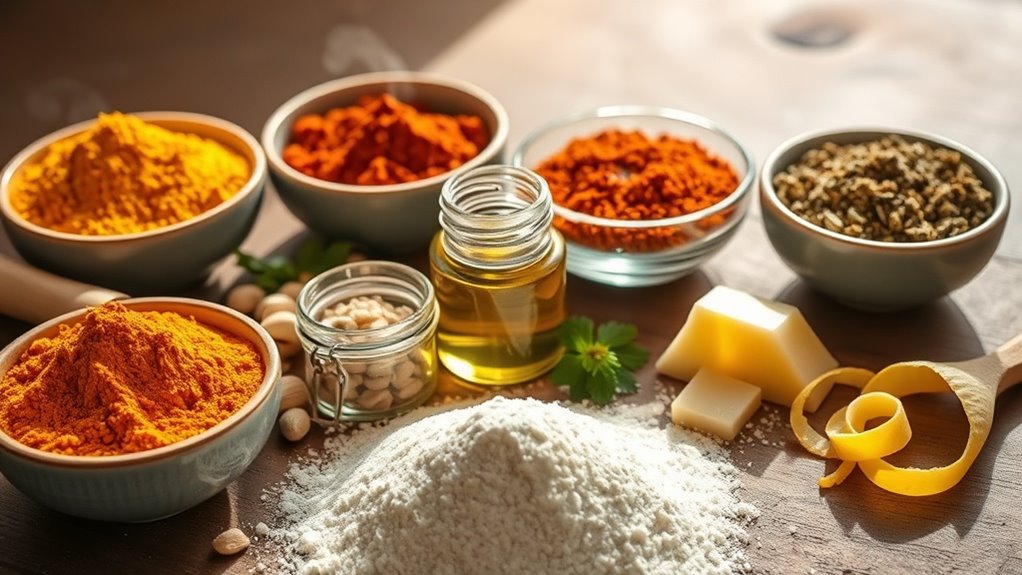
Ever wonder how to elevate keto meals without adding carbs or extra effort? You’re about to unlock practical, evidence-based ways to boost flavor with minimal carbs and effort. Start with the idea that spices and add-ons can pivot a dish from simple to satisfying without changing macros. The keto kitchen thrives on clean ingredients and precise seasoning, so you’ll want options that don’t tempt you with hidden sugars or starches. Focus on quality, fresh herbs, and heat sources that complement meat, fish, vegetables, and eggs, rather than masking bland basics.
Elevate keto flavor with smart spices, herbs, and clean grill techniques.
Keto spice blends offer a reliable shortcut that respects macros while delivering depth. A well-chosen blend provides balanced notes—savory, earthy, and bright—without adding calories that derail ketosis. When you select blends, scan labels for sugar or dextrose, and prefer blends with garlic, onion, cumin, paprika, and dried herbs. You’ll appreciate blends that align with your main protein: a warm, smoky mix for beef, a citrus-led blend for chicken, or a herby, zesty version for seafood. These blends can replace high-carb sauces, enabling you to keep meals vibrant, not sugary.
Grilling marinades deserve special mention for flavor intensity with minimal carb impact. True grilling marinades rely on oil, acid, herbs, and aromatics rather than sweeteners. Olive oil or avocado oil provides a fat base that supports fat-adapted cooking, while lemon, lime, or vinegar adds brightness without carbs. Fresh garlic, ginger, chili, and herbs like thyme or rosemary intensify aroma and perception of a savory finish. If you use a marinade, keep it lean on sugar; a tablespoon or less of a sugar-containing component can be enough for flavor without tipping macros. For poultry and pork, a quick 20–30 minute soak in a low-sugar marinade can deeply infuse flavor without costly calorie changes.
Pair these approaches with smart cooking practices. Salt judiciously early, as salting builds flavor and helps moisture retention. Cook proteins to target internal temperatures to avoid dry texture; juicy bites feel more satisfying on keto, so you’ll often plate sooner rather than later. Resting meat briefly after cooking stabilizes juices, enhancing mouthfeel and perception of savoriness. Use fresh herbs at the end to brighten the dish, avoiding heat-induced flavor loss. When you want variety, rotate keto spice blends and switch grilling marinades seasonally, pairing with proteins and vegetables that support your macros.
In practice, you’ll build a flavorful rotation with minimal carbs: a smoky beef profile from a keto spice blend, lemon-herb chicken with a bright marinade, and a seafood finish that marries citrus, herbs, and a clean fat base. Your meals stay flavorful, focused, and within keto guidelines, proving flavor doesn’t require extra carbs or complexity.
Commonly Asked Questions
Are There Keto-Friendly Spice Mixes to Avoid Stall Plates?
Only about 8–12% of people stall purely from spices, but smart choices help. Yes, there are keto-friendly spice blends to avoid stall plates. Look for blends labeled grain-free, sugar-free, or zero-added sugar, and check labels for hidden carbs. You’ll want spice blends that avoid starches, dextrose, or maltodextrin. Rely on herbs, pepper, and salt as bases, and track any hidden carbs you spot. This keeps your macros precise while supporting flavor.
Can Spices Affect Ketosis or Insulin Response?
Spices can influence ketosis and insulin only minimally. The spice effect on ketosis is generally negligible unless you’re using large, carb-heavy blends. Most spices don’t spike insulin meaningfully in typical culinary amounts. You should monitor portions of spicy sauces or sweetened mixes. The insulin impact of spices tends to be modest or neutral for most people. If you’re highly sensitive, track your responses, but in usual practice, spices won’t derail ketosis.
Which Dried Herbs Retain Flavor Best When Cooking?
To answer, dried herbs retain flavor well when stored airtight away from light; basil, oregano, thyme, and rosemary hold aroma longer than many. You’ll notice dried herbs generally have stronger, longer-lasting aroma than fresh in cooked dishes. Dried herbs longevity varies by harvest and storage. Use within 1–3 years for best potency. For flavor in recipes, crush or crumble near the end to maximize aroma; trust dried forms for consistent intensity.
Do Spice Blends Contain Hidden Carbs or Sugars?
Yes, some spice blends can contain hidden sugars. Check labels for added sugars, dextrose, maltodextrin, or syrups; even “flavor” blends may include carbs. Dry blends often have minimal carbs per serving, but serving size matters. Look for keto-friendly options with zero or total sugar listed, or make your own blend using pure spices. If you can’t verify, assume carbs and count them toward your daily total.
How to Store Spices to Maximize Freshness and Potency?
“Old habits die hard.” To maximize freshness, store spices in a cool, dark place away from light and heat. Keep lids tight and use airtight containers; transfer once opened to protect storefront freshness. Avoid storing near stoves or ovens, which hasten loss of potency. For spice longevity, buy in small amounts and label with dates. You’ll notice brighter flavors and steadier potency when you rotate stock and keep containers dry and sealed.