
To kick off your keto journey, focus on pantry basics that make low-carb eating doable: fats like extra-virgin olive oil and avocado oil for dressings and high-heat cooking, with butter or ghee for flavor and satiety; proteins such as eggs, chicken thighs, ground beef or turkey, and canned fatty fish a few times weekly; low-carb produce like leafy greens, broccoli, cauliflower, and zucchini; garlic and onions in moderation; chili flakes and low-sugar sauces for variety; plus almond or coconut flour, xanthan gum, cauliflower rice, and cloud bread for versatile meals. You’ll see how simple it can be to stay on track.
Important Facts
- Stock healthy fats: extra-virgin olive oil, avocado oil, and butter/ghee to support flavor and satiety.
- Prioritize proteins: eggs, chicken thighs, ground beef/turkey, and canned fatty fish for quick keto meals.
- Low-carb vegetables: leafy greens, broccoli, cauliflower, zucchini, peppers, and cucumbers for fiber and volume.
- Flavor boosters: garlic, onions in moderation, chili flakes, dried herbs, and low-sugar sauces to enhance meals.
- Pantry staples for variety: almond/coconut flour, xanthan gum, cauliflower/broccoli rice, cloud bread, lettuce wraps, and portioned nuts.
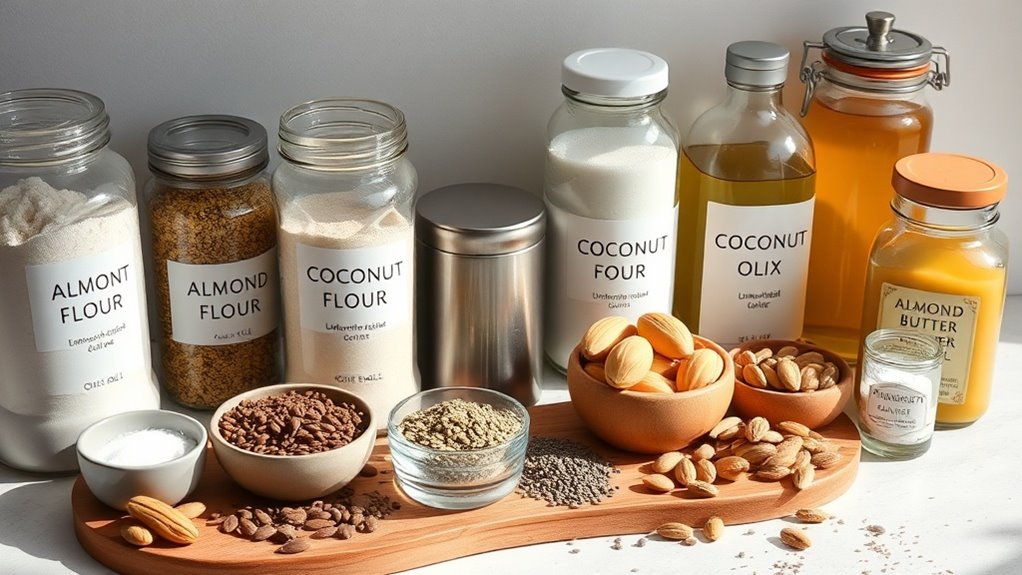
Wondering what sets a keto-start on the right foot? Designing your pantry with purpose gives you steady momentum and fewer temptations. The backbone of any first steps is practical planning: simple, reliable ingredients that keep macros in check while supporting real meals. You’ll want fats that keep you satisfied, proteins that preserve muscle, and low-carb produce that adds fiber and micronutrients without spiking carbs. When you focus on quality and consistency, you’ll find it easier to resist quick fixes and stay the course.
A solid keto pantry starts with fats you actually enjoy. Think extra-virgin olive oil for dressings and low-heat cooking, avocado oil for high-heat sautéing, and a steady supply of butter or ghee for flavor and satiety. Include a fatty fish option like canned sardines or salmon a few times weekly to boost omega-3 intake. For proteins, stock versatile options: eggs, chicken thighs, ground beef or turkey, and inexpensive canned tuna. These items support quick meals, from frittatas to skillet suppers, without straying from your daily targets.
Low-carb staple ingredients help you build meals fast. Nuts and seeds provide texture and crunch, though portions matter. Have almonds, walnuts, chia seeds, and flaxseed meal on hand, along with unsweetened nut butters for snacks and desserts. Vegetables should be fibrous and minimally starchy: leafy greens, broccoli, cauliflower, zucchini, and peppers. Keep a few refrigerated options like seeded cucumbers and asparagus for easy sides. For flavor, stock garlic, onions in moderation, chili flakes, dried herbs, and a couple of low-sugar sauces or condiments that align with your macros.
When it comes to keto pantry substitutions, you’ll find swaps that save time and calories without compromising taste. Use almond flour or coconut flour for baking in place of wheat flour, and thickener options like xanthan gum for sauces. Cauliflower rice or broccoli rice serves as a low-carb base for bowls or stir-fries. You’ll also encounter clever substitutes for traditional bread products, such as cloud bread or lettuce wraps, which can support meals and snacks while keeping carbs low. These keto pantry substitutions help you feel satisfied without slipping up.
For beginner snack ideas, keep portions controlled and protein-forward. Hard-boiled eggs, string cheese, or a small portion of nuts pair well with a carrot stick or cucumber. Yogurt Alternatives or full-fat plain yogurt with a few berries can be a quick pick-me-up, but watch the sugar content. Jerky with minimal added sugars, a small avocado, or tuna salad cups provide portability and adherence to your plan. By prioritizing balanced, real-food snacks, you reduce cravings and boost consistency across days.
In short, a well-stocked keto pantry supports reliable meals, simple substitutions, and practical snacks. Your plan should emphasize variety, practical substitutions, and steady momentum, so you can build confidence with every grocery trip.
Commonly Asked Questions
How Long Do Keto Pantry Items Stay Fresh After Opening?
Opening a pantry item is like unsealing a time capsule: freshness fades after opening. Generally, oils last 1–3 months, nut butters 1–3 months (refrigerated for best taste), seeds and nuts 1–6 months sealed, spices 3–4 years but lose potency. How long pantry opens matter; refrigerate fats to slow rancidity. Store fat/oil containers tightly closed in a cool, dark place. For safety, trust smell and taste; discard rancid flavors immediately.
Can I Substitute Almond Flour for Coconut Flour Equally?
You can’t substitute almond flour for coconut flour equally. Almond flour is higher in fat and moisture; coconut flour is very absorbent. Substitution guidelines: use about 1/4 the amount of coconut flour for almond flour, and add extra liquid or eggs to match texture. For recipes, consider almond flour vs coconut flour ratios carefully, and bake longer at lower temp. Expect denser results with coconut flour; adjust accordingly.
Which Pantry Staples Keep Carbs Under 20G Daily?
Sure—stick to pantry staples like nuts, seeds, canned fish, olive oil, and low-carb veggies to keep carbs under 20g daily. You’ll want mostly non-starchy veg, protein, and fats, while saving larger portions for pantry friendly snacks. This supports everyday macro goals with steady energy. Keep portions small for high-carb items, and track consistently. You’ll stay nourished, evidence-based, and on track without overthinking.
Are All Low-Carb Foods Acceptable on Keto?
Are all low carb foods acceptable on keto? Not all, because keto emphasizes staying in a state of nutritional ketosis, typically under 20–50 g total carbs daily depending on you. You should prioritize whole foods over processed options. How strict should carb limits be on keto? Be consistent and monitor your response—aim for steady ketosis, adjust for activity, and consult guidance if you stall. Track carbs, fiber, and protein to support evidence-based decisions.
How Do I Store Fats to Prevent Rancidity Long-Term?
Storing fats correctly can save your wallet and your health from rancidity long-term. To prevent fat oxidation, keep shelf-stable fats in a cool, dark place; use airtight containers; minimize light exposure; and refrigerate or freeze susceptible oils after opening. Limit heat and exposure to air, and choose fats with higher stability (tats like coconut, olive oil). Regularly rotate supplies to maintain freshness; label dates and discard after signs of off-odor or flavor.