
Keto meal ideas under five dollars aren’t just possible—they can be practical. You can build simple plates with affordable protein like ground turkey, eggs, or sardines, plus greens and a quality fat such as olive oil. Plan around weekly sales, use pantry staples, and bulk up with cabbage or zucchini for volume. It’s about smart swaps and portioning, so you’ll stay on track while keeping costs low—and there’s more to optimize beyond the basics.
Important Facts
- Build meals around a protein portion (egg, canned tuna, ground turkey) with greens and a moderate fat to maximize satiety on a budget.
- Use low-cost fats like olive oil or butter and add healthy fats from avocado or nuts in small portions to stay under $5.
- Choose affordable, versatile vegetables (broccoli, cauliflower, cabbage, leafy greens) and consider frozen options to cut costs.
- Plan meals using bulk staples (eggs, canned fish, cheese) and rotate proteins to prevent boredom while saving money.
- Leverage weekly sales and bulk buys, focusing on high-fat, moderate-protein combos to maximize value and keto adherence.
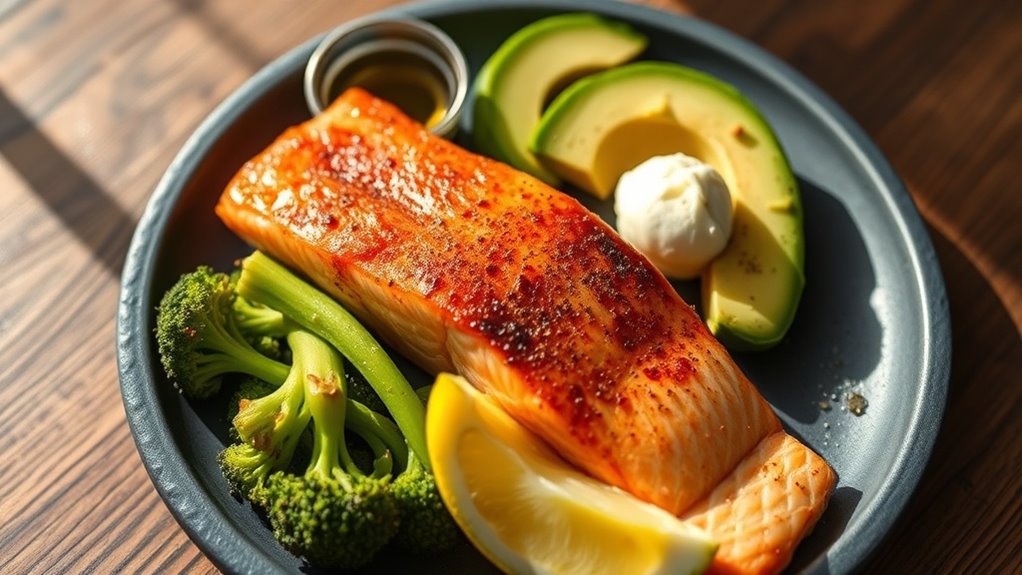
If you’re looking to stay keto without breaking the bank, you can build meals under five dollars per serving without sacrificing flavor or nutrition. You’ll find that budget friendly hacks aren’t about sacrificing quality—they’re about smarter choices, preparation, and lean sourcing. The core idea is to maximize fat and protein while keeping carbs low, using affordable ingredients that pack flavor and satiety. Start with pantry staples you already trust, then layer in proteins and fats that stretch days’ worth of meals. By focusing on versatile items, you reduce waste and keep costs predictable.
Stay keto on a budget with smart prep, versatile ingredients, and bulk buys.
A practical approach is to map each meal around inexpensive protein and a low-cost fat source. Ground turkey, chicken thighs, eggs, sardines, and canned tuna offer protein at a reasonable price. Paired with olive oil, butter, or avocado, you can craft filling plates without overspending. Vegetables matter, but select non-starchy options like leafy greens, broccoli, cauliflower, zucchini, and cabbage to keep carb counts low while providing essential micronutrients. Frozen vegetables can lower cost and improve convenience, aligning with pantry staples you already keep on hand.
When you’re assembling meals, think in terms of simple templates rather than fixed recipes. For instance, a meat-and-veg skillet can be built from a protein portion, a handful of greens, a tablespoon of fat, and a splash of a flavorful, affordable seasoning like garlic, lemon, or paprika. A budget mindful plan often leverages bulk purchase savings: larger eggs, blocks of cheese, or tubs of yogurt can be portioned into several meals. Use herbs and spices to punch flavor without adding carbs or calories that derail cost goals.
To optimize nutrition on a tight budget, prioritize high-fat, moderate-protein combinations that promote satiety. Foods like avocado, olives, and fatty fish contribute healthy fats without needing costly specialty items. For carb control, keep portions of higher-carb vegetables modest and rely on leafy greens and cruciferous vegetables to fill plates. Hydration matters too; drink water, and consider unsweetened tea or coffee to avoid unnecessary calories.
Budget friendly hacks include planning meals around a weekly list, using sales to time purchases, and stocking up on pantry staples that have long shelf lives. Build a small meal rotation to prevent boredom and ensure you’re meeting micronutrient needs. Lean on pantry staples such as canned fish, nuts, seeds, and preserved vegetables to maintain variety without breaking the bank.
In short, staying keto on a tight budget is about deliberate choices, smart bulk buys, and consistent planning. You can enjoy flavorful, nutrient-dense meals under five dollars per serving by relying on affordable proteins, healthy fats, and vegetables, plus proven pantry staples to keep you on track.
Commonly Asked Questions
How Can I Maintain Ketosis on a Tight Budget?
Yes, you can maintain ketosis on a tight budget. Start with budget-friendly strategies like planning meals around cheap protein (eggs, canned tuna) and versatile fats (olive oil, butter), plus affordable leafy greens. Track carbs to stay under your limit and use basic spices to keep meals flavorful. Focus on whole foods, minimize processed items, and batch cook. Acknowledge trade-offs, adjust portions, and stay consistent. Your discipline is your ketone-fuel, not your wallet.
Are Keto Meals Under $5 Kid-Friendly?
Yes, keto meals can be kid-friendly and under $5 with smart choices. You can mix budget-friendly keto staples like eggs, cheese, canned tuna, and frozen veggies into simple, protein-rich plates that kids enjoy. Plan ahead, shop sales, and avoid pricey specialty items. Focus on portion control and variety to keep nutrition balanced. For kid-friendly keto, involve them in prep. Budget-friendly keto works when you prioritize whole foods and convenient, tasty combos.
Can I Substitute Ingredients Without Increasing Cost?
You can substitute ingredients without raising cost. Use cost neutral swaps like swapping chicken thighs for breasts, or canned tuna for fresh fish, and swap cauliflower rice for shredded cabbage. Prioritize whole foods you already have, compare unit prices, and buy in-season produce. Substitute strategies rely on matching macros and calories while keeping price constant. This evidence-based approach helps you maintain keto targets without extra expense, focusing on cost neutral swaps and ingredient versatility.
How to Calculate Macros for Cheap Keto Meals?
Did you know that many people save up to 30% on weekly groceries by tracking macros? You can calculate macros for cheap keto meals by first setting cost effective macro targets, then mapping portions to protein, fat, and carbs. Use macro budgeting to prioritize protein density and filler veggies, and adjust portions to hit targets without blowing budget. Track weights, price-per-gram, and substitutions to stay precise while staying cost-conscious.
Do Cheap Keto Options Affect Taste and Satiety?
Cheap keto options can still taste good, but you’ll often trade some depth for cost. In general, taste vs cost varies by ingredients, planning, and freshness. You may see slightly lower satiety if portions rely on cheaper fillers, yet you can boost satiety vs variety with protein-rich choices and fiber from greens. So, taste vs cost shifts, and satiety vs variety matters—focus on quality proteins, fats, and fiber for balanced satisfaction.