
You can build a keto-friendly day with plain brewed black, green, or herbal teas as near-zero-carb foundations, then flavor them with sugar-free sweeteners, cinnamon, vanilla, or a squeeze of lemon. Consider dairy-free options like unsweetened almond milk or a splash of heavy cream in moderation, and explore cocoa-nib mochas or cucumber-mint green tea for variety. Track portions and label checks to stay within daily macros, and you’ll discover which combinations work best for you.
Important Facts
- Plain brewed black, green, and herbal teas are near zero net carbs, making them keto-safe as a baseline.
- Use sugar-free add-ins (erythritol, stevia, monk fruit) and keto-friendly flavorings (cinnamon, vanilla, lemon) to enhance taste.
- Creamy options like heavy cream or unsweetened almond milk add richness with careful portion control; avoid hidden sugars in blends.
- Try keto-friendly pairings: mocha-inspired black tea, green tea with cucumber and mint, or hibiscus with peppermint, avoiding syrups.
- For cold drinks, opt for unsweetened teas or concentrates, limit caffeine late in the day, and track carb counts from add-ins.
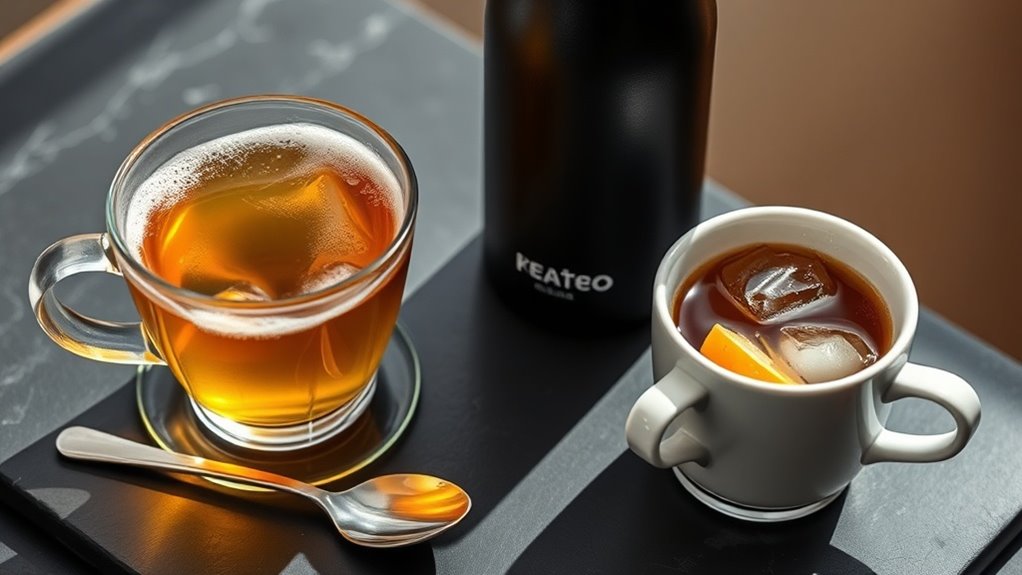
If you’re following a keto diet, you may wonder which drinks truly fit your plan. In this piece, you’ll get a concise look at keto-friendly teas and drinks, with practical guidance you can apply today. Hydration matters on keto, and tea offers a range of options that keep carbs low while supplying flavor and potential health perks. Black, green, and herbal varieties generally provide minimal net carbs when unsweetened, especially if you avoid added syrups or high-sugar mixers. Plain brewed tea is typically a safe baseline: most black and green teas contain about 0 to 1 gram of net carbs per cup, depending on the size of the leaf and steep time. If you’re aiming for precision, check labels or quantify carbs from your preferred brand, since processing and flavorings can alter counts.
For energy and focus, tea can be paired with mindful add-ins that stay within keto limits. Sugar free add ins are a practical way to enhance taste without spiking blood glucose. Common choices include a dash of cinnamon, a few drops of lemon, or a splash of vanilla extract. If you crave creaminess, consider a splash of heavy cream or unsweetened almond milk, noting that portion size matters for calories and carbs. When selecting additions, verify there’s no hidden sugar in flavorings or blends. Sugar free sweeteners like erythritol, stevia, or monk fruit can be used sparingly, but be mindful that some blends may carry trace carbs or fillers—read ingredients and count net carbs accordingly.
In terms of unusual tea pairings, you can experiment with flavor profiles that stay keto-friendly yet elevate your experience. For example, pairing black tea with a touch of unsweetened cocoa or cocoa nibs can create a mocha-like note without significant carbs. Green tea with a slice of cucumber and mint offers a refreshing, low-carb beverage option. Herbal blends with peppermint, rooibos, or hibiscus can provide variety and palette-cleansing notes without added sugars if you avoid flavored syrups. If you enjoy spices, a cinnamon-ginger combination can offer warming flavor while keeping carbs low, especially when sweetened with sugar-free options rather than honey or maple syrups.
When preparing cold beverages, ice cubes made from unsweetened tea or water can extend flavor without extra carbs. If you use pre-made concentrates, verify the carb count and sugar content—some bottled teas ship higher net carbs due to added sugars. For most people, limiting caffeine late in the day helps maintain sleep quality, which supports overall metabolic health on keto. Finally, track your intake with a simple note or app to ensure your chosen teas and additions align with your daily macro targets, reinforcing consistent adherence without sacrificing enjoyment.
Commonly Asked Questions
Do Keto Teas Stall at High Fever or Illness?
No, keto teas won’t stall you during high fever or illness. When sick, staying hydrated matters most, and tea can help, but avoid relying solely on caffeinated options. Your caffeine effects may vary with illness; dehydration can worsen symptoms, so balance fluids with water and electrolyte beverages. If fever persists, monitor symptoms, and consult a clinician. Keep caffeine moderate, and prefer soothing, non-caffeinated or low-caffeine teas to support recovery and hydration.
Can I Drink Tea While Fasting on Keto?
Yes, you can drink tea while fasting on keto. Tea fasting is common and usually calorie-free, helping hydration and appetite control. Opt for plain black, green, or herbal varieties. Watch caffeine impact: caffeine can raise cortisol or disrupt sleep if overconsumed, so limit to 1–3 cups daily depending on sensitivity. Avoid added sugars or milk during fasting. If you’re ill, reactions vary; listen to your body and adjust intake as needed.
Are Herbal Teas Truly Caffeine-Free on Keto?
Herbal teas aren’t truly caffeine-free for everyone, so they may contain negligible amounts of herbal caffeine depending on blends. If you’re strict, check labels and opt for pure infusions labeled caffeine-free. In terms of keto compatibility, most herbal teas fit keto, but watch for added sugars or honey. If you’re sensitive to caffeine, choose blends without guarana or yerba mate. Overall, moderate herbal caffeine aside, they can support keto goals when sugar-free.
Do Tea Additives Break Ketosis, Like Sweeteners?
Yes, most tea additives don’t sabotage ketosis, but some do. If you’re using tea sweeteners, choose keto-friendly options and watch portions, since excessive sweetener carbs can add up. Regarding caffeine content, tea varies; green and black teas have caffeine, while herbal blends are often caffeine-free. In general, small amounts of tea sweeteners won’t break ketosis, but heavy sweetener use can. Track your intake and prefer unsweetened beverages when in doubt.
Is Iced Tea More Keto-Friendly Than Hot Tea?
Iced tea isn’t inherently more keto-friendly than hot tea; both typically fit if unsweetened. About 40–60 mg caffeine per 8 oz cup is common, but iced varieties can be diluted when served over ice, affecting perception of strength. The key is caffeine content and added sugars—both impact ketosis. If you stick to unsweetened iced tea, you can enjoy caffeine without harming ketosis, just monitor total daily intake and avoid sweeteners.