
You might worry keto flavors feel flat, but with the right pairings you’ll wake every bite. You’ll blend bright acids with rich fats—olive oil, avocado, butter, or ghee—to deepen proteins and greens, then finish with a salt touch and a contrasting fat drizzle. Build layered spice notes—garlic, cumin, paprika, pepper—paired with oregano or thyme, with chili for warmth. A splash of lemon or yogurt lightens without losing depth, and fresh herbs add texture to keep each plate compelling.
Important Facts
- Match fats with bright notes: pair olive oil, avocado, butter, or ghee with lemon, vinegar, or yogurt to brighten keto dishes.
- Layer spices and herbs: combine garlic, onion powder, cumin, paprika, chili with oregano, thyme, dill, or basil for balanced profiles.
- Control heat and warmth: use chili powders or cayenne for heat, coriander and paprika for warmth without overpowering flavors.
- Elevate texture with finishing touches: salt to heighten sweetness, a contrasting fat drizzle, and crispy or seared surfaces.
- Keep flavor deliberate and simple: start with a single protein, smart fats, bright acid, and a thoughtful spice blend.
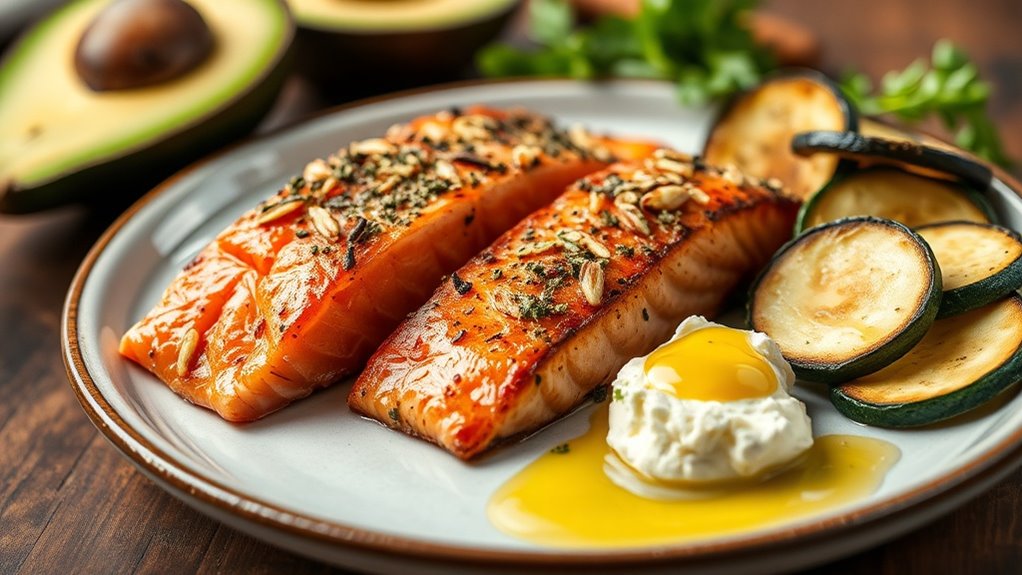
Curious about how to make keto meals exciting? You’re about to discover practical ways to boost flavor without breaking your carb budget. In this look at best-of keto food pairings, you’ll learn how simple tweaks can lift everyday dishes. Think of texture, balance, and nutrition aligning with taste, so meals stay satisfying from first bite to last. By focusing on core principles, you’ll approach flavor deliberately rather than by chance.
First, you consider keto flavor pairings. You’ll match fats with bright, fresh notes to create contrast that feels lively, not heavy. Olive oil, avocado, butter, and ghee give depth, while lemon, lime, vinegar, and a splash of yogurt lighten richness. You’ll notice that acids wake proteins and greens, making dishes feel cleaner and more vibrant. In seafood, poultry, or pork, a squeeze of citrus or a dab of yogurt can transform each bite, reinforcing savor without adding carbs.
Next, you’ll explore keto spice combinations. You’ll build profiles that suit the dish and your mood, from Mediterranean to Tex-Man, then rotate them to avoid flavor fatigue. Common anchors include garlic, onion powder, cumin, paprika, chili, and black pepper. You’ll pair these with aromatic herbs like oregano, thyme, dill, and basil to create depth. When you want heat, go for chili powders or a pinch of cayenne; if you prefer warmth without spice, opt for coriander and paprika instead. The key is layering, not blasting, so the final note isn’t scorching but balanced.
Consider how you plate and season. You’ll use a touch of salt at the end to heighten sweetness in vegetables and crusts, then finish with a drizzle of a contrasting fat to seal flavors. Visual appeal matters; a bright herb scatter, a lemon wedge, or a colorful veggie mix can transform perception and appetite. You’ll also think about protein texture—crispy edges, seared surfaces, and tender centers—since texture complements flavor and keeps meals engaging.
When you cook, you’ll measure impact by simplicity. You don’t need a long list of ingredients to achieve a bold result. A single protein, smart fats, a bright acid, and a carefully chosen spice blend can deliver a remarkable dish. If a recipe feels flat, revisit the pairing: add a new keto flavor pairing or a fresh keto spice combination to re-tune the balance. You’ll build confidence by keeping notes: what worked, what didn’t, and how pleased you were with the result. With these strategies, your keto meals will consistently feel exciting, clear, and accessible while staying intentionally flavorful.
Commonly Asked Questions
Can These Pairings Fit a Strict Keto Macros Plan?
Yes, these pairings can fit a strict keto macros plan, but you’ll want to tailor portions. Track total carbs, fats, and protein for each meal, adjusting to your targets. Pairing macros matter: choose high-fat, moderate-protein options and keep carbs low. Flavor ketosis comes from fat-rich ingredients and fiberless vegetables in moderation. You’ll optimize energy without exiting ketosis by planning portions, monitoring daily totals, and using these pairings to hit your macros precisely.
Do Keto Pairings Affect Appetite and Satiety?
Keto pairings do affect appetite and satiety. When you combine high-fat, moderate-protein foods with fiber-rich veggies, you’re likely to feel fuller longer. Keto appetite can dip between meals if you choose satiating options and time your carbs thoughtfully. Use satiety strategies like protein at every meal and mindful portions. Flavor pairing science helps you pick tasty, filling combos, supporting steady energy. Stay consistent, track portions, and adjust until you feel satisfied.
Are These Combos Suitable for Dairy-Free Diets?
Yes, these combos can be suitable for dairy-free diets. You’ll want dairy-free substitutions like olive oil, avocado, coconut yogurt, or nut milks, and watch for hidden dairy in sauces or flavor packs. Dairy free compatibility hinges on choosing ingredients labeled dairy-free and checking for casein or whey. You’ll enjoy flavorful pairings if you prioritize dairy-free substitutions and verify every component, keeping meals keto-friendly, satisfying, and accessible.
Which Flavors Pair Best With Eggs on Keto?
Eggs pair best with bold fats and savory notes on keto. Think avocado, cheese, olives, and smoked salmon to boost eggs flavor without spiking carbs. Add herbs, butter, or olive oil for moisture and richness. For macros, aim protein around 20–25g and fats to meet your calorie target, keeping keto macros in sight. You’ll enjoy balanced meals that stay satisfying and fiber-light, while still tasting excellent.
How Do Spice Levels Impact Ketosis?
Spice levels lightly affect ketosis: as you increase heat, your appetite may rise, but your ketosis thresholds aren’t instantly crossed. You’ll retain ketosis if total carbs stay low and spice tolerance stays reasonable. Keep flavor balance in check, don’t rely on heat for nutrition. Be mindful of heat perception, because spicy foods can trigger cravings. Track portions, monitor ketosis, and adjust gradually to maintain steady fuel without spikes.