
You’ll notice that high-fat foods can sustain fullness longer when paired with adequate protein and fiber. Evidence shows mono- and polyunsaturated fats slow gastric emptying and modulate glucose and insulin responses, helping control hunger signals. Combine 20–40 g fat with 20–30 g protein and fiber-rich veggies for a reliable fat–protein–fiber matrix. Hydration helps, but the real driver is nutrient-dense, satisfying choices that maintain volume and taste—a pattern that becomes clearer once you see the numbers behind it.
Important Facts
- Fat, protein, and fiber together slow gastric emptying, extending fullness more reliably than fat alone.
- Mono- and polyunsaturated fats (olive oil, avocados, nuts, fatty fish) boost satiety and energy density.
- Target 20–40 grams of fat per main meal, paired with 20–30 grams protein and high-fiber vegetables.
- Hydration supports fullness but is secondary to the fat-protein-fiber meal matrix.
- Real-world data show higher-fat, well-balanced meals lengthen intervals between meals and reduce subsequent hunger.
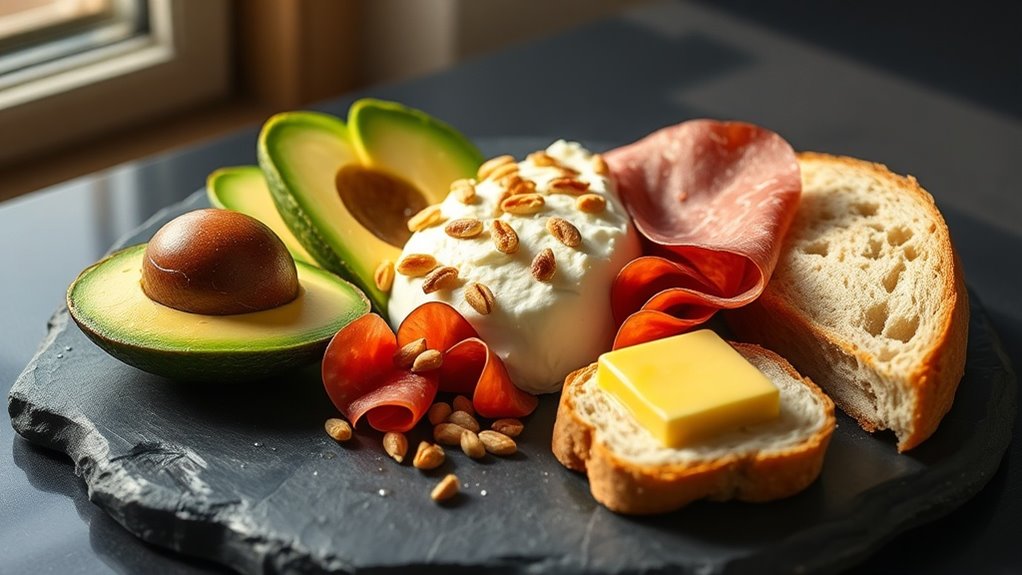
If you’re looking to stay full longer, high-fat foods can play a key role by slowing digestion and boosting satiety. In this examination, you’ll see how fat content, when paired with protein and fiber, influences gastric emptying and subjective fullness. High-fat nutrition tends to delay stomach emptying compared with meals rich in carbohydrates, leading to a more gradual rise in post-meal glucose and insulin. This pattern supports longer intervals between meals, a measurable shift in timing that aligns with observed satiety signals.
High-fat meals slow digestion, extending fullness between bites and stabilizing post-meal glucose.
You’ll find that not all fats have identical effects on fullness. Mono- and polyunsaturated fats, as found in olive oil, avocados, nuts, and fatty fish, contribute energy density and delay gastric transit without triggering excessive energy surplus in a single sitting. These foods also supply micronutrients and bioactive compounds that may modulate appetite hormones, though the magnitude varies by individual physiology. In contrast, saturated fats, common in dairy fats and certain meats, can produce a different gastric response and may be less consistent as satiety modulators across diverse populations. When evaluating high fat nutrition for satiety strategies, you’ll assess both volume and energy density, since meals with higher fat content can be less voluminous yet more energy-dense, creating a balance between perceived fullness and overall calorie intake.
Portion timing matters. If you’re pursuing sustained fullness, consider framing meals to include 20–40 grams of fat per main meal as a practical target, complemented by adequate protein (about 20–30 grams) and fiber-rich vegetables. This combination tends to slow gastric emptying more reliably than fat alone, reducing rapid hunger cues hours after eating. Fat’s influence on fullness also interacts with fiber type and texture; for example, incorporating nuts, seeds, or avocado alongside vegetables can enhance palatability while contributing to satiety. Hydration and beverage choices may subtly affect subjective fullness, but the primary driver remains the fat-protein-fiber matrix within the meal.
From a data-driven perspective, you’ll track hunger ratings and brief meal logs to quantify satiety trajectories. In randomized or real-world studies, higher-fat meals paired with protein and fiber generally show extended intervals between meals and lower subsequent hunger scores, supporting practical consistency for daily eating patterns. When formulating a plan, you’ll emphasize high fat nutrition as a component of a balanced strategy rather than a sole lever. Your choices should reflect personal tolerance, flavor preferences, and long-term adherence, ensuring that satiety strategies remain sustainable and evidence-based.
Commonly Asked Questions
How Do High-Fat Foods Affect Energy Levels Long-Term?
High-fat foods can support steadier energy long-term, but effects vary by timing and total diet. You’ll likely experience improved appetite control and clearer energy when fat timing aligns with activity and meals, aiding appetite vs. energy balance. However, chronic excess fat or poor quality fats can blunt performance and cause fatigue, especially if carbs are chronically low. Prioritize nutrient-dense fats, monitor timing, and favor a balance that keeps you energized throughout the day.
Can High-Fat Foods Aid in Weight Loss?
Yes, high-fat foods can aid weight loss when they help you control portions. You’ll likely experience stronger satiety signaling, which reduces overall intake. Focus on high-fat snacks that pair fiber or protein, like nuts with yogurt or seeds in salads. Track portions, avoid excess ultra-processed fats, and monitor total calories. Use evidence: fats slow digestion, blunt hunger cues, and may support adherence to a calorie deficit over time.
Are There Risks From Consuming Too Many Fats?
Yes, there are risks from consuming too many fats. You can trigger sticky fat myths if you misinterpret results, and excess saturated fats may raise LDL cholesterol. Rely on data, not anecdotes: focus on total fat quality, balance, and portion size. Keep intake aligned with guidelines, monitor markers, and avoid chronic overeating. You’ll reduce risk by prioritizing unsaturated fats, moderating saturated fats, and avoiding trans fats, while maintaining overall energy balance.
Which Fats Are Healthiest for Satiety?
Want to know which fats are healthiest for satiety? The answer: healthy fats like olive oil, avocados, nuts, seeds, and fatty fish support satiety signals rather than spiking hunger. You’ll feel fuller longer as these fats provide steady energy and important micronutrients. Your body benefits from omega-3s and monounsaturated fats, which help regulate appetite. Do you track portions to align with your satiety cues and overall goals?
Do Fats Impact Blood Sugar Stability?
Yes, fats can influence blood sugar stability. When you include fats with meals, fats slow gastric emptying and reduce glycemic spikes, helping fat driven glucose stabilization. Your body uses fats for energy, limiting rapid glucose rises. However, the effect varies by fat type and overall diet. Focus on balanced portions of healthy fats, fiber, and protein. Track your blood sugar responses to different fats to personalize your fats and blood sugar strategy.