
Does the idea that warmth equals weight loss hold up, or is it the nutrient mix that really matters for winter fat burn? You’ll want broths that pack protein and fiber, with greens, crucifers, and mushrooms for fullness, while keeping starches minimal. Creaminess can come from cauliflower or avocado in small portions, plus healthy fats like olive oil or coconut milk. Start batch-cooking so you can rotate lean, vegetable-forward, and fiber-rich creamy options as you pursue steady energy and sustainable results.
Important Facts
- Use bone broth as a protein-rich base to support satiety and low-carb goals.
- Add leafy greens and cruciferous vegetables for volume, fiber, and micronutrients.
- Incorporate creamy textures with cauliflower or avocado to avoid starches.
- Include lean proteins like shredded chicken or turkey while moderating portions for a modest deficit.
- Batch-cook and portion lunches or dinners, pairing broth-based and fiber-rich creamy soups for weekly variety.
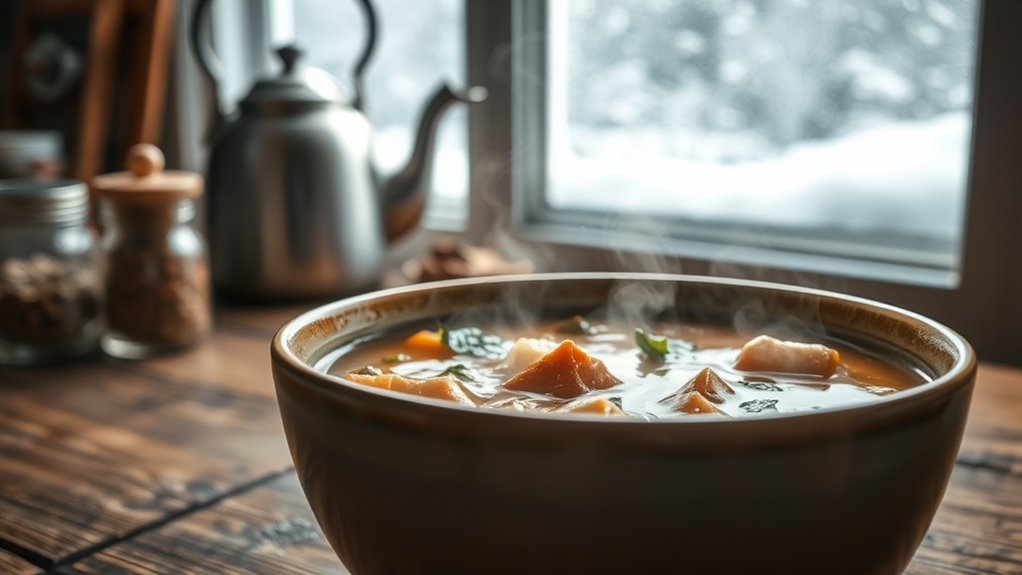
Winter can be tough on cravings, but low-carb soups can help you stay satisfied while supporting fat loss. When you’re choosing soups for winter fat burn, focus on protein density, fiber, and vegetables that deliver volume without excess carbs. A well-rounded broth or creamy base can curb appetite, stabilize blood sugar, and keep you in a modest daily deficit. Start with clear, protein-rich options like chicken or turkey bone broth stirred with leafy greens and a handful of mushrooms. These ingredients supply micronutrients and satiating macros without loading you up on calories. If you prefer a heartier texture, blend in small portions of cauliflower or white beans, but monitor portions to maintain your low-carb target.
Winter-friendly, high-protein soups curb cravings without piling on carbs.
You’ll get the best results by pairing soups with deliberate meal planning. Budgeting meal plans save both money and mental energy, letting you stick to a consistent fat-loss strategy. Map out a week of soups with a simple rotation: a lean protein-based broth, a vegetable-forward option, and a fiber-rich, creamy-style soup made with cauliflower or avocado for creaminess without starchy thickeners. Keeping a grocery list that emphasizes cheap, nutrient-dense ingredients helps you stay on track and reduces impulsive buys. Batch-cook on weekends and portion into single servings for quick lunches or dinners, then refrigerate or freeze as needed. This approach minimizes decision fatigue, a known barrier to adherence in real-world diets.
From a satiety standpoint, leverage fiber and protein to maximize fullness per calorie. Add cruciferous vegetables, leafy greens, and zucchini to soups; they add volume with minimal carbs. Include protein servings like shredded chicken, tofu, or turkey meatballs to sustain energy and support muscle maintenance during fat loss. When drafting your soups, you’ll benefit from a modest fat source, such as olive oil or a splash of coconut milk, to improve palatability and ongoing adherence without significantly increasing calories. Season with herbs and spices rather than high-sugar sauces to keep flavor intact without calories spiraling.
To sustain motivation, track progress with simple metrics: weekly weight, waist circumference, and daily hunger ratings. Adjust portions rather than entire recipes if you notice plateaus. In your kitchen toolkit, clever garnish ideas can elevate perception of fullness without extra carbs; consider a squeeze of lemon, a few fresh herbs, paprika dusting, or a dollop of Greek yogurt. These touches can improve satisfaction and variety, supporting continued adherence. Also review your budgeting meal plans regularly to account for price fluctuations and seasonal produce. By prioritizing high-protein, high-fiber soups, you’ll stay guided by evidence: steady energy, better appetite control, and a winter-friendly path to fat loss.
Commonly Asked Questions
Can I Eat Soup on a Ketogenic Diet?
Yes, you can eat soup on a ketogenic diet. You’ll want soups that emphasize fats and protein while keeping carbs low. When evaluating soup options, look for creamy bone or vegetable broths with added fats (cream, butter, olive oil) and lean meats or seafood. Discuss ketosis benefits and ensure label accuracy. Stick to non-starchy vegetables, avoid hidden sugars, and monitor portions to maintain ketosis while you assess how you feel on different soups.
Do Low-Carb Soups Spike Blood Sugar?
Blood sugar won’t spike for every bite, but it can if your soup has added sugars or high-carb ingredients. You can minimize risk with lean proteins, non-starchy veggies, and mindful portion sizes. When you choose low carb impact soups, you’ll likely see steadier readings. Watch labels, use fiber-rich ingredients, and monitor how you respond to different recipes. If your numbers stay steady, you’re keeping blood sugar in check while enjoying warmth.
Is Internet Protein Powder Necessary in Soup?
No, internet protein powder isn’t necessary in soup. You’ll get protein from meat, eggs, or dairy, and a subtopic approach can help you track protein goals without adding powder. If you choose protein powder, consider protein powder relevance: assess taste, texture, digestion, and added sugars. You can meet needs with whole foods first, using powder only when you’re aiming for a specific target or convenience, but it isn’t essential for most soups.
How to Store Soup Without Losing Nutrients?
Storing soup securely supports steady nutrient retention. To minimize nutrient loss, cool quickly, refrigerate within two hours, and store in airtight containers. Reheat gently to avoid degrading heat-sensitive vitamins. Limit boiling and use the microwave sparingly. Store portions in small servings to reduce exposure, and label dates. For nutrient retention, choose clear, plain broths over heavily salted varieties, and minimize reheating cycles. You’ll protect flavors and nutrients while keeping soups safe and satisfying.
Are Canned Soups as Healthy as Homemade?
Canned vs homemade isn’t universally better or worse. Homemade soups let you control ingredients, including sodium content, and you can tailor macronutrients to your goals. Canned options are convenient but often higher in sodium and sometimes additives. If you choose canned, look for low-sodium versions and simple ingredient lists. Ultimately, both can fit a low-carb, winter-fat-burn plan, but reading labels helps you manage sodium and overall quality.