
Did you know that non-starchy vegetables can fill half your plate at a keto-friendly 5–10 g net carbs per cup? You’ll want leafy greens like kale, spinach, and arugula, plus cruciferous picks like broccoli and cauliflower, as your base, then add peppers or zucchini for texture. Steam, roast, or light-sauté to preserve nutrients, and portion 2–3 cups of veggies daily to fit your net-carb targets while pairing with protein and fats for fullness—but there’s more to optimize, and you’ll want to plan ahead.
Important Facts
- Focus on leafy greens (kale, spinach, arugula) and cruciferous veg (broccoli, cauliflower) for low net carbs and high nutrients.
- Include non-starchy veggies like peppers and zucchini to add texture and volume within carb goals.
- Plan 2 daily vegetable servings, roughly 6–8 g net carbs per meal if aiming for a 20 g daily carb limit.
- Use steaming or roasting to preserve nutrients while keeping carbs and fats manageable.
- Pre-portion and rotate vegetables with protein and fats to boost fullness and support ketosis.
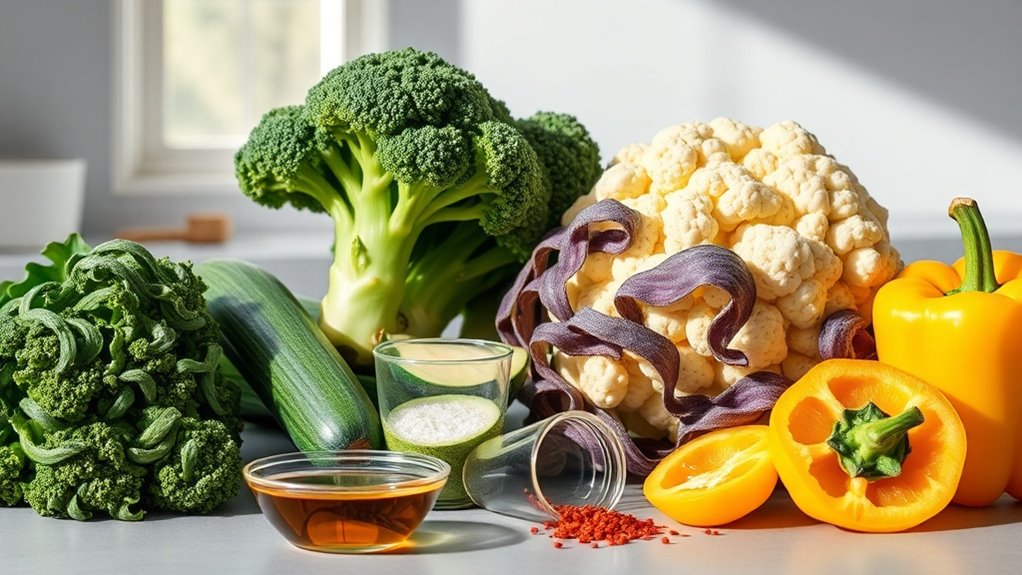
Keto meal prep can feel intimidating, but choosing the right vegetables makes it simple and sustainable. You’ll benefit from a practical approach that centers on evidence-based choices, portioning, and consistent routines. When you plan, you’re shaping your daily intake to support ketosis while maximizing micronutrients, fiber, and satiety. Start with leafy greens and cruciferous vegetables as your base because they offer minimal net carbs but high volume, helping you feel full without spiking glucose. Kale, spinach, and arugula pack vitamins A, C, K, and minerals, while broccoli and cauliflower provide fiber and phytonutrients that support gut health and steady energy levels.
Keto-friendly vegetables: leafy greens and cruciferous bases fuel fullness with minimal net carbs.
Your Keto meal planning should balance variety with predictable macros. Target roughly 2 to 3 cups of non-starchy vegetables per day, distributed across meals, depending on your total daily carbohydrate allowance. Include a colorful mix: greens for density, peppers and zucchini for texture, and cruciferous options like cabbage or Brussels sprouts for crunch and antioxidant content. When you rotate vegetables, you reduce sensory fatigue and ensure a broader spectrum of nutrients, without increasing total carbs.
Vegetable portioning is a practical skill you can master quickly. Use standard serving sizes: about 1 cup raw leafy greens or 1/2 cup chopped non-leafy vegetables per meal as a baseline, then adjust to fit your personal carb ceiling. For example, if you aim for 20 grams net carbs per day, you might allocate 6 to 8 grams net carbs per meal from vegetables, leaving room for proteins, fats, and sauces. Track portions with a simple app or a small notebook until you’re confident in estimation. When you cook, methods matter: steaming or sautéing with minimal added fat preserves nutrients and keeps net carbs low, while roasting enhances flavor and texture without dramatically changing carb totals.
In practice, incorporate at least two vegetable servings per day, varying types to optimize micronutrient intake. Use olive oil, butter, or avocado oil for cooking to maintain fat macros without adding hidden carbs. For texture and satiety, combine vegetables with protein and a fat source in each meal; this improves fullness and reduces snack cravings between meals. If you’re crunched for time, pre-wash and portion vegetables in containers for rapid assembly, maintaining consistency in your portions to support ongoing Keto meal planning and Vegetable portioning. By keeping a simple routine, you’ll sustain ketosis, enjoy meals, and reduce decision fatigue during busy weeks.
Commonly Asked Questions
How to Track Net Carbs in These Vegetables Accurately?
How to track net carbs accurately, you’ll weigh vegetables raw, read nutrition labels, and subtract fiber and sugar alcohols when appropriate. To ensure accuracy, use a consistent database or app, double‑check serving sizes, and account for variety. Keep a simple log of portion sizes and total carbs, then subtract fiber to get net carbs. For accuracy, use the same measurement method every time and note any ingredients that affect carb totals.
Can I Prepare These Veggies in Advance Without Nutrient Loss?
Yes, you can prep veggies ahead, but some nutrient loss happens. Leafy greens freeze well if blanched first; you can steam cruciferous veggies to save texture. For best results, steam broccoli, cauliflower, or kale for 2–4 minutes, chill rapidly, then freeze in airtight bags. That preserves vitamins better than raw freezing. Plan meals by blanching in small batches and labeling dates, so you minimize quality decline and maximize keto-friendly fiber.
Which Oils Pair Best With These Veggies for Keto?
You’ll find that oil pairing with veggies matters for keto, and you should choose fats with minimal carbs and stable heat. Use olive oil, avocado oil, or butter for sautéing, roasting, or finishing, and avoid high-carb oils. Track net carbs for veggies before adding oil, then account for the fat you choose. This keeps meals precise and practical while supporting steady ketosis and reliable energy.
Are There Any Hidden Sugars in Common Keto Vegetables?
Hidden sugars aren’t a big worry in typical keto vegetables, you just want to watch portions. Most leafy greens, cruciferous vegetables, and peppers have negligible sugars and high fiber, helping steady blood glucose. If you’re aiming for precision, measure carbs per serving and prefer non-starchy options. You’ll stay in ketosis by tracking total carbs, not labeling every veggie as “sweet.” Rely on fiber-rich keto vegetables to balance appetite and macros.
Do Portions Vary for Men vs. Women on Keto?
Yes, portions can differ for male vs female differences, but not in hard rules. You should base intake on total energy needs, activity, and body composition. Use portion guidelines that align with your goals, monitor hunger, and adjust protein and fats accordingly. Men often require more calories, but the keto framework remains the same: prioritize nutrient-dense veggies, fiber, and electrolytes. Track progress, refine macros, and consult a clinician if you have medical conditions or special needs.