
If you’re after quick keto dinners, a stir-fry is hard to beat: high-protein sear, bright vegetables, and a fat-rich glaze come together fast. Start with chicken, beef, shrimp, or tofu, sear for color, then rest briefly before finishing with aromatics and a tamari-leaning sauce. Add broccoli, peppers, and mushrooms in order of tenderness, a splash of rice vinegar, and a hint of xanthan gum if you like it glossy. You’ll want to adapt this approach for your week—and you’ll soon see why.
Important Facts
- Lean proteins as the star: chicken, beef, pork, shrimp, or tofu, seared quickly for flavor.
- Ketogenic bases: olive or avocado oil with garlic, ginger, and a splash of low-sodium soy/tamari.
- Non-starchy veg strategy: sauté in order of tenderness (broccoli, peppers, mushrooms) for crisp texture.
- Light sauces and thickeners: use tamari, rice vinegar, tiny keto-friendly sweetener, and minimal xanthan gum if needed.
- Finishing balance: brighten with citrus or lime, finish with a sesame oil toss, and add a fat-based gloss for rich mouthfeel.
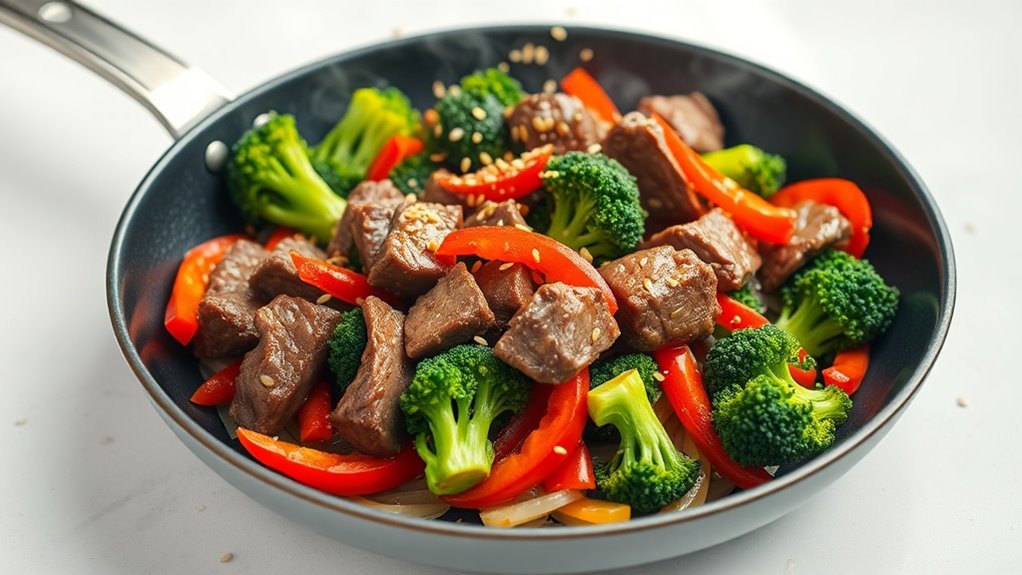
Looking for fast, keto-friendly dinners? You’re in a good place, because stir-fries can deliver meals that are low in carbs, high in fat, and ready in minutes. The appeal isn’t just convenience; it’s the chance to maximize nutrient density with lean proteins, non-starchy vegetables, and smart fats. When you plan a keto stir-fry, you’ll want to keep portions protein-forward and choose fats that support ketosis, such as olive oil, avocado oil, or coconut oil. Evidence suggests that quick-cooking methods help preserve micronutrients in vegetables while keeping texture appealing, which matters for satiety and ongoing adherence.
You’ll find that a strong base label—ginger, garlic, and a splash of an umami-rich ingredient—makes a big difference in flavor without adding empty carbs. For protein, choose chicken, beef, pork, shrimp, or tofu, and sear it quickly to develop color and aroma. The vegetables should be non-starchy: broccoli, bell peppers, snow peas, zucchini, mushrooms, and spinach all work well and keep net carbs reasonable. To balance moisture and flavor, use low-sodium soy sauce or tamari, a little rice vinegar, and a keto-friendly sweetener only if your plan allows tiny amounts. This approach keeps you within daily carbohydrate targets while delivering satisfying taste.
In terms of technique, you’ll want to preheat your skillet or wok until it’s hot, then introduce protein first to seal juices. Remove it briefly, sauté aromatics, and return the protein so flavors mingle quickly. Add vegetables in order of tenderness, starting with firmer items and finishing with delicate greens. Stir-frying should be rapid, so keep your cut sizes uniform and avoid crowding the pan, which can steam vegetables rather than sear them. A final toss of fat helps carry flavor and improves mouthfeel. If you prefer a thicker sauce, whisk a tiny amount of xanthan gum or a low-carb slurry with broth, but keep it light to avoid carb load creep. This aligns with evidence that minimal additives preserve macro ratios while delivering texture.
When you’re selecting sauces, read labels for hidden sugars and carbs. Quick substitutions, such as swapping out honey for a dash of monk fruit within a sauce, can preserve keto targets without sacrificing savor. Spice balancing matters too: balance heat with citrus or a touch of acidity to brighten the dish and prevent the flavor from dominating the palate. If a recipe feels flat, consider a pinch of sesame oil or a squeeze of lime to reestablish contrast. You’ll find that consistent technique, mindful substitutions, and deliberate spice balancing yield dinners that are both quick and scientifically grounded.
Commonly Asked Questions
Are All Stir-Fries Keto-Friendly by Default?
Yes, not all stir-fries are keto-friendly by default. You should watch sauces, as many contain sugar or high-sugar ingredients. When you cook, opt for low-carb veggies and proteins, and use soy sauce or tamari, garlic, ginger, and healthy fats. Are all stir fries keto friendly? No, especially with sweet sauces. If you’re aiming for precision, track net carbs and choose high-protein, low-carb options to keep your meal keto-conscious.
Can I Use High-Sugar Sauces in Keto Stir-Fries?
Yes, you can, but you should limit high-sugar sauces and choose low-sugar options. High-sugar sauces spike carbs and can kick you out of ketosis, so use alternatives like soy sauce, tamari, hoisin in small amounts, or make sauces with sugar-free sweeteners, vinegar, and aromatics. Read labels for hidden sugars, count net carbs, and balance with protein and vegetables. Can i use them occasionally? Prefer lower-sugar choices for consistent keto results.
What Is the Fastest Way to Meal-Prep Keto Stir-Fries?
Ever wondered the fastest way to meal-prep keto stir-fries? You do it by batch-cooking proteins, chopping veggies, and pre-making sauces, then portioning into containers for quick dinners. Fast prep tips include fully preheating the pan and using pan-friendly veggies like broccoli, mushrooms, and snap peas. Store components separately if needed to keep texture. This approach is evidence-based, concise, and keeps carbs in check while you grab a ready-to-heat meal.
Which High-Fat Ingredients Boost Keto Macros Best?
High fat ingredients that boost keto macros include extra-virgin olive oil, avocado oil, butter, ghee, heavy cream, and coconut oil. You’ll maximize calories and fat grams by adding generous portions at cooking and finishing stages. For variety, stir in fatty fish like salmon, or poultry skin. Keep overall carbs low and monitor portions to stay in ketosis. These high fat ingredients support keto macros while keeping you satiated and energized.
Are There Any Non-Meat Keto-Friendly Stir-Fry Options?
Yes, you can: non-meat options, keto friendly veggies, seeds, and tofu. You can rely on crunchy textures, color, and fiber to build satisfaction. For protein, use paneer, tempeh, or tofu; for fat, add avocado oil, sesame oil, or olive oil; for flavor, rely on garlic, ginger, soy sauce, or tamari. Balance macros, monitor carbs, and choose low-carb veggies like broccoli, zucchini, mushrooms, and leafy greens.