
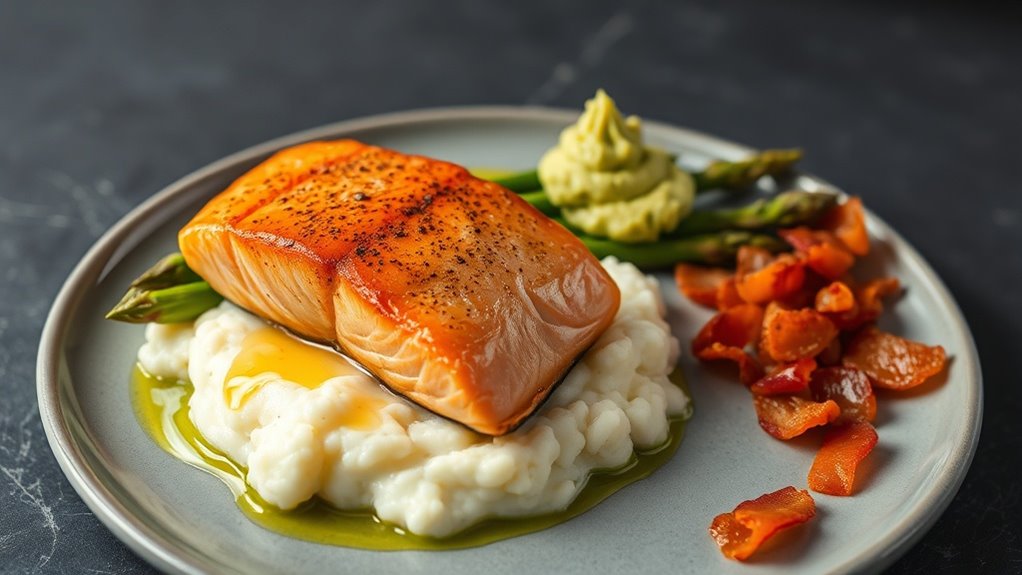
Post-workout keto fuel should balance high-quality protein with a controlled carb boost to replenish glycogen without tipping you out of ketosis. Target 20–40 g of leucine-rich protein (like whey, poultry, or fish) plus 10–30 g net carbs from strategic sources, plus electrolytes (sodium, potassium, magnesium) to support recovery. A fat-forward pairing—grilled salmon with olive oil and broccoli, or a protein shake with berries and coconut oil—helps you recover while staying in ketosis. Consider how to tailor this for your training.
Important Facts
- Prioritize high-quality, leucine-rich protein post-workout (20–40 g) to maximize muscle protein synthesis within a keto framework.
- Pair protein with a small amount of fast-acting carbs (net 10–30 g post-workout) to replenish glycogen without exiting ketosis.
- Rehydrate with electrolyte-rich drinks; emphasize sodium (1–1.5 g per liter sweat) plus potassium, magnesium, and calcium.
- Build recovery meals around protein, controlled carbs, vegetables, and fats (examples: salmon with broccoli in olive oil; protein shake with berries and coconut oil).
- Track individual carb responses to balance glycogen restoration with maintaining ketosis for consistent progress.
Post-workout fueling on a keto plan is achievable and efficient when you prioritize protein and electrolytes alongside moderate carbs and fats. In this approach, you’ll focus on replenishing glycogen stores enough to support training continuity while maintaining ketosis. Your post-workout nutrition should emphasize high-quality protein to stimulate muscle repair, a measured amount of carbohydrates to help replenish liver and muscle glycogen, and electrolytes to offset exercise-induced losses. Keto macros typically involve modest carbohydrate intake, adequate protein, and fats as the primary energy source. The exact targets vary by person, but a practical range is protein around 1.6–2.2 grams per kilogram of body weight, fats filling the remaining energy needs, and carbohydrates kept to a level that supports recovery without breaking ketosis.
You’ll want to choose protein sources that are rich in leucine and have high digestibility, such as whey protein, poultry, fish, or eggs. Consuming 20–40 grams of high-quality protein post-workout can maximize muscle protein synthesis, especially when paired with a small amount of fast-acting carbohydrate. For many people, 10–30 grams of net carbs after training can aid glycogen restoration without completely disrupting ketosis, depending on activity duration and intensity. If you train intensely or for extended periods, it’s reasonable to increment carbs slightly on training days while keeping total daily carb targets within your keto plan.
Electrolyte management matters after workouts, particularly on keto, where insulin fluctuations and fluid loss influence sodium, potassium, calcium, and magnesium balance. Rehydrate with water or an electrolyte beverage containing sodium and potassium. A practical target is to replace about 1–1.5 grams of sodium per liter of sweat, with additional potassium as tolerated by your digestion. Including a small amount of magnesium can support muscle relaxation and sleep, especially if you train in the late afternoon or evening. You’ll also want to ensure your meals at the next feed contain sufficient sodium and electrolytes to support recovery, as low electrolyte intake can blunt performance and cause cramping.
Meal composition matters for post-workout nutrition on keto. Assemble a recovery meal with protein, a controlled portion of carbohydrates, non-starchy vegetables, and fats. For example, a savory option might be grilled salmon with a side of steamed broccoli tossed in olive oil and a small portion of quinoa, or a protein shake blended with a handful of berries and a teaspoon of coconut oil. Keep fat as the main energy driver while you add just enough carbs to support recovery without spiking insulin beyond your plan. Over time, track how your body responds to different carb amounts and adjust so your workouts feel supported and ketosis remains intact. This evidence-based, precise approach keeps you consistent, resilient, and focused on steady progress.
Commonly Asked Questions
Can Keto Meals Replenish Glycogen Effectively After Intense Workouts?
Yes, keto meals can replenish glycogen, but not as quickly as higher-carb options. You’ll optimize recovery timing by prioritizing adequate total carbohydrates within your daily target and timing them around workouts, if possible. Focus on glycogen replenishment with enough glucose precursors and clear protein for repair. Ketosis may slow rapid glycogen uptake, so plan post-workout carbs strategically, while fats support overall energy. Track your response and adjust macros to balance performance and ketosis.
How Soon After Exercise Should I Eat Keto Meals?
Right after you finish, aim for within 0–2 hours to optimize post workout timing. You’ll maximize glycogen replenishment and support recovery when you combine a keto meal with adequate protein and electrolytes. While carbs aren’t required on keto, timing matters: don’t wait hours. Prioritize a balanced post-workout meal, monitor how you feel, and adjust portions to your activity level. Evidence suggests timely intake supports recovery without compromising ketosis.
Are Ketones Sufficient for Post-Workout Recovery Instead of Carbs?
Ketones alone aren’t enough for optimal post‑workout recovery. While ketone utilization can support energy, you still need glycogen synthesis from carbs to replenish muscle glycogen stores effectively. In practice, include a targeted carb window after high‑intensity sessions if you’re prioritizing recovery, while keto-friendly fats provide sustained energy. Balance is key: combine protein, hydrate, and monitor how your body responds to timing, intensity, and carb amount for best results.
Can I Use Protein Shakes With Keto Meals Post-Workout?
Yes, you can use protein shakes with keto meals post-workout. After resistance training, aim for about 20–40 g protein with each shake to support recovery. A practical approach is a keto smoothie with whey or collagen, plus fats like avocado. Protein shakes fit well into your macros, keep you satiated, and don’t derail ketosis. Remember hydration and timing matter; consistency, not perfection, drives progress.
What Are Quick Keto Snacks for Immediate Post-Workout Fuel?
Quick snacks for post workout fuel include a ready-made protein shake, a handful of almonds with cheese, or Greek yogurt with a few berries. You’ll want carbs minimal but enough to aid recovery, and fats to sustain you. Choose high-quality protein and electrolytes if you sweated a lot. Keep portions simple and portable; aim for 15–30 grams protein soon after training. These quick snacks support recovery without derailing ketosis.