
Studies show fatigue from long weeks drops your willpower by about 20%. You’ll want simple, reliable keto meals that sustain energy: think roasted chicken with broccoli and cauliflower rice, eggs with avocado, and tuna salad in lettuce wraps. Batch-cook ahead, keep easy snacks like cheese sticks, nuts, and olives handy, and use portable, low-carb options when you’re on the move. Want a practical plan you can start tonight? Let’s map it out.
Important Facts
- Prioritize protein and healthy fats at every meal to sustain satiety and steady blood sugar during busy weeks.
- Batch-cook simple meals (roasted chicken, broccoli, cauliflower rice) for multiple keto-friendly lunches and dinners.
- Use in-office substitutions (tuna lettuce wraps, carrot sticks with guacamole) to curb carb temptations.
- Plan a two-to-three dinner and two breakfast/lunch options with a shopping list to reduce decision fatigue.
- Stay hydrated with electrolytes, use quick stress-reduction routines, and adjust portions to maintain ketosis and energy.
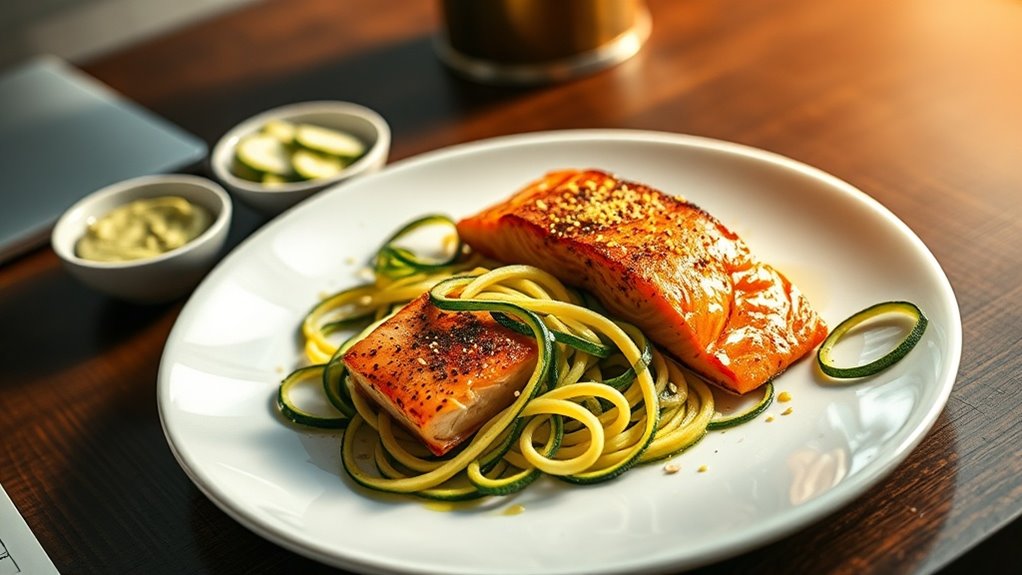
When your work weeks feel nonstop, a Keto-friendly plan can keep energy stable and cravings in check. You’ll find that small, steady changes beat sheer willpower on hectic days, and a well-structured keto approach helps you stay productive without spiraling into fatigue or bingeing. Start with simple, reliable meals you can rotate, so you don’t spend mental energy deciding what to eat. A practical keto mindset hinges on two ideas: stress management through predictable routines and meal planning that fits a busy schedule.
First, prioritize protein and healthy fats at every meal to maintain satiety and steady blood sugar. Think eggs with avocado for breakfast, a turkey avocado wrap using a low-carb tortilla, or a hearty chicken salad with olive oil dressing for lunch. Keep snack options on hand that are easy to grab, like cheese sticks, nuts, olives, or jerky without added sugars. Consistency matters more than perfection, so aim for routine feeding windows and balanced plates rather than chasing every macro target to the gram. When you’re short on time, batch cooking becomes your best ally: a roasted sheet of chicken, broccoli, and cauliflower rice can cover multiple meals, reheat quickly, and stay satisfying.
Prioritize protein and fats at every meal, with easy batch-cooked, satisfying options.
Stress management is integral to sticking with keto during pressure at work. When deadlines loom, you’ll benefit from a short, preplanned response instead of improvising under stress. Prepare a 5-minute routine: a glass of water, a quick breathing exercise, and a quick review of today’s meals. This reduces impulsive choices driven by cortisol and keeps your plan on track. If you’re tempted by carb-heavy options in the office, choose a keto-friendly swap—carrot sticks with guacamole instead of crackers, a tuna salad lettuce wrap in place of a sandwich, or a smoothie with unsweetened almond milk, spinach, protein powder, and a few berries. Clear, practical choices minimize decision fatigue and support steady energy.
Meal planning continues to be your most effective tool. Use a simple weekly template: two to three dinner ideas, two lunches, and two breakfasts that can be prepared in bulk, plus quick snacks. Shop with a list tied to that plan to avoid spontaneous purchases. If your schedule shifts, you can swap similar meals without breaking your macro targets. Hydration is often overlooked but essential; include water with electrolytes on long workdays to prevent fatigue and cravings. Consider a mini cooling-down ritual after stressful meetings—refill your water, reassess your hunger signals, and adjust portions if needed rather than spiraling into excess. Over time, the routine becomes automatic: you eat confidently, you remain in ketosis, and you sustain performance.
Commonly Asked Questions
How Many Keto Meals per Day Are Recommended During Busy Weeks?
Honestly, you don’t have to stress about it: 2–3 keto meals per day are typically plenty during busy weeks. You’ll stay steady, avoid crashes, and still hit macros. Think flexibility: if mornings are chaotic, have a balanced snack instead of a full meal. Meal timing and macro counting matter, but don’t derail your day. You’ll feel in control, not overwhelmed, and your plan stays practical and evidence-based.
Can I Adjust Macros When I’M Short on Time?
Yes, you can adjust macros when you’re short on time. Start with quick macro tweaks: prioritize protein to preserve satiety, and reduce carbs slightly if meals are lean. Increase fats to meet energy needs, or swap in a ready-made keto-friendly option. Track roughly, not perfectly, and don’t linger on numbers. Use protein shakes or easier, high-fat snacks to fill gaps. Adjusting macros is practical, evidence-based, and helps you stay in ketosis during busy weeks.
Are Keto Snacks Okay for Quick Energy Boosts?
Yes, keto snacks can give you quick energy, but choose options with protein and healthy fats and minimal carbs. You’ll want steady fuel, not a sugar crash. Keep snack timing consistent and pair small bites with water or electrolytes. Opt for nuts, cheese, or a boiled egg, and watch portions to avoid excess calories. Consistency beats hype, so plan ahead and listen to your body for sustained performance.
How Do I Handle Dining Out on a Keto Plan?
Dining out on a keto plan means you stay flexible and choose well. Start with menus labeled “keto” or ask to customize: swap sides, request extra veggies, and avoid hidden carbs. Track restaurant friendly macros by prioritizing protein, fats from olive oil or butter, and light sauces. Choose grilled, not breaded, items; sauces on the side; and skip sugary drinks. You can succeed with mindful portioning and clear, evidence-based choices.
Is Fasting Compatible With a Stressful Work Schedule?
Fasting compatibility? Yes, it can fit, even with a chaotic schedule, if you plan. You’ll adapt with practical timing, hydration, and mindful meals. When work spikes, use shorter fasting windows or skip meals strategically rather than all at once. For stress management strategies, prioritize consistency, sleep, and balanced electrolytes. You’ll feel resilient, energized, and steady, not rushed, because you’ve built a plan you actually follow.