
You might think bulk keto is pricey or bulky to manage, but with a smart plan you can stock protein, fats, and staples that stay fresh and still save time and money. Focus on freezer-friendly proteins, canned seafood, frozen veggies, low-carb flours, high-fat dairy, and bulk oils, then rotate, label, and portion to minimize waste. Ready to map a simple shopping list and storage strategy that fits your schedule and budget? Let’s build it.
Important Facts
- Prioritize bulk proteins that freeze well: chicken thighs, ground beef, pork, seafood like salmon for quick keto meals.
- Stock frozen veggies (leafy greens, broccoli, cauliflower) to boost volume with minimal carbs.
- Add high-fat dairy and nuts/seeds in controlled portions for sauces and snacks.
- Buy oils in bulk (olive, avocado, coconut) and low-carb pantry staples (almond flour, cocoa powder) for keto cooking.
- Implement a simple rotation and storage plan (label dates, vacuum seal, weekly inventory) to minimize waste.
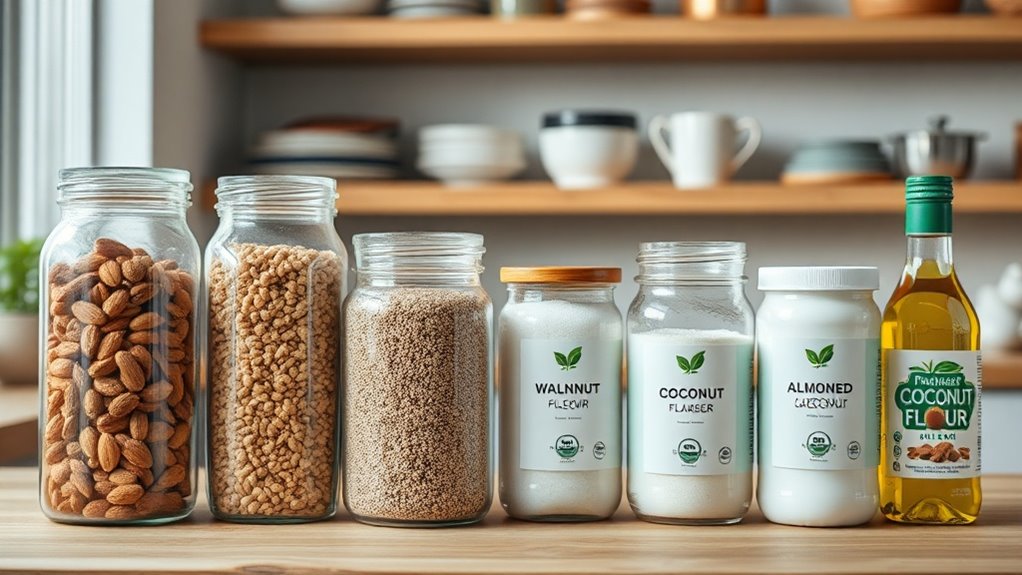
Stock up on keto staples that stay fresh and help you stay in ketosis without breaking the bank. When you shop in bulk for keto-friendly ingredients, you set yourself up for consistent meals, fewer trips to the store, and better budget control. You’ll want to prioritize items that have long shelf lives, low carb content, and versatile uses in a range of meals. Think ahead about what you actually cook week to week, so you don’t end up with unused bulk buys that spoil or go stale. A smart bulk strategy starts with proteins that freeze well, such as chicken thighs, ground beef, pork, and seafood like salmon, which stay flavorful after freezing. Stock and slow-cook more affordable cuts, then portion them for quick meals. Frozen vegetables, especially leafy greens, broccoli, and cauliflower, preserve nutrients while keeping costs down and reducing waste. They’re ready to blend into soups, stews, or casseroles without needing extra prep.
Whole, unsalted nuts and seeds are excellent for snacking and for adding texture to salads and baking. They’re calorie-dense, so portion control matters, but their fat profile fits keto needs. Higher-fat dairy products, like hard cheeses, butter, and cream, often have longer shelf lives when stored properly and can be used in sauces, coffees, and baked dishes. When buying oils, choose olive oil, avocado oil, and coconut oil in bulk; they’re stable and versatile across cooking methods. For pantry staples, rely on unsweetened, low-carb products: coconut flakes, cocoa powder, and almond flour expand your recipe options without raising carbs. Canned tuna, sardines, and chicken are reliable for quick meals, especially when fresh options aren’t available.
You’ll improve consistency by organizing storage space with a simple rotation system: use the oldest items first, clearly label dates, and store by type (frozen, refrigerated, dry). This approach reduces waste while preserving flavor and nutrient quality. For storage tips, optimize your freezer with airtight bags and dividers, which prevent freezer burn and simplify portioning. Vacuum sealing can extend shelf life substantially for meats and seafood. In the pantry, keep humidity-controlled containers for nuts and seeds to prevent rancidity. Keep an inventory list, update it weekly, and plan meals around what’s on hand to minimize impulse buys.
When you consider quick recipe ideas, you’ll see bulk ingredients shine. A batch-cooked protein base multiplies into several dinners with small adjustments to sauces or vegetables. A cauli mash or veggie stir-fry can accompany different proteins, keeping weeknights straightforward. For snacks, a handful of nuts or a cheese stick fits a keto plan without derailing progress. Use storage tips to maintain freshness, avoid spoilage, and maximize the value of every bulk purchase. Following evidence-based guidance on portioning, variety, and shelf-stable choices helps you stay in ketosis while keeping meals practical, affordable, and satisfying.
Commonly Asked Questions
How Long Do Bulk Keto Ingredients Stay Fresh?
Storage tips tell you the truth: how long you’ve got depends on the ingredient, not a single rule. When you’re stocking bulk keto staples, expect fats to keep months sealed, nuts and seeds to stay fresh for several months to a year in a cool, dark place, and dried meats or jerky to last weeks to a few months unrefrigerated. Refrigeration or freezing can extend shelf life considerably for many items. Always check best-by dates and scent tests.
Which Brands Offer Best Value for Bulk Fats?
You’ll get the best value from bulk fats from widely available fish oil brands and coconut oil brands, balancing price, purity, and freshness. Look for cold-pressed coconut oil and triglyceride-structured fish oils with third-party testing. Compare label claims, serving sizes, and shelf life, then favor reputable brands offering larger containers and return policies. Go for antioxidants, minimal additives, and clear storage guidance to maximize freshness and cost-efficiency for keto cooking.
Can Bulk Keto Items Be Frozen Without Quality Loss?
Yes, bulk keto items can be frozen without noticeable quality loss if you do it right. Imagine freezing as preserving a museum exhibit: slow, airtight, and labeled. For bulk shelf life, seal tightly in portioned bags or containers, remove as much air as possible, and keep at 0°F (-18°C) or colder. Freezing quality stays high when you thaw slowly in the fridge and avoid refreezing. Monitor fats and dairy for texture changes.
Do Bulk Nuts Require Soaking Before Use?
Yes, you don’t have to soak bulk nuts before use, but soaking can help with texture and digestibility. If you soak, you’ll notice texture changes, often softer and quicker to roast or blend. If you skip soaking, you’ll keep their natural snap and longer shelf life. Compare soaking vs not soaking based on your recipe and time. For keto, choose unsalted, portioned nuts to balance macros, flavor, and texture consistently.
How to Store Bulk Keto Powders Safely Long-Term?
Your bulk keto powders store best when you keep them cool and dry. Store at a stable storage temperature, away from heat and light. For longevity, implement shelf life tracking and label open-by dates. Freeze viability: most powders tolerate freezing, but you must seal tightly and thaw gently to avoid clumping. Recheck odor and texture monthly. If it smells off or clumps badly, discard. This approach keeps quality and safety front and center.