
Did you know that stocking high-protein, low-carb staples can cut snack cravings by up to 40%? You’re aiming for simplicity and consistency, so keep versatile keto basics like fatty fish, eggs, poultry, beef, and pork, plus dairy, healthy fats, and plenty of low-carb veggies. Ready for practical picks that fit real-life meals and prep, from quick breakfasts to dinner-ready options, without overthinking what to reach for next? Let’s start with the core ingredients that actually stick.
Important Facts
- Stock versatile protein staples: salmon or sardines, eggs, chicken thighs, ground beef, and pork belly for quick keto meals.
- Keep dairy-friendly options: high-fat cheeses, plain Greek yogurt or sour cream, and pre-cooked chicken for convenience.
- Choose healthy fats: olive oil, avocado oil, butter or ghee, mayo or aioli, and coconut cream or unsweetened coconut milk.
- Fill with low-carb veggies: leafy greens, cruciferous veggies, radishes, mushrooms, peppers, zucchini, and frozen backups.
- Add flavor boosters and swaps: fresh herbs, garlic, lemon, onions in small amounts, vinegars, cream cheese, and keto-friendly substitutes.
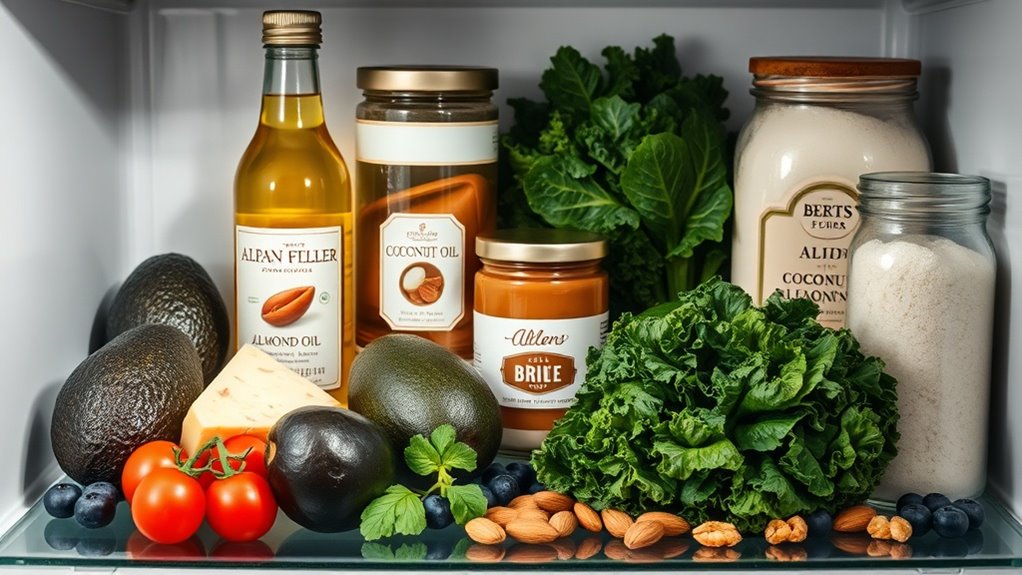
A well-stocked fridge makes sticking to a keto plan simple and sustainable, so what are the essential ingredients you should always keep on hand? To keep meals consistent and easy, focus on proteins, healthy fats, low-carb vegetables, and flavor enhancers. Your you-first approach means choosing items that are versatile, affordable, and shelf-stable enough to rotate weekly without pressure.
Proteins form the backbone of a keto fridge. Stock fatty fish like salmon or sardines, eggs, chicken thighs, ground beef, pork belly, and a small rotation of high-fat cheeses. These options provide sustained satiety and essential amino acids with minimal carbs. For convenience, consider pre-cooked chicken, fully thawed frozen shrimp, and jarred anchovies or tuna—each supports quick, flavorful meals. Keep sausage or bacon free of added sugars and fillers, and add a small tub of plain Greek yogurt or sour cream if your plan allows dairy for creaminess and texture.
Proteins anchor a keto fridge with fatty fish, eggs, chicken thighs, beef, pork belly, and dairy-rich options.
Healthy fats are nonnegotiable. Have olive oil and avocado oil for dressings and pan-frying, plus a narrow selection of nuts and seeds for crunch and energy. Include avocados in varying ripeness for ready use in smoothies, bowls, or as toppings. Butter or ghee supports cooking and flavor depth, while a jar of mayo or aioli adds richness to sauces without carbs. Don’t overlook coconut cream or unsweetened coconut milk for desserts or curries within your macros. These fats not only satisfy hunger but also help you adhere to lower carbohydrate targets.
Low-carb vegetables round out the core lineup. Leafy greens (spinach, kale, arugula), cruciferous options (broccoli, cauliflower, cabbage), and cruciferous cousins like radishes or mushrooms keep meals diverse. Bell peppers, asparagus, zucchini, and cucumbers add variety without a heavy carb load. Frozen vegetables are practical backups; just watch portions and avoid added sauces. Aim for a mix that covers plates with color, fiber, and micronutrients, while keeping net carbs in check.
Flavor boosters and keto friendly substitutions elevate meals without breaking your plan. Fresh herbs, garlic, onions in small amounts, lemon juice, and vinegars punch up taste without sodium overload. Cheese varieties, cream cheese, and sour cream provide creaminess; for crunch, choose sesame seeds or pork rinds as toppings. When a recipe needs a swap, use keto friendly substitutions like mashed cauliflower for potatoes, hearts of palm for pasta, zoodles for noodles, or almond flour for breading. Pair flavor combinations like lemon-garlic with salmon or thyme-butter with chicken for reliable, satisfying results. These choices support adherence by keeping dishes recognizable yet within macro targets. By stocking these items and rotating them thoughtfully, you’ll find it easier to assemble quick, evidence-based meals that stay true to a keto framework.
Commonly Asked Questions
How to Store Keto Ingredients for Maximum Freshness?
To maximize freshness, store keto ingredients using proper storage methods, like airtight containers for fats and sealed bags for greens. Refrigerate dairy and eggs promptly, and keep nuts, seeds, and cured meats in cool, dark spots or the fridge to slow spoilage. Label dates, freeze portions when needed, and thaw safely. These shelf life hacks reduce moisture buildup and oxidation. Regularly check humidity, rotate stock, and avoid cross-contamination for reliable, evidence-based results.
Which Keto Staples Have the Longest Shelf Life?
Short answer: the keto staples with the longest shelf life are longer lasting fats and shelf stable proteins. You’ll want things like extra-virgin olive oil, coconut oil, and solid fats like tallow or lard, plus shelf-stable proteins such as canned tuna, sardines, salmon, and jerky. Store in a cool, dark place; keep nuts sealed and rotate. This evidence-based approach minimizes waste while keeping your fridge lean and ready for quick meals.
Are There Keto-Friendly Substitutes for Common Non-Keto Items?
Yes, there are keto friendly substitutes for common non keto items. You can swap almond flour or coconut flour for wheat flour, cauliflower rice for grains, zucchini or shirataki noodles for pasta, and avocado or cheese for creamy textures. Use sugar alternatives like erythritol or stevia, and pick high-fat, moderate-protein dairy instead of milk full of carbs. Check labels for hidden sugars, increase fiber, and tailor substitutions to fit your daily macros.
How to Organize a Keto Fridge on a Budget?
Budget-friendly storage starts with simple planning: group keto staples, use clear containers, and label dates. You’ll keep costs down by prioritizing shelf life optimization—freeze extra portions, rotate older items, and use versatile ingredients. Keep a small, rotating list of affordable basics and reuse leftovers creatively. An anachronism at the start: “Back in the stone age, fridges hadn’t yet learned to budget.” In short, streamline, monitor expiration, and shop intentionally for lasting freshness.
Can Frozen Keto Ingredients Replace Fresh in Meals?
Frozen can replace fresh in meals, but expect flavor and texture differences. Frozen vs Fresh: Flavor Tradeoffs exist, often peak after blanching or proper thawing. Texture Tradeoffs can include moisture loss or sogginess if not handled. For budgets, Budget Fridge: Storage Efficiency and Inventory Management matter—freeze leftovers in portioned blocks, label dates, and rotate. Use quick-thaw methods and plan meals to minimize waste while maintaining keto nutrition.