
For example, you can pull canned tuna from the pantry, olive oil on hand, and roasted broccoli ready to reheat. You’ll want versatile proteins, quick fats, and low-net-carb veggies to keep meals consistent and affordable. Evidence-based prep favors bulk proteins like eggs, chicken thighs, ground beef, and oily fish, plus fast fats from avocado oil, olive oil, and ghee. Batch-cook greens and cruciferous veg, finish with simple dressings, and you’ll uncover a smoother, more reliable keto routine—if you stay the course, you’ll see how simple it gets.
Important Facts
- Stock protein staples like canned tuna, salmon, eggs, ground beef, chicken thighs, and pork shoulder for quick keto meals.
- Use quick fats such as avocado oil, olive oil, and ghee to sauté, finish, and emulsify sauces.
- Keep shelf-stable fats and snacks on hand: coconut oil, nuts/seeds, nut butters, and pre-portioned dressings.
- Prioritize low-net-carb vegetables: leafy greens, broccoli, cauliflower, peppers, zucchini, plus batch-roasted veggies.
- Plan with emulsions, citrus, garlic, herbs, and pre-portioned dressings to streamline batch cooking and consistent macros.
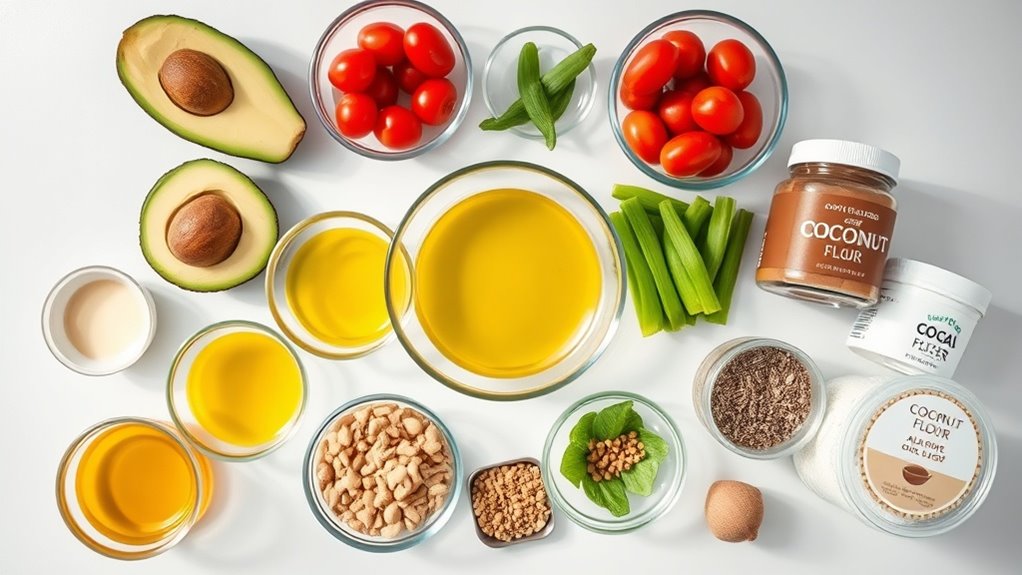
If you’re aiming for smooth, week-to-week keto meal prep, choosing the right ingredients is the difference between consistency and chaos. In building a reliable program, you’ll prioritize staples that are nutrient-dense, minimally processed, and easy to portion. Start with high-fat, moderate-protein basics that support ketosis without spiking your prep time. Your plan should balance sustainability with variety, so you can rotate proteins and fats without complicating shopping or cooking.
For proteins, select fatty, affordable options that are quick to transform. Canned tuna, sardines, and salmon offer convenient portions with omega-3s and low carbs. Eggs remain unmatched for versatility and price, delivering structure in scrambles, frittatas, or crustless quiches. When you add meat, opt for cuts that require little attention, like ground beef, chicken thighs, and pork shoulder, which reheat well and freeze cleanly. These choices reduce weekday decision fatigue and support consistent intake of daily protein targets.
Fats are central to keto accuracy, and two subcategories matter for meal prep: quick cooking fats and shelf-stable fats. Quick cooking fats—such as avocado oil, olive oil, and ghee—save time when you’re sautéing vegetables, finishing proteins, or emulsifying hot sauces. Shelf-stable fats like coconut oil, nuts, seeds, and nut butters maintain room temperature stability for grab-and-go snacks and easy dressings. This combination keeps meals cohesive: you’ll have flavorful bases without repeatedly thawing or scrambling for ingredients. Remember to track fat portions to maintain your macros.
Vegetables should be low in net carbs but high in fiber and micronutrients. Non-starchy greens (spinach, kale), cruciferous vegetables (broccoli, cauliflower), and colorful low-carb options (bell peppers, zucchini) provide volume and texture. Roast a sheet of veggies at the start of the week, then reheat in minutes with your proteins. For texture and moisture, include shredded cabbage or zucchini strands in salads and slaws. A robust vegetable strategy safeguards micronutrient intake and helps with satiety.
Flavor and texture enhancers matter for adherence. Emulsions, citrus zest, garlic, herbs, and spices add variety without carbs. Keep pre-portioned jars of vinaigrettes or creamy dressings ready, using high-fat bases like olive oil and full-fat yogurt where your plan allows. For snacks, emphasize high fat snacks that travel well and don’t require refrigeration for short periods, alongside quick cooking fats to finish meals with a glossy finish.
Finally, planning tools support consistency: a rotating weekly menu, shopping lists aligned with your macro targets, and defined batch-cooking sessions. You’ll reduce waste by freezing portions and labeling meals with date and macros. With disciplined ingredient selection—focusing on high-fat snacks, quick cooking fats, and versatile proteins—you’ll stabilize your ketosis, minimize daily decision fatigue, and sustain progress toward your keto goals.
Commonly Asked Questions
How Long Do Keto Ingredients Stay Fresh in the Fridge?
Keto ingredients typically stay fresh for a few days to a week in the fridge, depending on the item. Meat and seafood usually 1–3 days; dairy like hard cheeses up to 1–2 weeks; eggs several weeks when refrigerated. Produce varies: leafy greens 3–7 days; cruciferous 1–2 weeks. For reliability, use the two word discussion ideas and storage duration to plan rotation. Always trust your senses and refrigerate promptly after buying.
Can I Prep Keto Meals for the Whole Week?
Yes, you can prep keto meals for the whole week. On average, properly stored meals stay fresh 3–5 days in the fridge, so plan around that window. Use efficient batch timing and a variety of flavors to avoid monotony. Aiming for batch variety helps sustain adherence. Track serving sizes, reheat safely, and keep efficient prep timing to minimize waste. Evidence suggests mixing proteins, veggies, and fats boosts adherence and satisfaction.
Which Keto Staples Are Best for Quick Breakfasts?
For quick breakfasts, the best keto staples are eggs, full-fat Greek yogurt, avocados, bacon or sausage, cheese, and berries in moderation. You can scramble eggs with cheese, whip yogurt with a few berries, or sauté avocado halves for speed. These options provide protein and fat to curb appetite, support ketosis, and you’ll stay energized. Choose quality, minimize added sugars, and prep what you love to keep quick breakfasts consistent and evidence-based.
Are All Low-Carb Ingredients Suitable for Keto?
Are all low-carb ingredients suitable for keto? Not automatically. You need to check net carbs per serving and overall suitability for your daily targets. Be mindful of suitability concerns, as some low-carb items spike other macros or include hidden sugars. Freshness vs. shelf life matters; prioritize fresh proteins, non-starchy veggies, and healthy fats. Rely on evidence, track macros, and avoid fillers to ensure consistent ketosis and predictable results.
How Do I Avoid Hidden Carbs in Sauces?
Hidden carbs can lurk in sauces, so start by reading labels carefully. How to read labels: check total carbs, fiber, and sugar alcohols, and beware hidden sugar like corn syrup or dextrin. Identify Hidden carb sources such as sauces, marinades, and thickeners. Use whole, unprocessed bases and batch-test small amounts. Keep sauces simple, measure portions, and swap high-risk ingredients for keto-safe thickeners like xanthan gum.