
Imagine you start your day with a bowl that fuels focus instead of spikes in energy. A well‑composed keto breakfast balances about 20–35 g protein with 5–15 g net carbs, using eggs, yogurt or dairy-free swaps, avocado, olive oil, and a handful of greens for steady glucose release. Layer textures and flavors to stay satisfied, then finish with clean seasonings. Curious how to tailor a bowl to your routine and macros? Let’s map out your go-to combo.
Important Facts
- Target 20–35g protein per bowl using eggs, Greek yogurt, or dairy-free bases, paired with healthy fats to slow glucose absorption.
- Aim 5–15g net carbs per bowl with low-net-carb vegetables and dairy or dairy-free yogurts for creaminess.
- Add fats from avocado, olive oil, or nuts and use clean seasonings to boost fullness and flavor without sugars.
- Include spinach, mushrooms, peppers, and cucumber ribbons with tomato for texture, micronutrients, and volume.
- Build bowls with a protein base, fat, vegetables, and texture contrast; include practical examples like scrambled eggs or Greek yogurt layers.
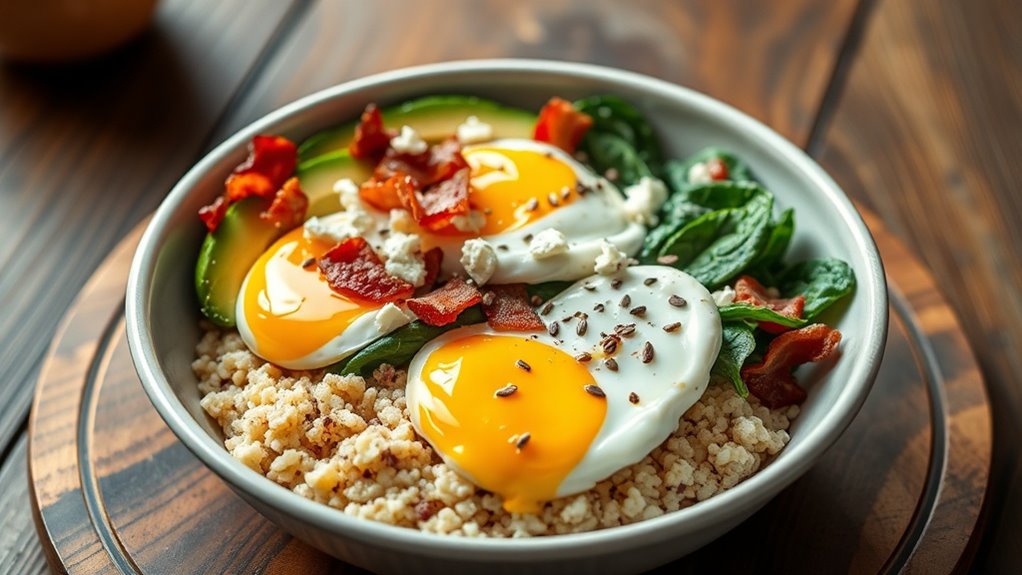
Keto breakfasts don’t have to be boring. When you’re aiming for a clean fuel profile, bowls built around protein, healthy fats, and low-net-carb veggies support steady energy and better satiety. You want variety without sacrificing ketosis, so focus on sources that deliver reliable macros and a texture and flavor that feel satisfying from first bite to last. Think about protein-rich bases like eggs, Greek yogurt (or a dairy-free alternative if needed), or cottage cheese, paired with fats from avocado, olive oil, or nuts. Since you’re pursuing clean fuel bios, choose ingredients that are minimally processed and free from added sugars or artificial thickeners. This approach helps you minimize blood-sugar spikes while maintaining consistent energy for your morning routine.
Texture matters as much as macro balance. Keto textures can be achieved through layering, emulsions, and the right mix of soft and crunchy elements. You might swirl in a creamy yogurt with a hint of lemon and a sprinkle of chia for body, then top with roasted almonds for crispness. Eggs, prepared softly or with a runny yolk, bring luxury to a bowl without tipping your macros off course. Vegetables should be low in net carbs but high in micronutrients—spinach, mushrooms, and peppers fit well. They add fiber, volume, and color, enhancing both satisfaction and intake of key minerals. If you crave savory acidity, a touch of pickle juice or a light vinaigrette can lift flavors without derailing your clean fuel bios.
Texture matters: layer, emulsify, and balance soft with crunchy for keto bowls.
To optimize macros, measure portions toward a target of about 20–35 grams of protein and 5–15 grams of net carbs per bowl, adjusting based on your total daily targets. Pair protein with healthy fats to slow glucose absorption and extend fullness. Hydration matters too; a splash of bone broth or a performance-friendly liquid can improve mouthfeel and mineral delivery without added sugar. Seasonings should be clean and simple—sea salt, pepper, paprika, and herbs—to keep flavors precise and aligned with your goals.
In practice, assemble bowls with a protein base, a fat source, vegetables, and a texture contrast. For instance, scramble eggs with spinach, fold in a dollop of yogurt, drizzle olive oil, and top with walnuts and cucumber ribbons. Or layer Greek yogurt, avocado, cucumber, and blistered cherry tomatoes, finishing with hemp seeds for crunch. If you prefer dairy-free, blend silken tofu with olive oil and lemon for creaminess, then add roasted cauliflower and crushed almonds. The key is consistency: choose a base you enjoy, build in fats to sustain energy, and incorporate crunchy toppings to satisfy bite after bite, all while keeping the meal within your keto targets and clean fuel bios framework.
Commonly Asked Questions
How Can I Customize Bowls for Dairy-Free Diets?
You can customize bowls by choosing dairy-free toppings and bases, using custom dairy free options. Start with a dairy-free protein (eggs, tofu, tempeh) and a plant-based milk or yogurt base. Use dairy free substitutes like coconut yogurt, almond yogurt, or hemp milk. Add fiber with chia or flax, fats with avocado or olive oil, and flavor with herbs. For keto, monitor net carbs, and verify labels for dairy free substitutes to keep it evidence-based and clean.
Do These Bowls Spike Blood Sugar After Fasting?
Do these bowls spike blood sugar after fasting? It depends on ingredients and portions. If you focus on high-fat, moderate-protein, and low-net-carb ingredients, your blood sugar impact can stay steady after fasting. Do these bowls support stable glucose when you customize bowls dairy free? Yes, by choosing fiber-rich vegetables, nuts, seeds, and sugar-free bases, you minimize spikes. Track portions, prefer whole foods, and rely on evidence-based macros to guide your dairy free keto choices.
Which Toppings Add the Most Fiber Without Carbs?
You’ll maximize fiber with fiber focused toppings like chia, flax, and psyllium husk, while avoiding high-carb tradeoffs. Choose psyllium to boost fiber with minimal net carbs, add chia for both fiber and swelling volume, and flax for omega-3s. Avoid high-sugar fruits and starchy seeds that spike carbs. Evidence supports soluble fibers moderating glucose. Balance portions to keep zero carb tradeoffs realistic, ensuring your bowl stays satiating without appreciable carbohydrate load.
Can These Bowls Be Prepared in Advance for Workdays?
You can make ahead prep for keto bowls, and yes, they work for workdays. About 75% of people who meal-prep report higher workday efficiency and fewer costly food mistakes. For best results, prep proteins, fats, and fiber sources separately, then assemble in the morning. Use airtight containers and portioned toppings to keep textures fresh. Reheat gently and add greens right before eating. This approach supports steady energy and concise, evidence-based choices.
Are There Keto-Friendly Sauces That Stay Fresh Longer?
Yes—there are keto friendly sauces that stay fresh longer, especially shelf stable sauces. When you store them properly, you can extend freshness: keep unopened bottles in a cool, dark place; refrigerate after opening when required; check use-by dates; avoid contamination with spoons. Look for oil-based, preservative-containing options. For long life, prefer shelf stable sauces with minimal water activity and stable fats. These practices help you keep keto friendly sauces ready for busy mornings.