
Chances are you don’t realize stress can briefly derail ketosis unless you’re intentional about timing. You’ll want a predictable intermittent fasting window, steady hydration with electrolytes, and a modest fat boost with restrained protein to minimize gluconeogenesis. Keep a simple morning routine, stock keto-friendly options, and limit late-day caffeine to protect sleep. Quick breathing and a quick mindfulness check before meals can curb cravings, and tracking ketones, weight, and sleep helps you adjust without overhauling plans.
Important Facts
- Maintain a predictable intermittent fasting window and use short, disciplined fasts to support ketone production during stress.
- Moderate protein intake to prevent gluconeogenesis, filling remaining calories with high-quality fats to sustain ketosis.
- Prioritize hydration with water and electrolytes, adding salt during sweating or headaches to counter cortisol-driven diuresis.
- Structure a simple daily routine, stock keto-friendly options, optimize sleep, and practice quick breathing to reduce decision fatigue.
- Track ketones, weight, mood, and sleep; make small iterative macro or fasting adjustments if ketosis wanes under stress.
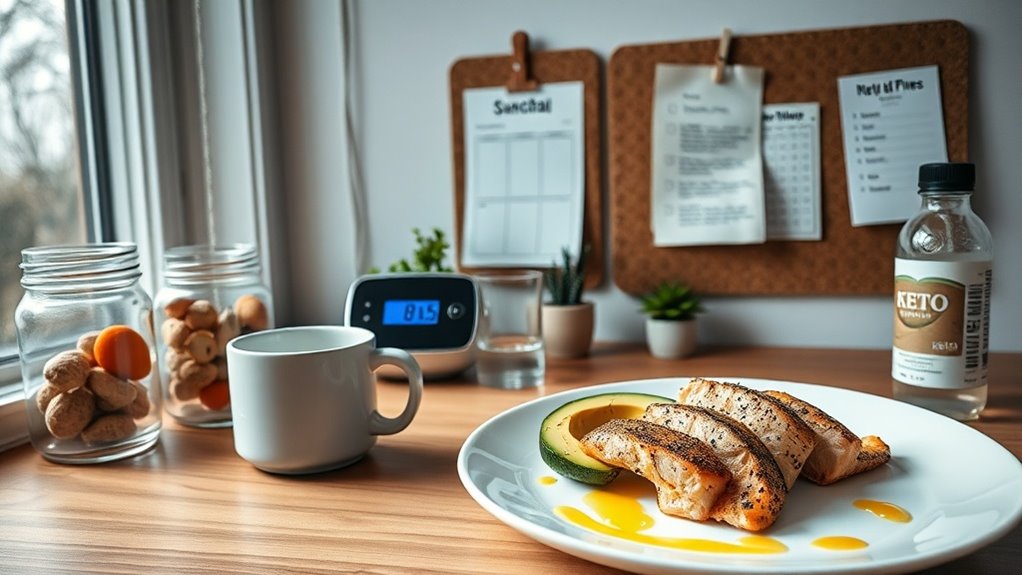
If you’re juggling stress and ketosis, you’re not alone—and it’s not a lost cause. When stress hits, your body shifts hormones, potentially nudging you toward glucose use. The goal is to preserve ketosis while supporting your nervous system and decision-making. Start with practical, evidence-informed steps you can apply today, and adjust as needed. Stress management matters because chronic stress disrupts appetite, sleep, and metabolic control, which can erode ketone production. So, lean on strategies that stabilize your physiology and routines.
First, optimize your fasting strategies with intention. If you’re accustomed to intermittent fasting, maintain a predictable window to minimize surprises during chaotic days. Short, disciplined fasting periods can support ketone production, but avoid extending fasts beyond what your body tolerates under stress. Hydration matters: water plus electrolytes help manage cortisol-driven diuresis and fatigue. Include a pinch of salt or an electrolyte product if you’re sweating, exercising, or experiencing headaches. This keeps energy available without forcing glucose reliance.
Second, fine-tune your protein and fat balance. You don’t need to fear slightly higher protein during stress, but excessive protein can convert to glucose through gluconeogenesis and blunt ketosis. Aim for a moderate protein intake that supports muscle maintenance and satiety, with fat filling the rest of your energy needs. Prioritize high-quality fats you enjoy, such as monounsaturated and medium-chain triglycerides, which can provide rapid, reliable energy. Avoid large carbohydrate binges that spike insulin and undermine ketosis.
Third, structure daily routines to reduce decision fatigue. Have a simple, repeatable morning plan and a pantry stocked with keto-friendly options, so stress doesn’t force you into suboptimal choices. Sleep quality compounds your ability to tolerate stress and stay in ketosis; dim lights, consistent bedtimes, and limiting caffeine late in the day help. When stress spikes, go back to a short, evidence-based breathing exercise or a 2–3 minute mindfulness check. These interventions modestly reduce cortisol and improve cognitive control.
Fourth, implement targeted stress management techniques. You can pair quick, practical actions with longer-term practices. Write a one-line intention for the day to reinforce your goal of ketosis protection. Use brief, deliberate pauses before meals to assess hunger versus craving. If cravings arise, drink water, then re-evaluate; often they fade within minutes. Seek social support or accountability; a friend or coach who understands ketogenic physiology can help maintain consistency during tough periods.
Fifth, monitor your response with simple metrics. Track ketone levels, weight, mood, and sleep quality to gauge whether your current plan supports ketosis under stress. If ketones drop persistently, revisit fasting duration, electrolytes, and macro ratios. Iterate with small adjustments rather than sweeping changes. By combining stress management with thoughtful fasting strategies, you preserve ketone production, sustain energy, and reduce the likelihood that stress derails your ketogenic goals.
Commonly Asked Questions
Can Fasting During Stress Maintain Ketosis Safely?
Short answer: yes, you can fast during stress and keep ketosis safely, but it depends on duration and your body. If you’re practiced, fasted training can support ketone use without dropping blood sugar too low. Monitor stress ketosis signals, stay hydrated, and avoid long, aggressive fasts. Short fasts paired with protein-aware meals help. If you feel lightheaded, pause. This approach is evidence-based, practical, and precise for many.
Do Exogenous Ketones Affect Ketosis Under Stress?
Exogenous ketones can raise blood ketone levels during ketosis stress, but they don’t automatically sustain full ketosis. You may see a temporary spike in ketones, while glucose remains elevated from stress hormones. For lasting ketosis, rely on steady fat-adaptation, sufficient electrolytes, and controlled intake. Use exogenous ketones strategically if you’re testing performance or mood, but don’t expect them to replace dietary consistency during stress. Monitor personal response and adjust dosing accordingly.
How Do Sleep Patterns Impact Ketosis on Busy Days?
Sleep quality drives ketosis on busy days: better rest helps you keep ketone production steady, while poor sleep raises stress hormones that disrupt fat metabolism. You’ll want consistent bedtimes, dark/light cues, and a wind-down routine to stabilize cortisol and adrenaline. Plan meals around sleep windows, limit caffeine late, and hydrate. If stress spikes, prioritize short, steady workouts and mindful breathing to protect ketosis, then reassess your sleep quality tomorrow.
Does Caffeine Disrupt Ketosis During Stress?
Caffeine can slightly raise cortisol and glucose, but it doesn’t necessarily disrupt ketosis for most people during stress. In moderate amounts, you’re unlikely to derail fat adaptation; however, high doses or added sugars can. To stay steady, choose black coffee or tea and monitor your body’s response. If you notice compromised ketosis, reduce caffeine or switch timing. Overall, caffeine ketosis is compatible, but stress ketogenic strategies still matter for consistent results.
Is Ketosis Sustainable With High-Intensity Workouts During Stress?
Ketosis can be sustained with high-intensity workouts during stress, though you’ll need careful fueling. Approximately 70% of athletes report improved fat oxidation with steady ketone intake during intense sessions, helping maintain ketosis. You might experience transient stress-induced glucose, but adapted athletes use moderate carb timing and ample protein to protect muscle. Stay hydrated, monitor HRV, and prioritize recovery. High intensity can be compatible, just plan nutrient timing to keep ketosis stable amid stress.