
Did you know quick keto meals can cut prep time by up to 50% with the right combos? You can start with a protein-forward base like rotisserie chicken or canned tuna, pair it with low-carb carriers such as cauliflower rice or zucchini noodles, and finish with ready sauces like pesto or olive oil dressings. This approach keeps macros in check while boosting flavor, letting you assemble meals fast—if you want to see exactly how to stack textures and fats, keep going.
Important Facts
- Use protein-forward bases (eggs, chicken, salmon, tuna) with pre-cut veggies and ready sauces to cut cooking time.
- Pair one protein with one fat-forward veggie/alternative (e.g., cauliflower rice, zucchini noodles) for quick meals.
- Stock ready-made keto sauces and spice blends to assemble meals in minutes with minimal cleanup.
- Rely on prepped staples: cooked proteins, chopped veggies, cauliflower rice, and flavor boosters for rapid assembly.
- Balance textures and macros with high-flavor carriers (avocado, olive oil, cream/yogurt sauces) to boost satiety quickly.
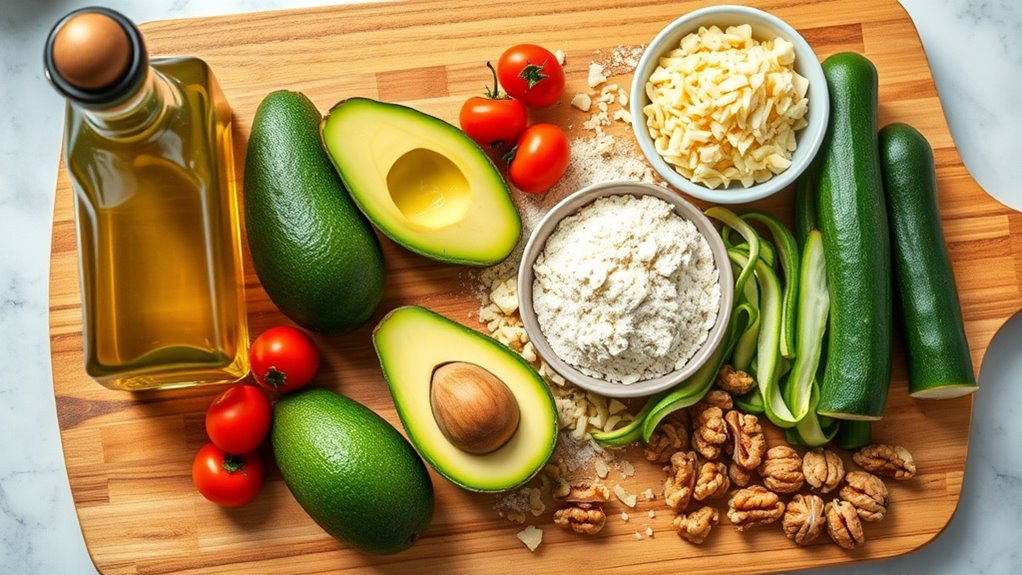
What are the best keto ingredient combos that shorten prep time without sacrificing flavor or nutrition? You’ll gain speed by choosing combos that cut steps, reduce cleanup, and maintain macro balance. Start with prepped staples: cooked proteins, chopped veggies, and ready-made sauces that fit keto macros. A practical approach is to pair a single protein with one or two high-flavor carriers to keep meals simple yet satisfying.
First, lean into protein-friendly bases that reheat well. Eggs, chicken, turkey, and salmon offer texture and amino acids without overcrowding your pan. For quick lunches, pair rotisserie or leftover chicken with cauliflower rice and a spoon of olive oil-based pesto. The cauliflower rice chunks up meals with fiber and volume while staying low in carbs. When time is tight, use pre-cooked shrimp or canned tuna as the protein anchor and mix with avocado, cucumber, and a squeeze of lemon for brightness. The goal is to minimize new cooking while maximizing flavor.
Next, lean on high-fat, low-carb carriers to elevate taste without extra steps. Plant-based fats, like avocado, olives, and olive oil, keep you satiated and can be spooned over many dishes without fuss. For a one-pan option, sear frozen cauliflower steaks in olive oil, then top with canned salmon and a dollop of pesto. This keeps prep lean and clean with minimal cleanup. If you prefer eggs, a quick scramble with spinach and cheese uses one skillet, delivering protein and fats in a single plate.
Gluten free swaps can simplify ingredient lists without sacrificing texture or satisfaction. Use almond flour or coconut flour where baking is needed, but swap out traditional thickeners for xanthan gum or guar gum to maintain structure in sauces. When a recipe calls for flour, try ground almonds for coating chicken or fish; it provides crunch and binds well with egg wash for a fast crust. For thickeners, consider coconut cream in sauces to add body and richness with fewer carbs than dairy-based thickeners.
Flavor boosters that streamline prep include pre-made spice blends, garlic-infused oils, and fresh herbs. A lemon-dill yogurt sauce pairs well with salmon and cucumber ribbons, while a cilantro-lime avocado mash can serve as a dip or topping for grilled items. For richness, drizzle avocado oil-based dressings over warm vegetables or toss olive-oil-coated greens with grated Parmesan.
In practice, assemble a two-component system: one protein plus one fat-forward veggie or grain substitute, plus a ready sauce. This minimizes steps, preserves nutrition, and aligns with keto goals. Keep a rotation of tried-and-true pairings: chicken with cauliflower rice and pesto; salmon with zucchini noodles and lemon yogurt sauce; shrimp with avocado salad and olive oil drizzle. By prioritizing prepped ingredients, gluten free swaps, and plant based fats, you’ll sustain flavor and nutrition with fewer kitchen minutes.
Commonly Asked Questions
How Long Do These Combos Keep in the Fridge?
How long you’ll keep these combos in the fridge depends on the ingredients, but generally, you’ll aim for up to 3–4 days. Idea 1: Fridge preservation matters—store in airtight containers, label with date, and separate raw from cooked when needed. Idea 2: Ingredient substitutions can affect shelf life, so swap in sturdy, low-moisture components to extend freshness. Reheat thoroughly and discard any off smells or textures.
Can I Swap Ingredients for Allergies?
Absolutely—yes, you can swap ingredients for allergies. Start with allergy substitutes like almond butter or coconut yogurt, then swap ingredients to keep macros. Use kid friendly options when needed, and check labels for hidden carbs. Keep it practical: track net carbs, swap ingredients mindfully, and test textures. This approach remains evidence-based, concise, and adjustable, so you maintain keto safety while accommodating allergy substitutes and preserving flavor.
Do These Work in Non-Stick Pans?
Yes, these work in non-stick pans, but follow quick friendly keto safety tips. Use low to medium heat, add a thin oil coat, and avoid high-sugar ingredients that scorch easily. Preheat gently, then cook, flipping as needed. Clean with warm water soon after to protect the coating. This approach supports non stick safety while you stay evidence-based, practical, and focused on fast prep.
Which Combos Are Kid-Friendly and Tasty?
Yes, these combos can be kid-friendly and tasty. Try simple, familiar flavors like scrambled eggs with cheese and spinach, avocado-tuna boats, or chicken and broccoli stir-fry with a light soy-ginger glaze. Kid friendly ideas rely on texture and mild seasonings, not overpowering sauces. For evidence-based practicality, keep portions small, use kid-approved veggies, and offer a dip. These tasty combos support sustained energy and easier meal-time planning for you.
Are There Hidden Carbs in Any Ingredients?
Hidden carbs can lurk in sauces, dressings, and processed snacks, so read labels and measure portions carefully. You’ll want to check fiber vs. total carbs and beware hidden sugars. If you have allergies, use allergy substitutions like coconut aminos or olive oil instead of soy sauce. You’ll find most fresh meats, eggs, and low-carb veggies are safe, but always verify ingredients. Stay vigilant, track carbs, and adjust portions to stay in ketosis.