
To break down carbs for easier tracking, you’ll start by checking labels for total carbs and fiber, then estimate net carbs (total minus fiber) when appropriate. Use standard portions—about 15–25 g carbs per half-cup grains—and weigh or measure to keep accuracy. Note hidden sugars in sauces, and log consistently with a baseline database. Expect weekly tweaks as you pair carbs with protein, fiber, and fat to blunt spikes, and stay curious about what fits your routine.
Important Facts
- Use total carbohydrate minus dietary fiber to estimate net carbs for meals, aiding steady glucose control.
- Target 45–60g carbs per meal and pair with fiber, protein, and fat to blunt spikes.
- Convert grams to practical servings using labeled data or databases to improve tracking accuracy.
- Note portion size and cooking method, since starch type and preparation impact glycemic response.
- Track daily totals with a consistent method, review weekly, and adjust targets as needed.
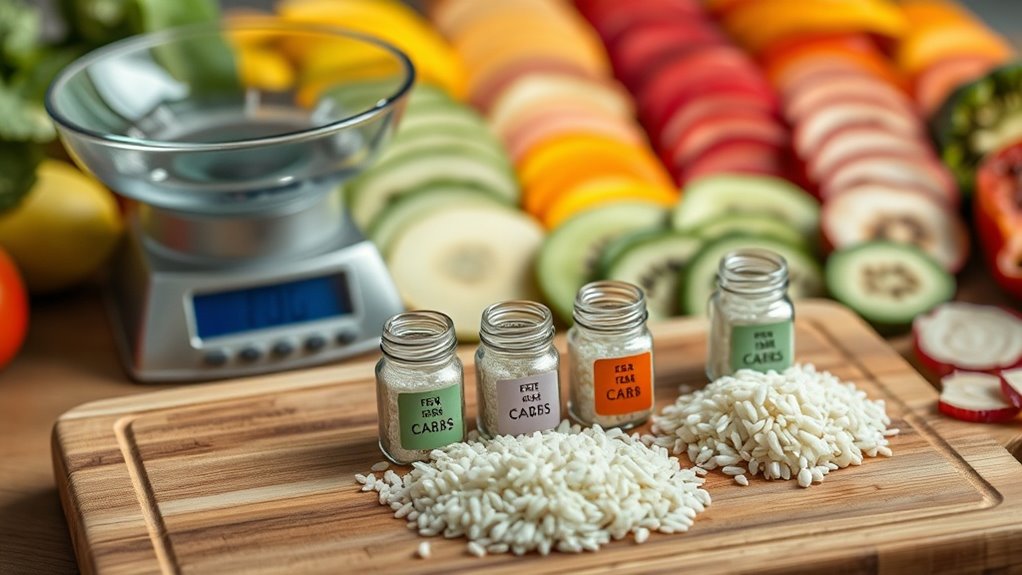
If you’re trying to track carbs more accurately, start by understanding how the body processes different starches, sugars, and fiber. Your goal is to translate complex digestion into practical numbers you can use for carb counting and meal planning. Starches vary in digestion speed, but most common sources fall into quick-release and slow-release categories. Quick-release carbs raise blood glucose faster, while slow-release carbs provide a steadier supply. Fiber, by contrast, isn’t digested into glucose and often isn’t counted in total carbohydrate for many labels; it reduces glycemic impact and improves satiety. When you’re evaluating foods, look for total carbohydrate and dietary fiber to estimate net carbs if that’s part of your plan. Evidence shows that serving size consistency and standardized labeling improve reliability in tracking.
Master carb counting: compare quick vs. slow starches, factor in fiber, and use consistent portions for reliable planning.
To apply this to meal planning, begin with portion awareness. You’ll want to convert grams of carbohydrate into practical servings you can measure. Use label information or standardized databases to identify the carbs in a typical serving, then map that to your daily target. If you’re using a goal such as 45 to 60 grams per meal, organize foods so each plate aligns with that range. Pairing carbs with fiber, protein, and fat can blunt spikes in glucose and enhance appetite control, which supports more stable intake across meals. Research supports meal structure as a key factor in adherence and metabolic outcomes, not just the carb count itself.
Next, learn the typical carb footprint of common foods. For grains and starchy vegetables, expect roughly 15 to 25 grams of carbohydrate per standard half-cup cooked portion, with higher amounts for larger servings. Fruits bring natural sugars alongside fiber, vitamins, and water; portion control remains essential to keep net carb goals aligned. Legumes provide both fiber and protein, moderating rapid glucose rises but still contributing substantial carbs. Processed foods often hide carbohydrates in sauces and additives, so reading ingredient lists and nutrition panels becomes a crucial habit. You’ll benefit from a consistent method: choose a baseline database, record portions, and calculate daily totals. This consistency reduces estimation error and supports more reliable carb counting and meal planning.
To minimize error, measure portions with a scale or standardized cups, especially when you’re new to tracking. Document how you prepare foods, since cooking methods can alter starch availability and glycemic response. For example, al dente pasta has a different impact than fully cooked pasta, even with the same labeled carbohydrate. When you’re uncertain, favor whole-food sources and minimally processed items, which tend to yield more predictable responses. Finally, review your data weekly to identify patterns and adjust targets accordingly. Evidence suggests that iterative tweaks based on real-world tracking produce better long-term adherence than rigid, one-size-fits-all plans.
Commonly Asked Questions
Do Carbs Include Fibers in Total Carbohydrate Counts?
Yes, carbs include fibers in total carbohydrate counts on many labels, but not all. Some products list total carbohydrates excluding fiber, while others include fiber. For tracking accuracy, check the label’s definition and use net carbs if you’re focusing on digestible impact. When needed, separate dietary fiber from total carbs to compare foods consistently and maintain precise, evidence-based tracking of your intake.
How Do Sugar Alcohols Affect Tracking Accuracy?
Sugar alcohols can impact tracking accuracy because not all are fully absorbed, so you may undercount calories or net carbs. Their effect varies by type (methyl-/ethylene glycol forms differ from sorbitol or xylitol). Expect some gastrointestinal symptoms that shift timing of intake effects. To maximize accuracy, use labeled sugar alcohol amounts and monitor your body’s response. In sum, sugar alcohols impact tracking accuracy—log them thoughtfully and adjust portions based on personal tolerance and metabolic reactions.
Should I Count Net Carbs for All Meals?
Yes, you should count net carbs for meals, based on your goals and tolerance. Net carbs give you flexibility in meal planning and help you track impact on blood sugar. Focus on fiber and sugar alcohols, adjust portions, and compare meals using consistent labeling. Use net carbs to guide portions, not punish choices. Monitor your response, refine your estimates, and document trends. This evidence-based approach supports precise, sustainable meal planning and better tracking outcomes.
Do Sauces and Condiments Impact Total Carb Intake?
Sauces and condiments can impact your total carb intake, so check labels and portions carefully. Some sauces add sugars and starches that raise carbs more than you’d expect, while others are nearly carb-free. When you estimate, consider sauce sugar content and portion size, and remember that condiment calories can vary widely even in small amounts. Track your intake with precise measurements to avoid underestimating total carbs, especially for high-sugar sauces.
Which Apps Best Categorize Complex Carbohydrates Automatically?
Apps like MyFitnessPal and Lose It! perform apps automatically categorization, but their accuracy on complex carbohydrates varies. A notable stat: only about 60% of foods labeled “fiber-rich” are precisely categorized by automatic systems. For complex categorization, you’ll want apps that let you customize entries and check macronutrient detail, then cross-check with the USDA database. Rely on evidence-based labeling, not guesswork, and verify starch, fiber, and sugar alcohols for precise tracking.