
Stress spikes can derail keto fast, but you can ride them with simple, repeatable habits. You’ll want a flexible meal framework focused on protein, greens, and healthy fats, plus quick keto-friendly carbs only when needed. Prioritize protein at every meal, load up on non-starchy veggies, and keep easy, portable snacks on hand. Add brief stress-relief tactics, like 2–5 minutes of controlled breathing, and track how meals, mood, and sleep shift over time to guide tweaks.
Important Facts
- Build simple, repeatable keto meals centered on protein, non-starchy vegetables, and healthy fats to reduce decision fatigue during stress.
- Prioritize protein at each meal, fill the rest with greens and colorful veggies, and include a small keto-friendly carb if allowed.
- Use brief stress-management techniques (2–5 minutes of controlled breathing) and post-stressor reflection to curb cravings.
- Maintain a flexible meal framework with rotating core meals, go-to snacks, and quick hacks for time-constrained days.
- Track meals, mood, and sleep with simple notes to identify patterns and sustain keto under pressure.
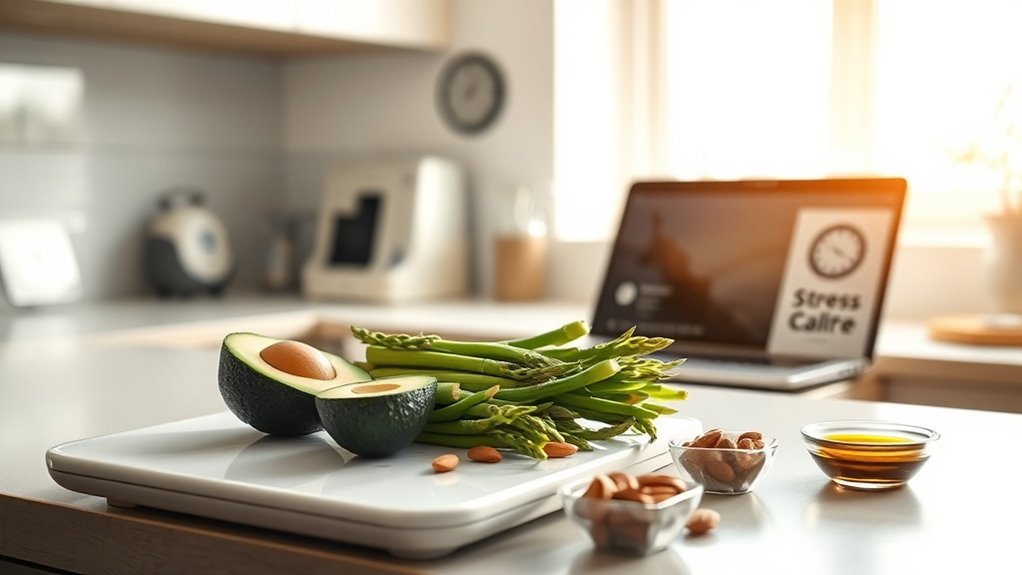
Balancing keto with real-life stress isn’t about perfection; it’s about practical adjustments that keep you on track when life gets hectic. You can approach this with evidence-based clarity, using proven strategies rather than rigid obedience to a calendar. Start with keto meal planning that emphasizes simple, repeatable patterns. Build a grocery list around reliable staples—protein, non-starchy vegetables, healthy fats, and a modest portion of carbs from keto-friendly sources if your plan allows. Acknowledge that stress can disrupt appetite and timing, and design meals that are quick to assemble, nourishing, and portable when you’re on the move. Meal prep compounds your success by reducing decision fatigue and preventing impulsive, non-keto choices fueled by stress.
Balancing keto with real-life stress through practical, evidence-based routines.
When stress rises, your nervous system often drives cravings for quick-energy calories. Counter this with steady, predictable routines that regulate blood sugar. Prioritize protein at each meal to support satiety and preserve lean mass; fill the remaining plate with leafy greens and colorful vegetables to maximize micronutrient intake. Include healthy fats to maintain energy density without triggering a surge in hunger. If you’re tempted to skip meals during busy stretches, set a reminder to eat something small that fits your plan—protein plus vegetables and a fat source is a reliable trigger that steadies appetite and mood.
Stress management strategies on keto aren’t about grand gestures; they’re about consistent, practical habits. Incorporate brief, evidence-backed techniques such as controlled breathing for 2–5 minutes, which can reduce cortisol and sharpen decision-making. Mindfulness or brief reflection after stressful events helps you observe cravings without judgment, making it easier to choose keto-aligned options. Sleep, often underrated, plays a critical role in hormonal balance and appetite control; prioritize a regular bedtime and limiting caffeine late in the day to support restorative rest. If you’re in a high-pressure phase, consider restructuring commitments to protect your eating window and prevent energy dips that invite non-keto snacking.
Adapting your plan to real-life constraints is essential. Keep a flexible but consistent framework: a core set of keto meals you rotate, a short list of go-to snacks, and a system for quick hacks when time is tight. Hydration matters too; water with electrolytes can blunt cravings and support cognitive function during stress. Track your progress with simple notes on meals, mood, and sleep to identify patterns and refine your approach without guilt. Remember, the goal is sustainable balance, not perfection. With thoughtful keto meal planning and practical stress management strategies, you maintain momentum through cycles of stress while honoring your health objectives. You’ll demonstrate that evidence-based, efficient habits can power resilience and steady progress.
Commonly Asked Questions
How Does Sleep Affect Ketosis Under Stress?
Sleep quality directly affects ketosis under stress: poor sleep elevates stress hormones, which can blunt ketone production and worsen fatigue. You’ll see sharper hunger signals and craving patterns, making fasting effects harder to sustain. Keep hydration strategies and electrolyte timing steady, monitor calorie balance, and limit alcohol impact. Prioritize fatigue management, maintain consistent bedtime routines, and consider light exercise to support ketosis. Small tweaks in sleep lead to clearer ketosis and steadier energy.
Can Fasting Worsen Stress-Related Keto Symptoms?
Fasting can worsen stress-related keto symptoms if you’re not careful. When stress hormones rise, fasting may intensify dizziness, irritability, or fatigue, making keto symptoms more noticeable. To minimize risk, listen to your body, break fasts with balanced meals, and avoid long stretches during high-stress days. If symptoms persist, shorten fasting windows, stay hydrated, and ensure adequate electrolytes. Consider a moderate approach rather than extreme fasting to support both keto and stress management.
Is It Okay to Drink Alcohol on Keto During Stressful Periods?
Yes, you can, but with caution during stressful periods. Think of your body as a ship; alcohol impact can tilt the balance, especially when stress hormones rise. It may raise cortisol, disrupt sleep, and hinder ketosis. If you choose to drink, limit quantity, opt for lower-carb options, and monitor your targets. Stay hydrated, eat protein-forward, and avoid bingeing. Your practical plan should prioritize steadier stress management alongside mindful, evidence-based choices.
Do Electrolytes Counteract Stress-Induced Keto Fatigue?
Electrolyte strategies can help fatigue mitigation during stress on keto. Yes, electrolytes can counteract fatigue by supporting nerve signaling, hydration, and muscle function when cortisol rises and you’re more prone to imbalances. Practical steps: sip electrolyte-rich fluids, monitor sodium, potassium, and magnesium, and pair with protein and carbs post-workout or after a long day. If fatigue persists, recheck intake, sleep, and stress management; consider a structured electrolyte plan as part of your fatigue mitigation strategy.
Will Stress Spike Ketone Cravings or Hunger?
Yes, stress can trigger stress cravings and appetite spikes. You may notice stronger urges for carbs or comforting foods, especially when cortisol rises. To counter this, you can use steady meal timing, protein-rich portions, and fiber to blunt cravings. Hydration helps, too. Practice quick stress-reduction techniques, like breathing or a short walk, to stabilize mood. Tracking triggers lets you prepare alternatives, so you stay aligned with keto goals while handling stress.