
You want keto toppings that boost flavor without adding carbs, so think crunchy nuts, seeds, and toasted coconut for texture, plus creamy cheese or Greek yogurt in moderation. Add crisp veg like cucumber and zucchini, bright herbs, olives, capers, a dash of citrus zest, and a drizzle of olive or avocado oil to tie flavors together. A few spices—smoked paprika, cumin, garlic powder, chili flakes—finish the bowl. There’s more to explore that keeps your macros in check.
Important Facts
- Add texture with crunchy toppings like roasted nuts, sesame seeds, sunflower seeds, or toasted coconut for contrast in low-carb bowls.
- Use lightweight, crisp veggies such as sliced cucumber and zucchini ribbons to balance bulk without spiking carbs.
- Pair creamy, savory elements with full-fat dairy (grated cheese, feta) and a moderate amount of Greek yogurt for richness.
- Elevate flavor with fresh herbs (cilantro, parsley, dill) and a citrus lift from zest or a small squeeze of lemon/lime.
- Enhance umami with garlic powder, smoked paprika, cumin, chili flakes, plus olive or avocado oil and cheese crisps.
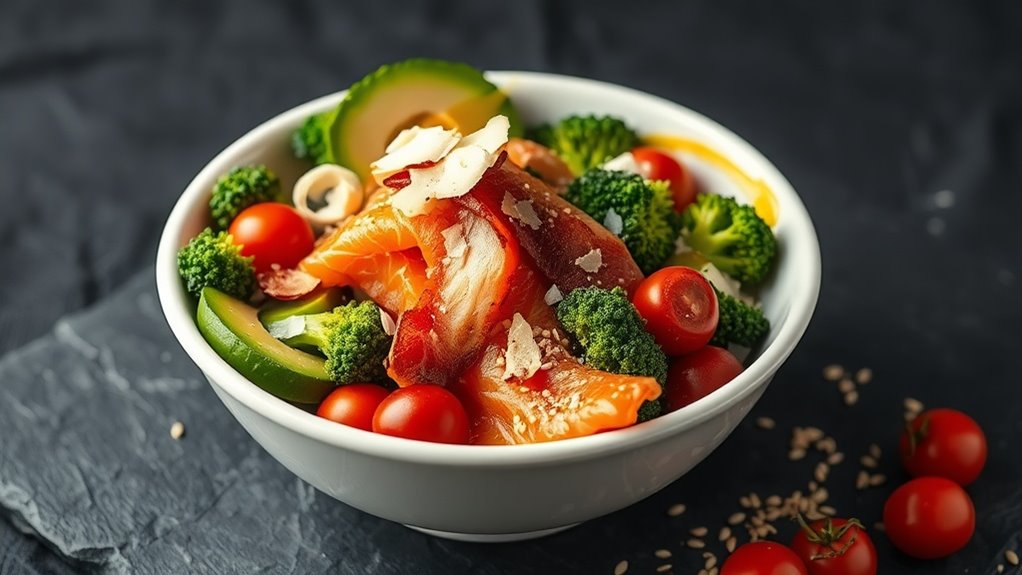
If you’re building a keto-friendly bowl, choosing the right toppings can boost flavor and keep carbs under control. The focus here is on selecting ingredients that deliver reliable texture and satisfying mouthfeel while staying within a low-carb budget. Start with a base that holds up well with sauces and dressings, such as crisp vegetables and protein-rich add-ons, so every bite feels cohesive rather than dry. When you weigh options, prioritize items that add both bulk and aroma without piling on sugars.
Keto texture add ons are crucial for preventing a bland bowl. Think crunchy elements like roasted nuts, sesame seeds, sunflower seeds, and toasted coconut. These foods bring satisfying bite and help slow down eating, which can aid portion control. If you like creaminess, consider full-fat dairy such as grated cheese, crumble feta, or a dollop of Greek yogurt, but keep portions modest to avoid excess calories. For a lighter texture, sliced cucumber or zucchini ribbons offer refreshing contrast without spiking carbs. Balance is key: you want enough variety to keep textures interesting without creating a calorie surge.
Keto textures mix crunchy nuts with creamy dairy and crisp veggies for balanced bites.
Low carb flavor boosters are the next layer for taste without compromising ketosis. Fresh herbs—cilantro, parsley, dill—bring brightness and complexity. Citrus zest or a small squeeze of lemon or lime can lift richer components. Spices, including smoked paprika, cumin, garlic powder, and chili flakes, deliver warmth and depth without sugar. A light drizzle of high-quality olive oil or avocado oil can amplify mouthfeel and help the seasonings cling to ingredients. Umami-rich toppings like olives, capers, and cheese crisps can add savoriness without relying on high-carb sauces. When you choose dressings, opt for oil-and-vinegar bases or yogurt-based sauces in measured portions to maintain balance.
Texture variety supports satiety. Combine a crunchy layer (nuts or seeds) with a soft layer (ripe avocado, cheese) and a crisp veggie (pepper, cucumber). This interplay helps you feel satisfied and less prone to overeat. Consider prep methods that boost texture: lightly roast vegetables for caramelization, toast seeds for aroma, and grate cheese to increase surface area for flavor absorption. Keep hydration in mind; watery toppings can dilute flavors and reduce satisfaction, so pair juicy items with firmer textures.
Evidence-based practice underpins choosing toppings: prioritize whole, minimally processed ingredients with identifiable carb counts. Track portions to avoid unintended surges, especially with nuts and dairy. In sum, your keto bowl thrives when you mix keto texture add ons with low carb flavor boosters, achieving a balanced, flavorful, and satisfying eating experience.
Commonly Asked Questions
Are There Any Toppings to Avoid on Keto Bowls?
Yes, you should avoid certain toppings on keto bowls. Skip sugary sauces, high-carb croutons, and breaded toppers that spike carbs. Watch portions of fruits with higher sugar, like certain berries, and limit starchy additions. For avocado safety, use fresh, ripe avocado and avoid processed spreads that add carbs. Pepper caution: some prepared peppers or sauces contain added sugars or fillers. Stick to whole, low-carb options and measure portions to stay in ketosis.
Can Toppings Affect Net Carbs Differently Than Ingredients?
Toppings can affect net carbs differently than ingredients, due to added fiber, sugar alcohols, or processing. That’s the net carbs nuance: you’re counting total carbs minus fiber, but some toppings raise glucose more than their fiber suggests. So, toppings vs ingredients aren’t identical in net carbs impact; you must check labels and measure portions. In practice, choose toppings with low net carb impact, and rely on whole, minimally processed ingredients for steadier carb control.
What’s the Best Way to Portion Toppings for Bowls?
You’ll learn how to portion toppings for bowls by measuring portions, then distributing evenly. Start with a 1–2 tablespoon base for each topping, adjusting to taste and macro targets. Use a straight scooping method and layer toppings in equal spokes to ensure topping distribution remains consistent from bite to bite. Track net carbs per topping and cap totals to meet goals. This evidence-based approach keeps flavors balanced without overshooting keto targets.
Do Toppings Impact Digestion or Allergies on Keto?
Yes, toppings can affect digestion and allergy considerations on keto. Some dairy, nuts, and seeds may slow digestion or trigger symptoms in sensitive individuals, while high-fiber veggies aid gut speed. Watch for personalized reactions and portion sizes. If you have allergies, read labels carefully and avoid risky ingredients. For digestion, balance fat with protein and fiber. Toppings digestion varies by person; track responses and adjust. Allergy considerations require strict avoidance of known allergens.
How to Store Keto Toppings to Stay Fresh Longer?
Storage methods and freshness tips keep keto toppings reliable for longer. You should portion, freeze, and refrigerate in airtight containers to slow oxidation and moisture loss, checking spoilage signs daily. Follow batch prep guidance so you know shelf life and texture changes, adjusting for seeds, cheese, and fats. Use freezing tips when possible, label dates, and monitor moisture control. If you notice off smells or mold, discard immediately to prevent spoilage.