
Fatty foods feel more satisfying because energy-dense fats engage multiple sensory cues—lubricity, thickness, aroma release, and trigeminal sensations—while you form the bolus with saliva and temperature cues. Texture, viscosity, and mouthfeel align with aroma and fat content to predict smooth transit. Fat signaling and post-ingestive feedback reinforce reward and fullness, shaping your pacing and portion size. There’s a coherent, testable link here that could change how you approach meals—and why some bites feel more complete than others.
Important Facts
- Fat delivers energy-dense compounds and engages distinct trigeminal and gustatory pathways, shaping how we perceive satisfaction from fatty foods.
- Texture cues like lubricity, thickness, and aroma influence salivary flow and bolus formation, boosting mouthfeel satisfaction.
- Viscosity, lubricity, and particle perception combine with temperature and aroma to inform texture-based fullness signals.
- Fatty acid signaling and post-ingestive feedback modulate reward, appetite, and fullness, reinforcing preference for fatty profiles.
- Texture alignment with fat content supports smoother swallowing and pacing, enhancing overall hedonic satisfaction and meal size decisions.
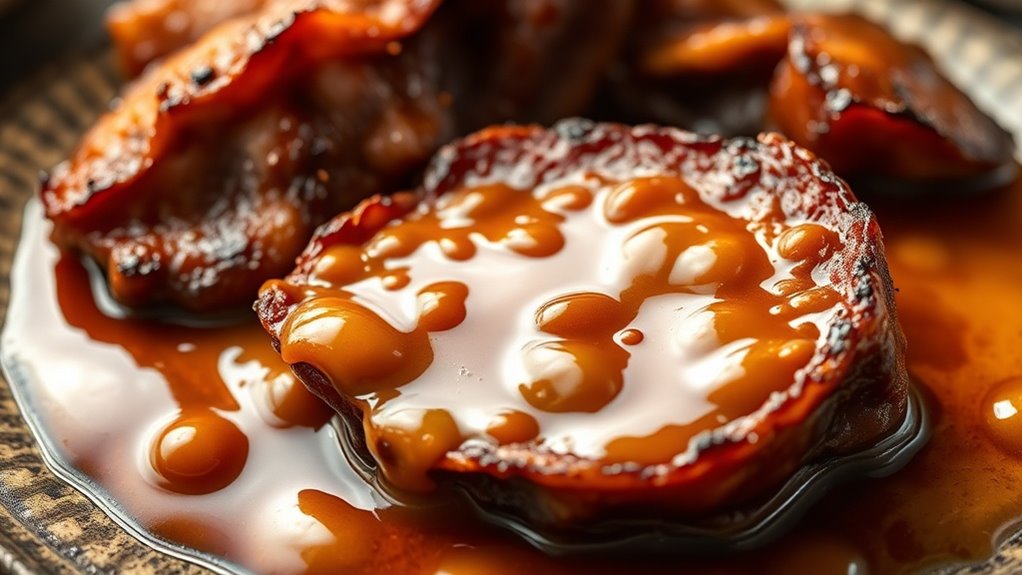
Fatty foods offer a distinctive satisfaction that goes beyond taste, often linking sensory pleasure with physiological responses. In this discussion, you’ll explore why some fatty foods feel more satisfying, with attention to measurable processes that connect mouthfeel to bodily signals. You’ll examine how fatty acid signaling might influence reward circuits and satiety, helping you understand why you might crave certain textures or fat levels. You’ll also consider how oral texture perception contributes to overall satisfaction, independent of basic taste categories. The framework here is empirical and focused on observable phenomena, not anecdotes.
Satisfying fats arise from texture-driven perception, energy signals, and integrated fullness cues.
You can begin by noting that fat delivers energy-dense compounds that engage trigeminal and gustatory pathways differently from other macronutrients. When you bite into a fatty item, you encounter a combination of lubricity, thickness, and a release of aroma compounds that can alter salivary flow and bolus formation. These mechanical and chemical cues interact with neural signaling to shape how filling a food feels at the moment of mastication and swallowing. In parallel, fatty acid signaling mechanisms may modulate reward processing and appetite regulation, creating a coordinated response that reinforces preference for particular fatty profiles. You observe that this coordination manifests as stronger oral texture perception, which, in turn, intensifies post-ingestive signaling related to fullness and satisfaction.
You’ll recognize that oral texture perception is not a single sense but a composite of viscosity, lubricity, and particle perception, all interpreted by the central nervous system in conjunction with temperature and aroma. When texture aligns with expected fat content, you experience a smoother bolus transit, reduced oral friction, and a perception of richness that can be linked to higher satisfaction ratings in controlled settings. Conversely, if texture deviates from expectation—excessive grittiness, waxiness, or dryness—the sensation can dampen perceived satisfaction even if caloric intake remains similar. The empirical pattern suggests a relationship between texture cues and hedonic response, moderated by prior experience and context.
You should appreciate that fatty acid signaling may modulate hormonal and neural pathways that influence meal size, pacing, and termination. This regulatory loop can help explain why you might continue eating a fatty item despite reaching a neutral taste threshold, particularly when oral texture perception remains favorable. In summary, satisfaction from fatty foods emerges from a confluence of energetic content, texture-driven oral perception, and signaling processes that integrate sensory input with metabolic feedback. Understanding these components clarifies why certain fats feel more satisfying and informs approaches to healthier choices without sacrificing perceived fullness or pleasure.
Commonly Asked Questions
Do Fatty Foods Trigger Stronger Cravings Than Others?
Fatty foods can trigger stronger cravings than others, but it varies by fat type, flavor intensity, and personal craving dynamics. You’ll likely notice higher urges when fats pair with salt, sugar, or textural contrast, shaping a robust fatty craving dynamics profile. This relates to a taste satisfaction linkage, where creaminess and mouthfeel amplify reinforcement. Although responses differ, you generally experience sharper cravings for richer, satisfying textures that your brain associates with energy and reward.
How Do Texture and Aroma Influence Satisfaction?
Texture and aroma influence satisfaction by shaping anticipation and oral experience; you notice crispness, creaminess, and chew as texture satisfaction, which reinforces fullness signals. Aroma influence guides early hedonic response, nudging preference even before tasting. Objective effects include slower chewing with fibrous textures and heightened memory cues from savory scents. Your enjoyment rises when texture remains consistent and aroma is strong yet balanced, helping you feel more satisfied and less likely to overeat.
Can Fat Content Affect Post-Meal Energy Levels?
Fat content can influence your post-meal energy levels, but effects vary. You’ll experience fat metabolism shaping slower, steadier energy release, which may reduce sharp energy fluctuations. High-fat meals can delay gastric emptying, smoothing blood sugar, yet heavy portions might cause brief dips as you shift toward resting metabolism. Overall, you’ll notice energy fluctuations depend on fat type, total calories, and meal composition, not fat alone. You may feel prolonged fullness with mild activity, followed by calmer energy afterward.
Do Health Benefits Reduce or Increase Craving for Fats?
The answer is: health benefits can modulate craving, often reducing it when nutrients support steady energy. You’ll notice craving modulation as your body adapts to balanced fat content and improved energy impact, rather than spikes. In practice, higher-quality fats paired with fiber tend to lessen urges, while poor fat quality may sustain them. You observe empirical patterns: consistent meals, fat content that supports steadier energy, and mindful choices decrease cravings over time.
How Does Portion Size Impact Perceived Fullness?
Portion size directly shapes perceived fullness: larger portions typically boost how full you feel, even when actual energy intake isn’t proportionally higher. You’ll often notice a rise in perceived fullness with initial increases, then a plateau as satiety signals catch up. Smaller portions can underreport fullness, prompting you to eat more later. So, your sense of fullness tracks closely with portion size, but thresholds exist where additional volume adds diminishing perceptual benefit.