
Did you know that the right keto dressing can cut daily carb load by up to 5–8 grams per salad without sacrificing flavor? You’ll want oil-forward blends, like a 3:1 olive oil to vinegar base, plus a touch of Dijon and lemon for brightness. For creaminess, a small amount of unsweetened yogurt or mayo with garlic and chives works well. Keep ingredients short and carbs low to stay on track, and you’ll see why this topic matters more than you might think.
Important Facts
- Use classic vinaigrettes (olive oil + vinegar) with a 3:1 oil-to-vinegar ratio for a keto-friendly, flavorful base.
- Add a teaspoon of Dijon or citrus zest to boost depth without adding sugars or carbs.
- For creamier options, blend olive oil with a small amount of mayo or unsweetened yogurt while keeping total carbs low.
- Read labels on store-bought dressings to avoid hidden sugars and choose options with oil as the base and short ingredient lists.
- Pair bright acids with crunchy greens or creamy bases with soft vegetables to balance mouthfeel and satiety without spiking carbs.
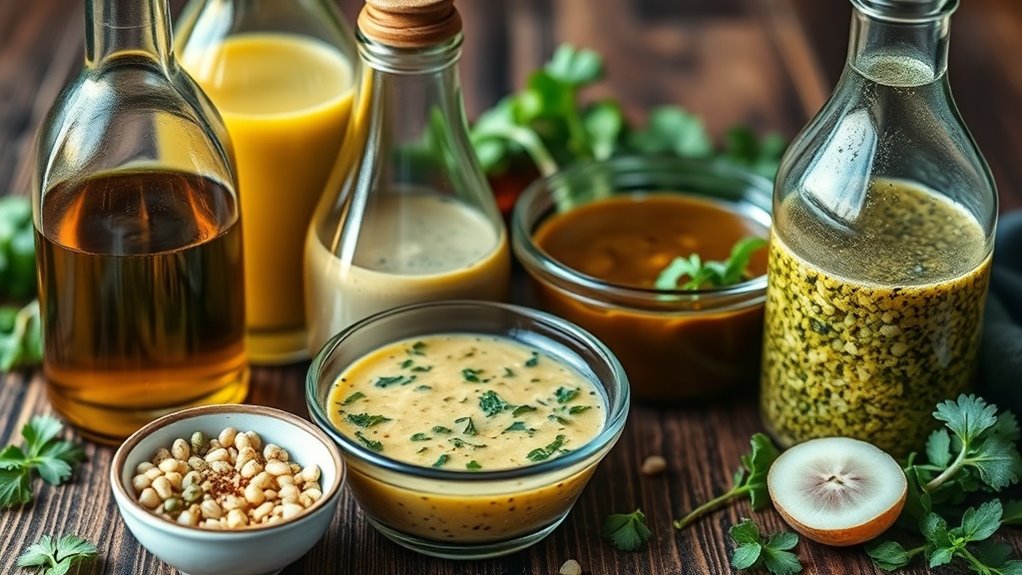
If you’re sticking to a keto plan, choosing the right salad dressings can make vegetables feel more satisfying without pushing your daily carbs. The first idea to embrace is a simple premise: dressings should amplify flavor while staying low in carbs and added sugars. Classic vinaigrettes, made with olive oil and vinegar, deliver fat and acidity that help you absorb fat-soluble nutrients from greens. The idea isn’t to drown greens in sauce but to create a balanced mouthfeel that slows your palate’s appetite signals so you stay satisfied longer. When you think about pairings, choose ingredients that complement rather than overwhelm. A splash of lemon, a pinch of Dijon, or a whisper of herbs adds complexity without boosting carbs.
Classic olive-oil vinaigrette: flavor up greens without spiking carbs.
A practical approach is to keep a few staple dressings on hand and rotate them so your meals remain interesting. A lemon-olive oil vinaigrette, with a teaspoon of Dijon for depth, works well across salads that feature leafy greens, cucumbers, and avocado. For a richer option, mix olive oil with a small-percent dairy or mayo base, adding minced garlic and chives. The pairing here is straightforward: fat from oil or mayo enhances satiety, while garlic and herbs deliver aroma without carbs. If you’re aiming for creamy textures, consider unsweetened yogurt-based dressings as a lighter alternative to heavier mayo blends. The idea is to maintain texture and flavor without pushing total carbs higher than your target.
When you evaluate store-bought dressings, read labels for hidden sugars and total carbohydrates per serving. Look for dressings whose base is oil, with minimal added sugar and a short ingredient list. The efficacy comes from choosing options that align with your macros rather than chasing novelty. Pairings matter: a tangy vinegar note pairs well with bitter greens and feta, while herbal finishes brighten salads containing cucumbers and tomatoes. If you’re uncertain about a recipe, start with a 3:1 oil-to-vinegar ratio and adjust to taste, ensuring you’ll stay within your daily carb budget.
For daily use, consider macro-friendly options that support ketosis: olive oil, avocado oil, or mayonnaise as the fat anchor; lemon juice, vinegar, or citrus zest as the acidity anchor; and mustard or herbs for flavor without carbs. The idea you should carry forward is consistency: small, flavorful dressings enable you to enjoy a wide variety of vegetables without feeling deprived. Pairings can guide your selections—use bright acids with crunchy greens, or creamy bases with softer vegetables like spinach or arugula. By focusing on lean, tight ingredient lists and mindful portions, you’ll sustain adherence and keep nutrition goals in view.
Commonly Asked Questions
Are Keto Dressings Shelf-Stable Without Refrigeration?
Yes, some keto dressings are shelf-stable, but most benefit from refrigeration after opening. A chorus of shelf stable questions and refrigeration myths can mislead you; check labels for preservatives and storage guidance. In general, unopened bottles may sit at room temp, yet once opened, refrigerate to preserve safety and flavor. If in doubt, err on the side of cooling. Remember to inspect for separation or off-odors before use.
Can Store-Bought Dressings Be Keto-Friendly?
Yes, store-bought can be keto-friendly if you read labels carefully. Look for shelf-stable options with no sugar, low carb totals, and clear macros. Prefer dairy-free or alternatives if you’re avoiding dairy, and check for refrigeration requirements once opened. Practice portioning to control calories and macros. Avoid high-sodium dressings and hidden carbs. Keep decisions evidence-based, comparing ingredients, serving sizes, and storage. If unsure, choose simple, no-sugar blends as store bought alternatives.
How Do I Portion Dressings for Macros?
You portion dressings for macros by measuring servings and tracking calories and fat grams to fit your daily goals. Use labeled guidelines on bottles to verify serving size, then weigh or measure with a tablespoon to ensure consistency. Record macros in a tracking app after each use. Labeling guidelines help you stay honest about portions, especially when you eyeball dressings. This keeps you aligned with your keto targets while avoiding hidden sugars and excess carbs.
What Qualifies as a “Low-Carb” vs. “No-Sugar” Dressing?
You’re at a fork in the pantry: low carb means limited total carbs; no sugar means zero added sugars, while natural sweeteners may appear. In dressingss look for under 5–8 g carbs per serving and 0 g added sugars for “no sugar.” The definitions differ, so check nutrition labels, eyeing sugar as dextrose, corn syrup, honey. You’ll choose dressings with clean ingredients, evidence-backed benefits, and plain oil–vinegar bases.
Are Dairy-Free Keto Dressings Effective Alternatives?
Yes, dairy-free keto dressings can be effective alternatives. You’ll rely on dairy free substitutes like olive oil, avocado, tahini, and nut milks for fats, plus herbs and vinegar for flavor. These dressings typically use plant based fats, which support ketosis when portioned appropriately. Be mindful of hidden sugars and carbs in some plant milks or sauces. Read labels, and aim for about 1–2 tablespoons per serving to keep you within daily targets.