
You want a keto routine that sticks: steady meals, predictable portions, and simple foods you actually enjoy. You’ll pace carbs, prioritize protein and fats, and layer in low-carb vegetables and herbs for variety. Start with a modest, protein-forward breakfast or a light coffee, then anchor lunch and dinner at consistent times. Hydration, electrolytes, sleep, and stress matter, so track how you feel and adjust slowly. There’s momentum here, once you see how small shifts support steady energy and fewer cravings.
Important Facts
- Map a typical day to create predictable eating windows, stabilizing energy and reducing cravings within a flexible keto rhythm.
- Build simple, protein-forward meals with healthy fats and low-carb vegetables to sustain fullness and avoid grazing.
- Tailor breakfast strategy to appetite: light or protein-forward options that sustain until lunch without energy crashes.
- Prioritize hydration and electrolytes, with mindful salt use, to support appetite regulation and comfort.
- Track mood, energy, hunger, and weight, and make small, consistent adjustments to sustain long-term adherence.
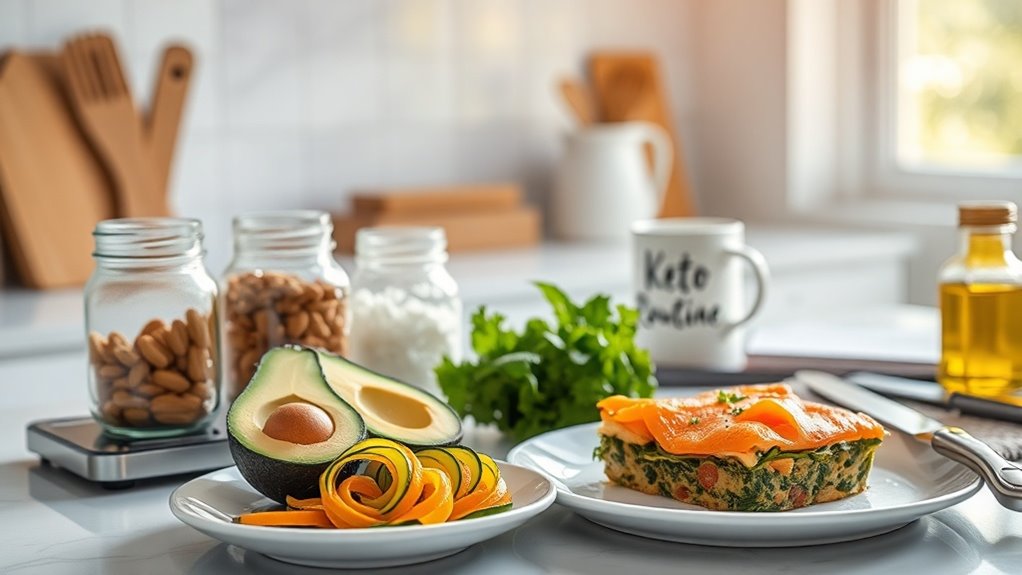
Ever wonder how a consistent keto routine fits into real life? You’re not imagining it: a routine that feels natural can reduce decision fatigue, support steady energy, and align with what your body’s signaling. The key is clarity, not rigidity. Start by mapping your typical day and identifying windows when you’re most likely to eat, move, and rest. You don’t need perfection—just a reliable framework you can adjust as needed. In practice, this means choosing a few simple meals you enjoy, so keto appetite doesn’t drive you toward grazing or convenience foods. A practical approach is to anchor meals around protein, healthy fats, and low-carb vegetables, while keeping carbs consistently low enough to maintain ketosis without drama.
Ever wonder how a consistent keto routine fits into real life and still feels natural?
You’ll benefit from a predictable rhythm. When you know you’ll eat at roughly the same times, you set a tone for your metabolism that reduces cravings and stabilizes energy. If you find mornings hard, consider a modest protein-forward breakfast with fats to sustain you until lunch. If you’re not hungry in the morning, shift to a light coffee with fat or a small, satisfying snack and delay a larger meal until appetite returns. This kind of pacing supports keto metabolism by avoiding large, erratic swings in glucose and insulin, which can destabilize your focus and willingness to stick with the plan.
Flavor matters. You don’t have to survive on bland plates. Build meals around proteins you enjoy—fish, poultry, beef, eggs—and pair them with fats you tolerate well, like olive oil, avocado, or nuts. Load up on fibrous vegetables to keep you satisfied without adding many carbs. Use herbs and spices to keep flavors interesting, so meals feel like real life, not a chore. When you feel satisfied after a meal, you’re less likely to seek quick, high-carb fixes that disrupt ketosis. This is evidence-based: satiety signals matter for adherence, and a well-composed plate makes keto appetite easier to manage.
Hydration and electrolyte balance deserve attention. Water, electrolytes, and adequate sodium help minimize post-meal discomfort and fatigue that could derail routine adherence. A simple cue: drink a glass of water at each meal, and add a pinch of salt on meals if you’re active or hot outside. Sleep and stress management aren’t luxuries; they’re practical tools that stabilize your appetite signals and hormone balance, making keto metabolism smoother over time.
Track progress with lightweight metrics: mood, energy, hunger levels, and weight trends, not perfectionist timelines. If you hit a plateau, reassess portion sizes, carb timing, or meal composition rather than abandoning the routine. Small, consistent adaptations lower friction and keep you moving forward. In the end, your keto routine should feel doable, flexible, and personally meaningful, so you stay with it long enough to see real metabolic and appetite-related benefits.
Commonly Asked Questions
Can Keto Feel Natural on a Busy Schedule?
Starting with a clear yes: keto can feel natural on a busy schedule. You’ll stick to keto daily routines by planning simple meals, batch-cooking on Sundays, and keeping keto-friendly snacks on hand. Use busy schedule tips like 1-2 quick prep meals, and reusable containers to reduce decision fatigue. You’ll notice consistency builds confidence, and small, steady choices matter most. Track progress, adjust as needed, and rely on evidence-based, practical tips to stay in ketosis daily.
How to Avoid Keto Flu Without Strict Macros?
Yes, you can avoid keto flu without strict macros by prioritizing electrolytes, hydration, and gradual adaptation, while monitoring how you feel. Practice somatic awareness: notice energy shifts, cravings, and stomach responses to foods. Use grocery optimization: choose nutrient-dense, minimally processed options, easy-to-digest proteins, leafy greens, and healthy fats. Eat when hungry, stop when full, and adjust intake based on mood and fatigue. Stay consistent, refuel with salt and potassium, and reassess daily.
Is Fruit Allowed in a Flexible Keto Plan?
Fruit can fit, but with fruit moderation. In a flexible keto plan, you’ll adjust around your macros rather than forcing bans. Think like a navigator: you choose small portions, track carbs, and prioritize whole, fiber-rich options. Evidence-based pointers: pick berries, melons, and citrus sparingly; pair fruit with protein or fats to blunt spikes. Your approach should be client-focused and practical, using flexible macros to sustain energy and adherence.
Can I Train Fasted While on Keto Long-Term?
Yes, you can train fasted while on keto long term, but approach it carefully. Fasted training can work for fat adaptation, yet performance may dip early in the day. If you choose it, start with easy workouts and monitor how you feel. Hydration, electrolytes, and adequate protein help. Consider cycling fasted sessions with fed ones to support recovery. Prioritize long term keto goals, adjust fasting windows, and listen to your body for sustainable progress.
How to Sustain Motivation During Slow Progress Versions?
“Slow and steady wins the race.” You can sustain motivation during slow progress by reframing goals, tracking tiny wins, and tying effort to meaningful outcomes. Focus on habit formation: set consistent cues, batch small actions, and celebrate each milestone. Use evidence-based strategies like self-monitoring, deliberate practice, and social accountability. Remember, progress compounds, so stay curious, adjust plans as needed, and trust the process while you build sustainable routines and steady, motivating momentum.