
A coincidence often sparks change: swap high-carb sides for leafy greens and non-starchy vegetables, and you’ll notice how easily a meal shifts toward keto without losing satisfaction. You’ll build plates around protein, fats, and vegetables, while trimming hidden carbs in sauces and dressings. Use olive oil, avocado, and fatty fish for quality fats, and season with herbs, citrus, and textures to keep meals appealing. Stay mindful of net carbs and macronutrient targets, and you’ll uncover practical ways to keep meals keto-friendly, step by step.
Important Facts
- Swap high-carb ingredients for low-carb, nutrient-dense options while preserving flavor and satiety.
- Make fats the primary energy source with olive oil, avocado, nuts, seeds, and fatty fish.
- Flavor with herbs, spices, citrus zest, and acids to add taste without extra carbs.
- Add low-carb toppings like sour cream, nuts, crushed pork rinds, and grated cheese for texture.
- Plan with consistent daily macros, monitor hidden carbs, and rotate proteins, veggies, and fats to avoid monotony.
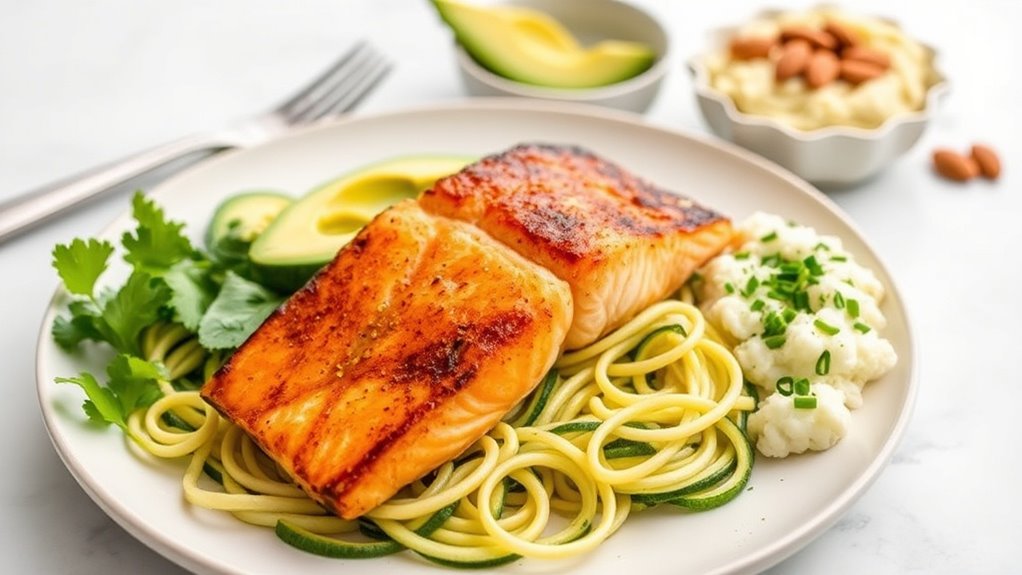
Turning ordinary meals into keto meals is about swapping high-carb ingredients for low-carb, nutrient-dense options while preserving flavor and satiety. You’ll approach this by prioritizing whole foods, healthy fats, and adequate protein, then trimming carbohydrates without sacrificing enjoyment. In practice, you start with proteins like poultry, fish, eggs, and lean meats, pairing them with non-starchy vegetables that provide fiber, micronutrients, and volume. You’ll replace starchy sides with leafy greens, cruciferous vegetables, and color-rich produce, which keeps meals satisfying while reducing net carbs.
Turning ordinary meals into keto-friendly, flavorful plates by swapping starches for nutrient-dense, low-carb options with hearty fats.
Fats will be your primary energy source on a ketogenic pattern, so you select high-quality fats such as olive oil, avocado, nuts, seeds, and fatty fish. You’ll aim for a balanced fat intake that supports ketosis without overwhelming your plate. When you’re choosing dairy, opt for full-fat options like cheese, yogurt, and cream, but monitor dairy’s impact on satiety and carbs, adjusting portions as needed. Be mindful of hidden carbs in sauces, marinades, and dressings; where possible, prepare them yourself from simple ingredients to control carbohydrate content and artificial additives.
Seasoning matters more than you might expect. You’ll rely on herbs, spices, citrus zest, and acid to add flavor without increasing carbs. You’ll expect that fat, not simply protein, can elevate satiety, stabilize appetite, and improve meal satisfaction, so you’ll structure portions to keep you full for longer. To avoid monotony, rotate proteins, vegetables, and fats across meals, creating a diverse palate that still aligns with macro targets. When planning, you’ll estimate net carbs per dish, subtracting fiber from total carbohydrates, and aim for consistent daily ranges rather than chasing a perfect macro at every meal. This approach supports adherence and reduces cravings.
Incorporating low carb topping ideas can elevate texture and flavor without adding meaningful carbs. Think a dollop of sour cream, a sprinkle of chopped nuts, crushed pork rinds for crunch, or grated cheese as a finishing touch. You’ll also consider toppings that boost satiety, like avocado slices, olive tapenade, or a drizzle of olive oil infused with herbs. By keeping portions moderate, you maintain energy balance and avoid overconsumption of fats. Regarding fat burning myths, you’ll avoid believing that high-fat intake alone guarantees rapid weight loss; effective ketosis depends on total carbohydrate control, consistent energy deficit, and physical activity. You’ll track progress with simple metrics—weight trend, waist measurements, energy levels, and occasional ketone checks if you’re into precision.
Commonly Asked Questions
Can I Still Eat Fruit on Keto Meals?
Yes, you can, with mindful choices. Fruit options on keto are limited, so you’ll want small portions and low-sugar varieties. Track net carbs accurately, since fiber helps, but sugars still count. Berries often fit best, while citrus is okay in tiny amounts. Balance your day with protein and fats, and avoid high-sugar fruits. If you’re unsure, log a few days and compare impact on ketosis and energy.
How Do I Track Net Carbs Accurately?
Tracking accuracy comes down to meticulous measurement and mindful labeling. To track net carbs accurately, you’ll weigh ingredients, read nutrition labels, and subtract fiber and sugar alcohols as appropriate. Expect carb labeling challenges: variability between brands, serving size misreads, and rounding. Use a standardized calculator, log consistently, and adjust for personal tolerance. You’ll improved precision by double-checking entries, cross-referencing databases, and tracking trends over time rather than chasing perfect numbers.
Are Artificial Sweeteners Keto-Friendly?
Artificial sweeteners keto can be keto-friendly for many people, but it varies. You’ll want to choose options with zero or negligible net carbs and monitor your response. In general, use artificial sweeteners keto sparingly to avoid triggering cravings or glucose fluctuations. If you crave something sweet, you can pair a small keto friendly fruit occasionally, while prioritizing high-fiber, low-sugar foods. Track labels, stay under your personal carb limit, and watch for digestive or insulin responses.
What Are Quick Keto-Friendly Breakfast Options?
You’ll find quick keto breakfasts you can actually enjoy, and you’ll notice the coincidence: a coffee break becomes fuel. Try eggs with avocado, Greek yogurt, or cottage cheese topped with nuts for protein, fats, and fiber. Consider keto swaps like coconut oil in a smoothie or chia seeds for texture. These options are practical, evidence-based, and fast, supporting ketosis without starving you. You’ll stay full, perform better, and feel confident about your daily macro targets.
How to Handle Social Dining and Keto?
In social dining, you handle keto by planning ahead, choosing low-carb options, and politely steering conversations about foods. Practice keto etiquette: skim menus, ask about sauces, and request substitutions to keep net carbs in check. Track net carbs after meals using a simple app or notebook, adjusting portions as needed. Bring a keto-friendly snack for triggering moments, and avoid fuel spikes. Evidence suggests mindful choices support adherence and social comfort without sacrificing goals.