
Like a faint blush on a dry landscape, tiny sweeteners can tip the balance you’re working hard to maintain. You can choose keto-friendly options—stevia, monk fruit, erythritol, or allulose—in moderation, and pair them with fat, protein, and fiber to blunt spikes. Start small, check labels, and track your daily carb budget. Use flavor boosts like vanilla or cinnamon to ease reliance on sweetness, and favor whole foods to support satiety. Curious how to tailor this to your meals?
Important Facts
- Choose ketosis-friendly sweeteners (stevia, monk fruit, erythritol; use allulose cautiously) and measure servings to minimize glycemic impact.
- Pair sweeteners with fats, protein, or fiber to blunt any minor glucose or insulin rise.
- Use flavor enhancers (vanilla, citrus zest, cinnamon, cocoa) to boost perceived sweetness without excess sugar.
- Reserve sweeteners for planned meals, start with small amounts, and track net carbs to stay within daily keto targets.
- Monitor your response (digestive comfort, cravings, ketone levels) and adjust type, amount, and meal composition accordingly.
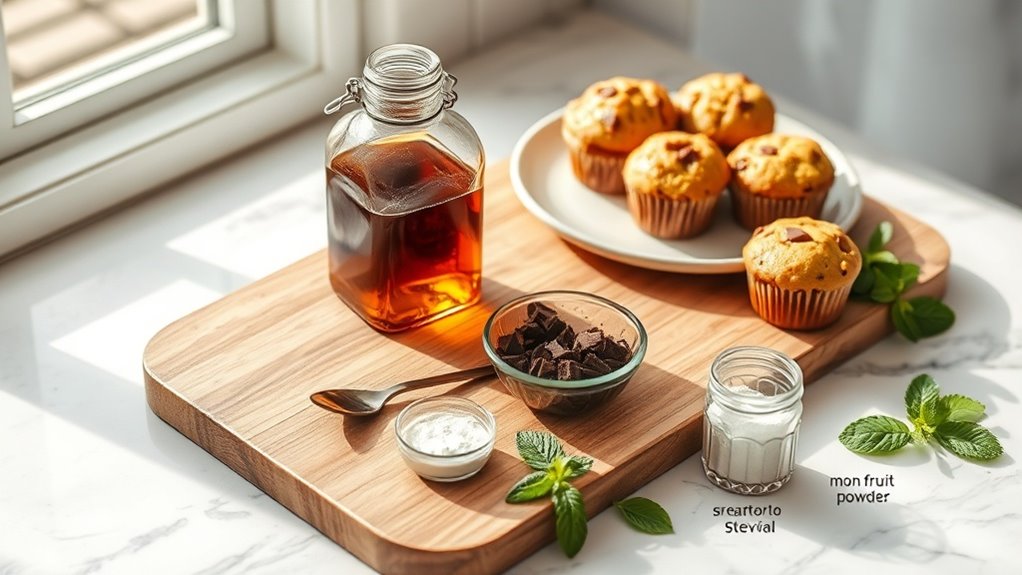
Curious about keeping ketosis while enjoying a touch of sweetness? You’re not alone, and you don’t have to give up flavor to stay in ketosis. The key is choosing sweeteners that minimize insulin response, avoid excess carbohydrates, and support your overall macros. Think about sweeteners alternatives that are naturally low in net carbs, and use them in a way that fits your daily targets. You’ll get both satisfaction and metabolic clarity when you balance quantity with quality.
First, understand that not all sweeteners affect ketosis the same way. Some spike blood glucose a little, while others barely move the needle. For most people, small amounts of certain sweeteners don’t derail ketosis, especially when they’re nestled into meals with plenty of fat and protein. When you’re evaluating options, look at net carbs per serving and any potential digestive effects. In practice, this means reading labels, measuring servings, and avoiding dessert-style portions that exceed your planned carbohydrate budget. By choosing wisely, you create room for a satisfying treat without compromising fat adaptation.
Not all sweeteners affect ketosis equally; choose wisely, measure portions, and stay within your carb budget.
Sweeteners alternatives include options like stevia, monk fruit, and erythritol, which tend to have minimal impact on blood sugar. When used in moderation, these can preserve the savory and creamy balance of your meals. If you’re using sugar alcohols, be mindful of potential GI upset at larger quantities. Some people tolerate allulose well, as it may have a minimal effect on glucose and insulin. The goal is to enjoy the sweetness without triggering cravings that push you over your daily carbohydrate ceiling. Pair your sweetener with fats, fibers, or protein to blunt any minor glycemic excursions and to enhance satiety.
A practical approach is to reserve sweeter ingredients for items that already lean ketogenic, such as breakfast dishes with eggs and avocado, or yogurts and cheeses that align with your macros. You can also experiment with flavor enhancers like vanilla extract, citrus zest, cinnamon, or cocoa powder to achieve perceived sweetness without relying on sugar substitutes alone. Ketosis friendly tips include tracking your intake, testing your blood or breath ketone levels if you’re curious, and prioritizing whole foods alongside any sweeteners. This reduces the likelihood of mindless snacking and supports steady energy.
When you plan ahead, you maximize enjoyable flavors while maintaining ketosis. Start with a small amount of your chosen sweetener, then wait to gauge its impact before adding more. If you notice any adverse effects—digestive discomfort, cravings, or a shift in energy—adjust your approach. By integrating sweeteners alternatives thoughtfully, you sustain flavor variety, protect your ketosis, and uphold clear, evidence-based decision making. In short, you can sweeten foods without ruining ketosis by balancing the type and amount of sweetener with fat, protein, and fiber, and by focusing on ketosis friendly tips that support your overall goals.
Commonly Asked Questions
Can I Use Honey in Small Amounts on Keto?
Yes, you can use honey in tiny amounts on keto, but it’s not ideal. Honey contains sugars that can spike ketosis, especially if you exceed a small portion. If you choose to try it, limit to tiny amounts and monitor your ketone levels. Be aware of ketosis impact, since even small quantities can affect metabolic status. Consider alternatives like stevia or erythritol for a clearer keto path while still satisfying a sweet tooth.
Do Artificial Sweeteners Kick Me Out of Ketosis?
Naturally, artificial sweeteners can be tolerated by many without knocking you out of ketosis, but it varies. If you’re curious, artificial sweeteners ketosis impact is generally minimal when used sparingly. You may also explore sugar alcohols keto friendly, which often don’t spike insulin. Avoid fruit juice ketosis and honey in small amounts. Flavor enhancers replace sugar, keeping taste while you stay in ketosis. Track your response to see what works best for you.
Which Sugar Alcohols Are Keto-Friendly?
You’re wondering which sugar alcohols are keto-friendly. In short, erythritol, xylitol (in moderation), maltitol is less ideal, and sorbitol should be limited. For a clear, evidence-based overview, look at a sugar alcohols overview to compare net carbs and GI impact. In practice, erythritol stands out as keto-friendly; many people tolerate it well. Pair this with keto friendly sweeteners like stevia or monk fruit for balance.
Does Fruit Juice Affect Ketosis Fast?
Yes, fruit juice can affect ketosis quickly because it’s high in sugars, especially fructose and glucose, which spike blood sugar and insulin. If you’re aiming to stay in ketosis, limit portion sizes or avoid juice, opting for whole fruit or water with electrolytes. Are you asking for two two word discussion ideas about the Subtopic “does fruit juice affect ketosis fast?” that are not relevant to the listed Other H2s? fructose timing, juice metabolism.
Can Flavor Enhancers Replace Sugar Entirely?
With a clean slate, yes—flavor enhancers can replace sugar entirely for many applications. You’ll want combinations like salt, acids (vinegar/lemon), aroma boosters, and non-sugar sweeteners to mimic sweetness without spiking blood glucose. Two word discussion ideas not relevant to Other H2s: flavor enhancers, sugar substitutes. Evidence supports that careful use maintains ketosis for some individuals, though taste and texture vary. Start with small swaps, then adjust based on preference and metabolic response.