
Did you know that many keto-friendly snacks clock in with chewy ingredient lists and questionable fats, yet simple nuts, cheese, olives, and pepperoni sticks can offer cleaner macros? You’ll want packaging that’s recyclable or resealable and labels that clearly expose sourcing and processing. If you’re aiming to minimize waste while staying in ketosis, consider these ready-to-eat options and the best ways to pair them with non-starchy veggies—but there’s more to optimize beyond the pantry, so keep reading.
Important Facts
- Prioritize minimally processed keto foods with clean ingredients and transparent nutrition labels to meet macro targets.
- Choose snack options with net carbs 2–6 g and fat 8–12 g per serving for steady ketosis and satiety.
- Favor whole-food bases (nuts, seeds, coconut, olive oil, cheese) over sugary or starch-heavy packaged items.
- Opt for recyclable or refillable packaging, resealable pouches, and brands with clear sustainability disclosures.
- Pair ready-made meals and beverages with reliable macros and low additives to maintain ketosis and reduce waste.
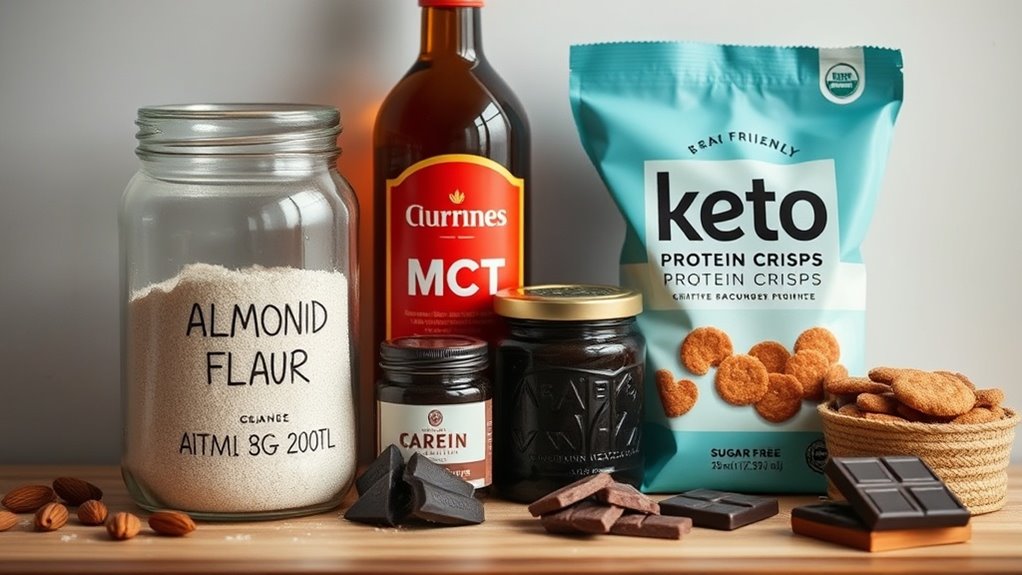
If you’re sticking to a keto diet, you don’t have to sacrifice convenience: there are plenty of packaged foods that fit the macros and still taste great. In this Best-Of roundup, you’ll find options that prioritize high-quality fats, adequate protein, and minimal net carbs, so you can stay on track without turning meals into a guessing game. The key is choosing minimally processed products with clean ingredient lists, mindful portions, and transparent nutrition panels. When you read labels, look for whole-food bases like nuts, seeds, coconut, cheese, and olive oil, and avoid hidden carbs from sugars, starches, or maltodextrin. This is how you maintain steady energy and satiety between meals.
Practical keto: clean ingredients, solid fats, minimal net carbs.
Keto snacking becomes practical when you select snackable formats that deliver reliable macros. Keto-friendly bars and bites can be handy, but scrutinize fiber and sugar alcohol counts, since these influence net carbs. Favor options with 2–6 grams of net carbs per serving and at least 8–12 grams of fat to support ketosis. Portable cheeses, pepperoni sticks, olives, and roasted nuts offer straightforward macros and minimal processing. For sweet cravings, go for dark chocolate with a high cacao percentage paired with nuts, or unsweetened coconut chips, which provide fat without spiking blood sugar. When you choose these snacks, you’re balancing convenience with metabolic goals, reducing the risk of over-snacking.
Packaging sustainability matters if you want to minimize waste while you shop. Look for brands that use recyclable or compostable materials, or that offer refillable formats for staples like nuts, seeds, or nut butters. Some products employ minimal, recyclable wrappers and clearly labeled sustainability statements on the back panel. Even small choices—choosing a resealable pouch instead of single-use bags, or buying in larger, reusable containers—help reduce overall waste. If you’re optimizing both your keto goals and environmental impact, pair your snack choices with smart storage practices: portion out snacks into reusable containers, wash and reuse packaging where possible, and opt for brands that assess their supply chains for carbon footprint and packaging lifecycle.
For beverages, keto-friendly options include unsweetened sparkling waters, coffee with unsweetened cream, and electrolyte drinks with zero or minimal sugars. These drinks support hydration and electrolyte balance, which matter when you’re in ketosis. In core meals, look for ready-to-eat options that align with your macros, such as ready-to-heat meals featuring quality fats, lean proteins, and non-starchy vegetables. Avoid heavily processed meals that rely on artificial additives. In sum, your best bets combine reliable macro alignment, honest labeling, and a commitment to packaging that respects the environment. This approach keeps keto snacking practical and sustainable without compromising taste or nutritional integrity.
Commonly Asked Questions
How Do I Read Nutrition Labels for Keto-Compatibility Quickly?
Reading labels quickly, keto compatibility hinges on identifying total carbs per serving and keeping them low. Start with the serving size, then check total carbs, fiber, and sugar alcohols, and apply serving-size math if you eat more. Use keto compatibility diet principles to aim for 5–10 g net carbs per serving for many days. Learn labeling terminology like “net carbs” and be wary of hidden carbs from starches or maltodextrin.
Which Brands Guarantee Clean, Non-Additive Keto Ingredients?
You know the map is honest when the brand is a lighthouse, showing clean ingredients and brand transparency. Some brands guarantee minimal additives, but you must still read labels and verify sourcing. Look for transparent ingredient lists, third‑party testing, and clear allergen notes. If a brand isn’t forthcoming, skip it. In short, choose those that spell out every component, avoid vague “natural flavors,” and provide easy access to ingredient sourcing for keto compatibility.
Are Sugar Alcohols or Artificial Sweeteners Keto-Friendly?
Are sugar alcohols or artificial sweeteners keto-friendly? Generally yes, but it depends on the type and your tolerance. You should look for labeling tricks or hidden additives that can spike carbs or trigger cravings. Some sugar alcohols like erythritol have minimal net carbs, while maltitol harms ketosis for many. Artificial sweeteners vary—prefer stevia, monk fruit, or sucralose in moderation. Track your response, read ingredients, and choose minimally processed options.
How Do Serving Sizes Affect Weekly Keto Allowances?
Serving size impact matters: larger portions can quickly push you over weekly keto allowances, so read labels quickly and plan portions before snacking. Your daily limit hinges on total carbs, sugar alcohols, and artificial sweeteners, plus your commitment to keto dairy free options if needed. Look for clean keto ingredients and brand guarantees to stay keto compatible. Track fiber and net carbs, and remember sugar alcohols may dent ketosis; adjust portions accordingly for sustainable, evidence-based success.
Which Products Fit Both Keto and Dairy-Free Needs?
You can find keto friendly dairy free snacks and keto safe dairy free desserts that fit both needs. Look for items labeled dairy-free, low net carbs, and no added sugars. Check labels for hidden dairy ingredients like casein or whey and watch for lactose. Favor whole-food bases such as nuts, seeds, coconut, and cocoa. Always verify serving sizes to stay within your weekly keto allowance. Prefer certified Paleo or vegan options when possible for dairy-free assurance.