
Around 60–70% of people feel better on a keto plan within a few weeks, but you don’t have to feel deprived to reach your goals. You’ll focus on clear portions of protein, healthy fats, and plenty of nonstarchy vegetables, with small, satisfying choices for cravings. Plan ahead, track simple cues like hunger and mood, and adjust gradually—tweak carbs or portions as needed. The result isn’t perfection, it’s a sustainable path that stays doable when you hit inevitable bumps. Curious how it fits your life?
Important Facts
- Focus on deliberate choices that support energy, mood, and appetite control rather than deprivation.
- Build a simple, flexible meal plan with protein, vegetables, and fats, plus variety to avoid feeling boxed in.
- Use a sustainable structure: plan ahead, track subtle cues (appetite, energy, mood), and adjust gradually.
- Prioritize high-quality fats and fiber-rich vegetables; include small, satisfying snacks to curb cravings.
- Adapt meals in real life (dining out, social events) by choosing grilled protein, nonstarchy vegetables, healthy fats, and avoiding hidden sugars.
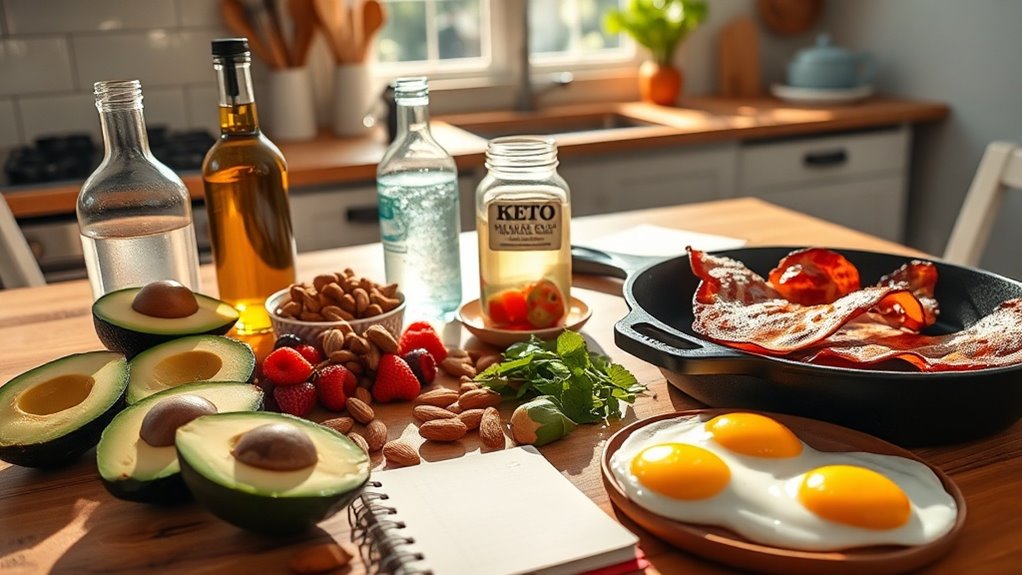
If you’re trying keto without feeling deprived, you’re not alone—and the good news is you can eat satisfying foods while hitting your goals. You’re seeking a practical pathway, not a list of prohibitions, and that mindset matters. In practice, keto isn’t about deprivation; it’s about deliberate choices that support steady energy, mood, and appetite control. You’ll benefit from a clear plan that blends structure with variety, so you don’t feel boxed in. Start by framing your meals around high‑quality fats, moderate protein, and low‑carb vegetables. This balance helps you stay satisfied while staying in ketosis, and it reduces the urge to overeat on carb-rich items.
Keto can be satisfying: structure, variety, and deliberate choices keep energy steady and cravings in check.
A realistic approach begins with a simple, flexible template: each meal features a protein source, a generous portion of nonstarchy vegetables, healthy fats, and a small, mindful portion of nuts or berries if you’re craving something more. You don’t have to be perfect; you just aim for consistency, especially at breakfast and lunch, when routines matter most. Hydration supports appetite signals and energy, so pair your water with a pinch of salt if you’re exercising or feeling lightheaded. Consider electrolytes as part of your routine, not an afterthought, to prevent fatigue and cramping.
When it comes to snacks, keep options that reinforce your plan rather than derail it. Think cheese sticks, olives, jerky without added sugar, avocado halves, or a small smoothie with leafy greens and protein powder. By prioritizing protein and fiber-rich vegetables, you’ll minimize cravings and maintain steady blood sugar. If you’re social or dining out, you can still follow keto by choosing grilled protein, a nonstarchy veggie side, and a healthy fat, avoiding hidden sugars and bread baskets. Planning ahead reduces spontaneous choices that push you off track.
Tracking progress can be minimal yet meaningful. You don’t need a complicated log; a quick note on appetite, energy, and mood each day gives you actionable feedback. If you notice persistent fatigue, revisit your fat intake, electrolyte balance, and sleep quality. Small adjustments—shifting a gram of carbohydrate here or there, tweaking portion sizes, or swapping olive oil for butter—can make a meaningful difference without triggering guilt or deprivation. The emphasis is on sustainable habit formation, not temporary fixes.
You’ll also benefit from a client-centered mindset: ask yourself what works for you and what doesn’t, and adjust accordingly. If a particular meal feels unsatisfying, modify with more protein or fat while keeping carbs in check. If you’re unsure about a food’s fit, test it for a week and evaluate its impact on hunger and performance. By pairing evidence-informed guidance with practical tweaks, you can maintain ketosis, enjoy meals, and feel in control rather than restricted. The overarching idea is to integrate keto into daily life as a flexible, personalized approach that respects your preferences while supporting your goals, including the two word ideas you’ve identified: idea1 two word, idea2 two word.
Commonly Asked Questions
Can I Have Occasional Carbs on Keto Without Losing Progress?
Yes, you can have occasional carbs without losing progress, but plan them strategically. Keep portions modest, stay within your daily carb targets, and choose high-fiber, nutrient-dense options. Track how you feel and your results over 1–2 weeks to adjust. Use two word discussion ideas like “carb timing” and “real-life.” Remind yourself that consistency matters more than perfection, and use occasional carbs as a flexible tool, not a setback. You’ll sustain momentum with mindful, practical choices.
How Strict Must I Be With Macros to Avoid Cravings?
You don’t have to be perfectly strict with macros to curb cravings. Focus on strict macro tracking at meals when you need it, then use mindful portioning to stay balanced. Employ group dining strategies to navigate social occasions, and practice flexible carb timing on lower-crab days to prevent binges. This evidence-based, client-centered approach supports adherence, so you feel in control while still progressing toward ketosis goals.
What Are Smart Keto Substitutes for Common Cravings?
Smart swaps for common cravings include cauliflower rice instead of starch, zucchini noodles in place of pasta, and fat-boosted yogurt or cheese with berries for desserts. For craving management, you can fiber up meals, hydrate, and add protein early in the day. You’ll likely feel satisfied longer when snacks pair protein with healthy fats. Use evidence-based portions and adjust macros gradually to avoid spikes, staying client-centered and practical.
Is There a Flexible Keto Approach for Busy Schedules?
You can, with flexible scheduling, tailor keto to your life while staying on track. You’ll focus on macro balance and adapt meals around work, family, and workouts. This plan lets you dial carbs up or down as needed, without guilt. Evidence supports consistent protein, fiber, and fats to curb cravings. Practical tips: plan ahead, batch prep, and use quick keto options. You’ll stay compliant, feel energized, and sustain long-term progress.
How Do I Handle Social Eating While Staying Keto?
When you’re at social events, you can stay keto by planning ahead, choosing protein-rich plates, and loading on non-starchy vegetables. Savor occasional carbs if you need them, but fit them into your daily target and adjust others. Use clear boundaries, communicate your goals kindly, and track intake to stay accountable. Stay flexible, monitor how you feel, and tailor portions. Social eating becomes manageable with prep, mindfulness, and a practical, evidence-based approach.