
Have you noticed how a steaming bowl can melt away the cold and the cravings at the same time? This best-of collection steers you toward protein-forward comfort, with bone broth bases, lean meats, and fiber-rich veggies that keep net carbs in check. You’ll find soups, casseroles, and quick skillet meals designed for steady energy and minimal starchy thickeners. Ready to explore practical, evidence-based tweaks that make cozy meals both satisfying and balanced? Let’s start.
Important Facts
- Use bone broth-based soups with protein, fiber-rich vegetables, and no sugars or starch thickeners for warmth and fullness.
- Create cozy keto casseroles with protein-dense fillings and creamy dairy or avocado sauces, avoiding heavy starches.
- Include quick 15–20 minute skillet meals that combine meats, vegetables, and fats like cream or olive oil for speed.
- Apply evidence-guided principles: prioritize whole proteins, non-starchy vegetables, healthy fats, and monitor net carbs.
- Plan a weekly rotation: 2–3 soups plus 1 casserole to sustain energy and fit real-world kitchen routines.
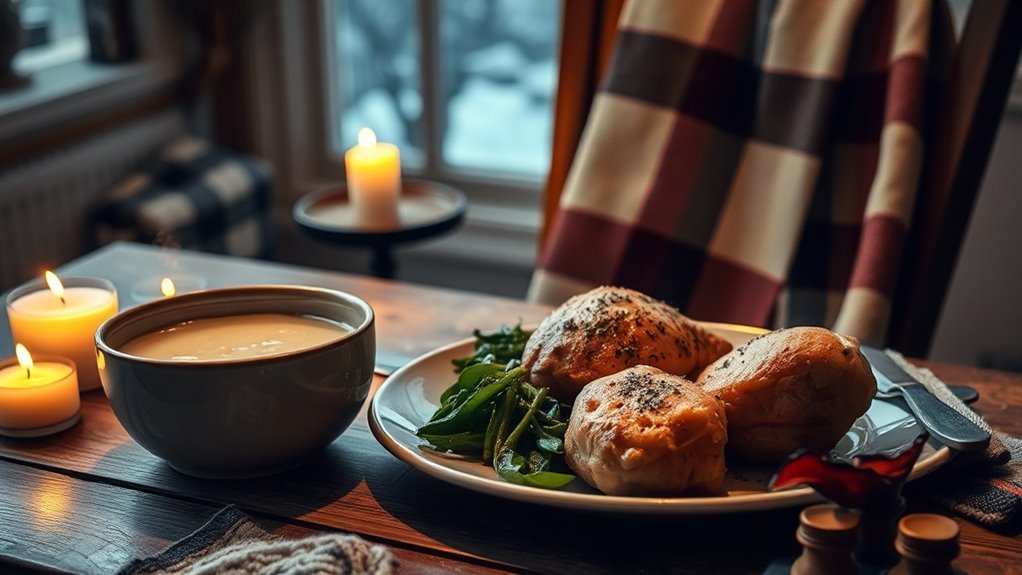
When a chilly evening settles in, comfort foods don’t have to derail your goals: you can crave warmth and stay low-carb with satisfying soups, stews, and skillet meals that deliver big flavor without piling on carbs. In this Best-Of roundup, you’ll focus on practical choices that lean on evidence, balance, and real-world kitchen routines. You’ll notice that low carb soups can be both comforting and nutrient-dense, using bone broth, lush vegetables, and protein sources like chicken, beef, or tofu to support fullness without excess carbs. By prioritizing fiber-rich vegetables and flavorful herbs, you create depth without relying on added sugars or starchy thickeners. When you choose a soup, you’ll look for clear portions of protein, vegetables, and healthy fats to sustain energy through longer evenings.
Cozy keto casseroles are a cornerstone of comfort with minimal carb tradeoffs. You can rely on protein-dense fillings, creamy dairy or avocado-based sauces, and low-sugar vegetables to deliver staying power. A well-constructed cozy keto casserole keeps portions balanced, avoids heavy starch substitutes, and uses cauliflower, zucchini, or shirataki in moderation to mimic texture without spiking carbs. In practice, you’ll layer flavors through garlic, onion (in moderate amounts if you’re tracking net carbs), herbs, and pepper, then bake until the top turns golden. This approach helps you avoid breakfast-for-dish reliance while still delivering a warm, satisfying meal.
Beyond soups and casseroles, you’ll incorporate skillet meals that come together in fifteen to twenty minutes. Sautéed meats with robust vegetables and a bit of cream, cheese, or olive oil give you a comforting plate without high carb ingredients. If you want additional warmth, consider spice blends like cumin, paprika, and chili powder to sharpen flavor without adding sugar. When you plan your week, build a rotation of two to three soups and one casserole so you have quick options that align with your goals.
Evidence guides these choices: prioritize whole-food proteins, non-starchy vegetables, and healthy fats; minimize refined carbs; and monitor portion sizes. You don’t need to eliminate warmth to stay on track. By choosing recipes that emphasize protein, fiber, and satisfying fats, you’ll feel full longer and maintain steady energy. If you track net carbs, adjust portions of cheese or dairy to keep totals in your target range. With consistent, practical meals—low carb soups, cozy keto casseroles, and quick skillet dishes—you’ll enjoy cold nights without compromising your nutrition.
Commonly Asked Questions
Can I Substitute Proteins in These Recipes?
Yes, you can substitute proteins in these recipes. Protein swap ideas include swapping chicken for turkey, beef for pork, or salmon for tofu, depending on your goals. You’ll maintain flavor, but watch cooking times. For texture retention tips, sear proteins first, then finish gently, and consider moisture-retaining methods like braising or adding broth. Aim for similar protein weights, and adjust seasonings accordingly to keep the dish balanced.
How Do I Adjust Macros for Leftovers?
You’ll adjust macros for leftovers by recalculating per-serving energy and nutrient targets after cooking, then redividing total macros across planned portions. Start with planned leftovers in mind, using container labels to track weight and portions. Leftover macro tinkering depends on protein, fat, and carb changes from refrigeration. Use portion size scaling to resize servings, and recalculate calories, protein, fat, and carbs per portion. Store accurately and re-check goals after reheating.
Are There Kid-Friendly Low-Carb Options?
Yes—there are kid-friendly low-carb options. You can offer kid-friendly ideas like mini meatloaves, veggie-based chili, and chicken tenders made with almond flour. For protein substitution, swap in turkey, fish sticks, or tofu in familiar recipes to keep taste approachable. Keep portions sensible, flavors mild, and offer dips. Use textures kids enjoy, like crisp roasted veggies or cheesy casseroles. Pair with fruit for balance, and involve them in simple prep to boost acceptance.
Which Pantry Staples Keep Best Long-Term?
Pantry staples that keep best long-term include canned beans, tuna, and salmon, plus whole grains like quinoa. For low-carb aims, stock nuts, seeds, olive oil, coconut oil, and unsweetened canned vegetables. Store in a cool, dark place to maximize shelf life. Practice rotation by using the first-in, first-out method. Pantry storage should be airtight and moisture-controlled; check dates regularly. With careful selection, you’ll maintain long term shelf life and quick, nutritious options.
Can I Freeze Portions Without Texture Changes?
Can I freeze portions without texture changes? Yes, with careful prep. You’ll want to cool fast, portion, and freeze in airtight bags or containers, leaving little air. Blanch vegetables or fully cook proteins, then chill before freezing to minimize ice crystals. Thaw slowly in the fridge and reheat gently, stirring to prevent lumps. Expect minor texture changes in some items, but proper handling keeps flavors intact. Texture changes are possible, but manageable with methodical prep.