
If you don’t like meat but want keto benefits, you can still hit protein and fat targets with eggs, dairy, tofu, tempeh, Greek yogurt, and paneer, while leaning on olive oil, avocado, nuts, and seeds for energy. Schedule meals that pair high-protein plants with flavorful vegetables and fiber, use texture tricks like roasted tofu, and keep portions controlled with pre-planned combos. It’s about steady macros and sustainable choices that may surprise you. You’ll want to keep exploring how.
Important Facts
- Focus on plant-based fats and proteins (eggs, dairy, tofu, tempeh, paneer) to support ketosis without relying on meat.
- Use fat-dense plant sources (olive oil, avocado, nuts, seeds, full-fat dairy) to meet energy targets with low carbs.
- Enhance flavor and satiety with sautéing, crushing garlic, roasting tofu/tempeh, and finishing with herbs and low-sugar sauces.
- Incorporate convenient plant-based options (egg dishes, paneer curries, chickpea-based meals in controlled portions).
- Start with high-fat, moderate-protein, very low-carb macros; adjust based on energy, mood, sleep, and appetite.
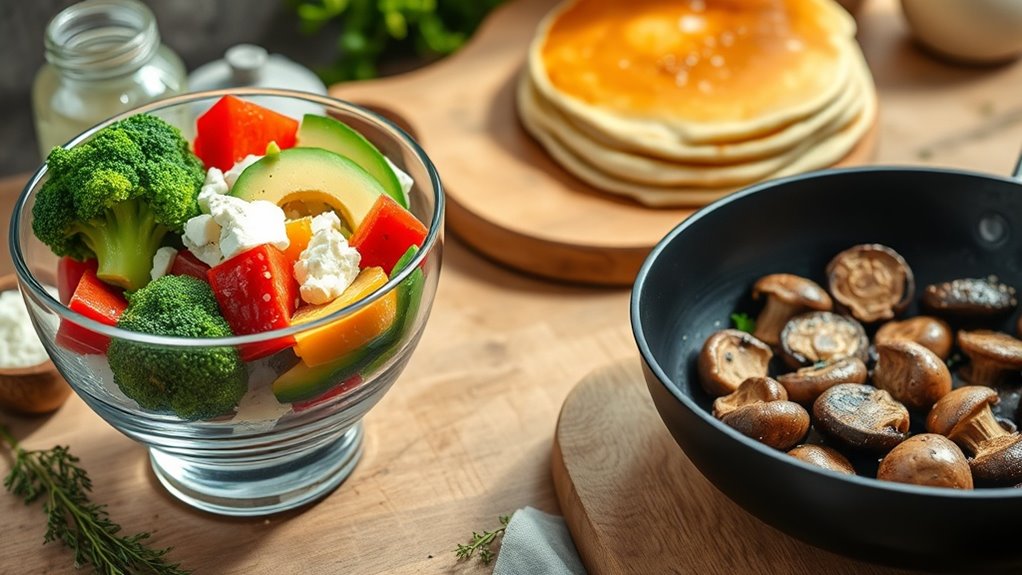
If you don’t love meat, you can still make keto work by focusing on nutrient-dense plant fats and proteins, smartly balancing your macros, and choosing foods that keep you full and satisfied. You’ll build a practical plan that respects your tastes while honoring ketosis. Start with reliable protein sources that align with plant-based preferences, like eggs, dairy, tofu, tempeh, seitan, Greek yogurt, cottage cheese, paneer, and high-protein legumes in moderated portions. Emphasize fats from olive oil, avocado, nuts, seeds, and full-fat dairy or plant-based milks to hit energy needs without overloading carbs. Your goal is to create meals that sustain energy, curb cravings, and support steady blood sugar.
Embrace plant fats and protein to sustain ketosis without sacrificing flavor.
In place of meat, focus on cooking techniques that maximize flavor and satiety. Sautéing vegetables in a small amount of oil, crushing garlic to release aroma, and finishing with herbs can elevate simple ingredients. Roasting tofu or tempeh until caramelized adds texture that makes these plant-first proteins feel substantial. Stir-frying with low-sugar sauces, like tamari and sesame, helps you stay within carb limits while delivering familiar satisfaction. Steaming greens and topping them with a drizzle of lemon-infused olive oil preserves nutrients and keeps portions light yet filling. These cooking techniques reduce reliance on meat while preserving taste, texture, and nutrient density.
Plant-based substitutes can be your allies when you’re craving variety. Explore substitutes like egg-based dishes, paneer curries, or chickpea-based “meat” alternatives in small, controlled portions to fit keto macros. For convenience, keep pre-portioned protein-and-fat combos on hand, such as deviled eggs, cheese slices with avocado, or a smoothie using unsweetened plant milk, protein powder, and hemp seeds. If you choose legumes, pair them with healthy fats and monitor portions to stay within your daily carbohydrate target. Remember, the emphasis is on nutrient density and satiety, not simply reducing meat intake.
Your macro strategy should be individualized and adaptable. Start with a rough target of high fat, moderate protein, very low carbohydrate, then adjust based on energy, mood, sleep, and appetite signals. Prioritize fiber from low-starch vegetables, leafy greens, and seeds to support gut health and fullness. Hydration matters, so drink water regularly and use electrolytes if needed, especially during adjustments.
If you’re unsure how to tune your plan, consider tracking a week of meals to assess how plant-based substitutes and cooking techniques affect ketosis, energy, and satisfaction. Your evidence-based, patient-centered approach means listening to your body, refining portions, and choosing practical options that fit your lifestyle. With consistency, you’ll sustain ketosis while honoring taste preferences, creating a sustainable path to keto that doesn’t hinge on meat.
Commonly Asked Questions
How Can I Get Enough Protein Without Meat Sources?
You can get enough protein without meat by prioritizing plant-based and dairy options: eggs, Greek yogurt, cottage cheese, tempeh, tofu, seitan, lentils, chickpeas, quinoa, and edamame. Combine protein sources across meals and include protein-rich snacks. Use protein powders if needed for convenience. Also pair protein with plant based fats like avocado, nuts, seeds, olive oil. Track intake to meet daily goals; aim for even distribution. This evidence-based approach supports steady muscle maintenance and satiety.
Will Keto Hinder My Plant-Based Diet Goals?
Keto can coexist with a plant-based plan, but you’ll want careful protein planning and macro tracking for keto plant based goals. If you’re plant-based, focus on high-quality fats, legumes in moderation, and complete proteins from soy, quinoa, and tempeh. Meat free compatibility improves when you monitor ketone levels and micronutrients. Expect some tradeoffs, but with mindful meals, you can align keto with your plant-based aims.
Which Keto Fats Are Best for Non-Meat Eaters?
You’ll want which plant based fats and best oil options like olive, avocado, and MCT for keto without meat. Prioritize protein rich non meat sources such as tempeh, tofu, seitan, and hemp seeds, balanced with leafy greens and micronutrients. Practical picks include walnuts and flaxseed for omega-3s. Build meals around these fats, monitor ketosis, and adjust. This evidence-based approach supports sustainable fat intake while keeping plant-based goals in view.
Can I Meet Micronutrient Needs Without Meat?
You can meet micronutrient needs without meat, especially with a well-planned plan. You’ll want to track micronutrient gaps and include diverse non meat protein sources like legumes, soy, dairy or fortified products, plus leafy greens, nuts, seeds, and whole grains. Prioritize iron, B12, zinc, D, calcium, and omega-3s, and consider supplements if needed. A registered dietitian can personalize guidance, ensuring a practical, evidence-based approach that fits your keto goals while addressing gaps.
Are There Meal Ideas That Avoid Meat Entirely?
Yes, you can: try vegetarian keto or vegan keto ideas like eggs, dairy, tofu, tempeh, nuts, seeds, and low-carb vegetables, plus fortified plant milks. Focus on protein quality, micronutrients, and fiber, and monitor electrolytes. Plan meals with soy or paneer, leafy greens, avocado, and berries in moderation. Use measureable portions, and consider a supplement strategy for B12, iron, and zinc. Stay flexible, track your mood and energy, and adjust carbs to tolerance.