
You’ve likely heard the old adage about quick fixes, but the best keto hacks for busy folks prove simplicity beats complexity. You build a small, repeatable cart of high-fat, moderate-protein staples and assemble meals with a greens- protein- fat plate, no-fluff cooking required. Think bulk eggs, cheese-and-meat platters, fat-forward soups, and no-cook options like tuna salad or avocado with canned salmon. Hydration and electrolytes matter, and a simple tracker keeps you on target—so what’s your first staple plan?
Important Facts
- Build a minimal weekly plan with repeatable meals: eggs, cheese/meat plates, canned seafood, and zucchini noodles for fast keto wins.
- Use a well-stocked, shelf-stable pantry (olive oil, canned tuna/salmon, olives, full-fat dairy, nuts) to reduce cooking time.
- Prioritize fat-forward meals with limited net carbs and a plate of greens to satisfy hunger quickly.
- Rely on no-cook or reheatable options (tuna avocado salad, cheese boards, fat soups) to cut prep.
- Hydrate and balance electrolytes; pair fat-rich snacks with measured portions to maintain ketosis.
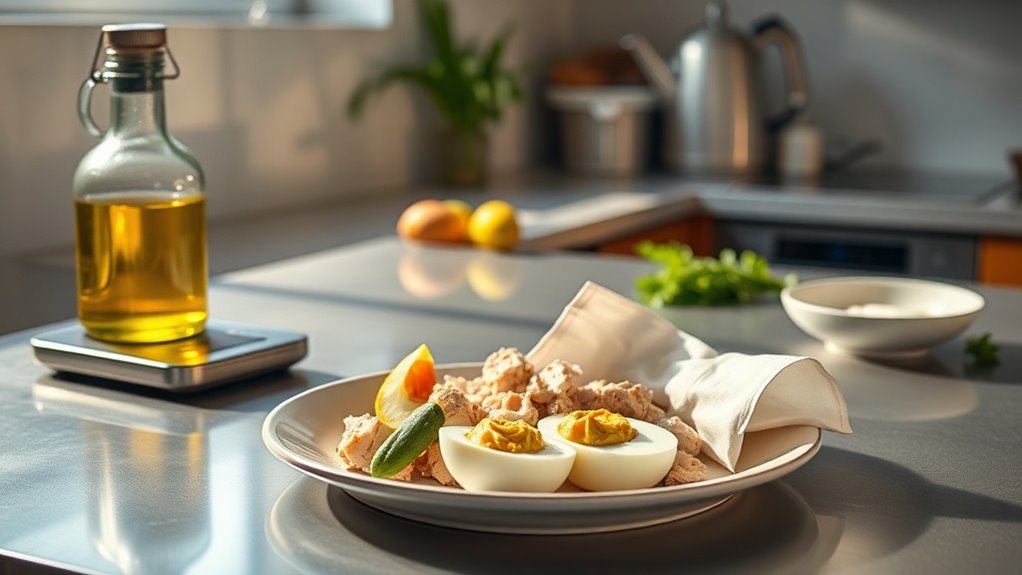
Tired of cooking but still sticking to keto? You’re not alone, and you don’t have to abandon progress to keep it simple. The core idea is to shorten decision fatigue while keeping macros on track. You’ll lean on reliable strategies: streamlined planning, high-fat, moderate-protein options, and ready-to-go ingredients that fit your daily targets. Start with a clear weekly plan and a small, repeatable shopping list that minimizes guesswork. When you’re pressed for time, the goal is to produce meals that satisfy hunger, maintain ketosis, and require minimal effort.
A practical approach is to build a small repertoire of quick meals you can rotate. Think eggs cooked in bulk, cheese-and-meat plates, canned tuna or salmon on zucchini noodles, and fat-forward soups. These options are not only fast but also adaptable to your tastes. To stay within keto parameters, prioritize fat as your main energy source, moderate protein, and very limited net carbs. When you’re uncertain about portions, rely on simple plate guidance: half non-starchy greens, a quarter protein, and a quarter fats, plus a few vegetables or avocado for fiber. This keeps meals balanced without a mental calculations marathon.
Pantry swaps make a big difference. If you hate long recipes, lean on shelf-stable items that stay fresh and readily combine into meals. Canned seafood, olives, almonds, full-fat dairy, olive oil, and coconut oil form the backbone of quick, satisfying plates. For flavor, keep a small collection of keto-friendly condiments: mustard, hot sauce, pesto, and low-carb salsa. These reduce meal prep time while keeping taste intact. When your pantry is well-stocked, you can assemble meals in minutes rather than days, and you’ll avoid last-minute grocery runs that derail your plan.
Hydration and electrolytes matter on keto and are often overlooked. A quick trick is to sip mineral-rich fluids or add a pinch of salt to water with meals to prevent lightheadedness or cramping, especially if you’re cutting carbs dramatically. If hunger hits between meals, opt for a fat-rich snack that requires zero cooking, such as cheese, nuts, or olives. Keep portions measured to prevent overconsumption, which can nudge you off track.
If you’re seeking structure, use a simple weekly framework: two egg-based breakfasts, one no-cook lunch option like tuna salad or avocado with canned salmon, and a couple of protein-forward dinners you can reheat. This keeps you in the keto zone without feeling like a full-time chef. Track your intake with a straightforward app or notebook to confirm you’re meeting daily macros, then adjust gradually based on energy, appetite, and progress. By prioritizing quick meals and pantry swaps, you stay consistent, reduce kitchen time, and preserve adherence to keto goals.
Commonly Asked Questions
What Quick Keto Breakfasts Require No Cooking at All?
You can grab quick breakfasts that require no cook at all, like full-fat yogurt with nuts or coffee with MCT oil and a ready-made protein shake. For no-cook ideas, rely on hard cheeses, smoked salmon, and pre-washed greens. Track macros, and save time with travel snacks like jerky. When eating out or budget-hacking, choose simple, high-fat options, and plan macros tracking. This keeps you consistent without kitchen effort.
How to Track Macros Without Weighing Every Ingredient?
You’ll track macros by estimating portions and using trusted apps, not weighing every bite. Start with a simple target: identify kcal, protein, carbs, fat, then log meals and adjust. Use standard serving sizes and reusable templates to speed things up. Macro tracking relies on consistency, not precision, so focus on tracking most days and refining macro balance over time. Keep a steady routine, review weekly, and tweak portions to stay aligned with goals.
Which Keto Snacks Travel Well and Stay Fresh?
Sticking with travel-friendly options, choose keto snacks that maximize portable freshness. Nuts, jerky, cheese sticks, olives, and seed crackers hold up well in small containers. For storage, use airtight, opaque bags and keep portions pre-measured to prevent moisture and heat damage. Pack energy bars with minimal sugar alcohols, and add a silica pack if allowed. Label by snack type to simplify access. Focus on keto snack storage and portable freshness to stay compliant on the go.
Can I Eat Out on Keto Without Cooking?
Eating out on keto is doable without cooking, yes. You can navigate menus, choose protein-rich dishes, add extra veggies, and skip high-carb sauces. Can I eat out keto? absolutely, with smart picks and sauces on the side. No cooking needed means you lean on grilled meats, salads, and olive oil dressings. Track carbs, avoid bread, pasta, and sweeteners. Acknowledge sauces, portions, and hidden carbs to stay in ketosis while enjoying meals.
Are There Budget-Friendly Keto Hacks That Save Time?
Yes—there are budget friendly, time saving keto hacks. Plan simple meals with versatile base ingredients (eggs, canned fish, frozen veggies) and batch cook on Sundays to cover weekdays. Use grocery store rotisserie chicken and pre-cut veggies to cut prep time. Shop sales, buy in bulk, and supplement with affordable staples like avocado, nuts, and olive oil. Track macros briefly to avoid waste. These moves keep costs low while you stay on track.