
If you’re building a keto meal plan for a week, start with clear macros based on your weight and activity, targeting 20–50 g net carbs daily and steady protein with moderate fat. You’ll want a repeatable framework of two to three core meals daily, each with a protein, a fat source, and non-starchy vegetables, plus optional small snacks. Consider a simple shopping list, hydration, and rotating fats to prevent palate fatigue—the next step will tighten your plan and keep you on track.
Important Facts
- Set a weekly macro target: 20–50 g net carbs, adequate protein for your weight/activity, and balanced fats to support ketosis.
- Build 2–3 core meals daily with a consistent protein, varied fats, and non-starchy vegetables; add small snacks if needed.
- Create a 7-day template mapping meals to macros, with hydration timing to stabilize insulin and electrolytes.
- Use a categorized grocery list focused on whole foods, staples, and electrolyte balance (salt, potassium, magnesium).
- Track meals and adjust by taste tests, mood, and energy; simplify meals if carbs exceed targets.
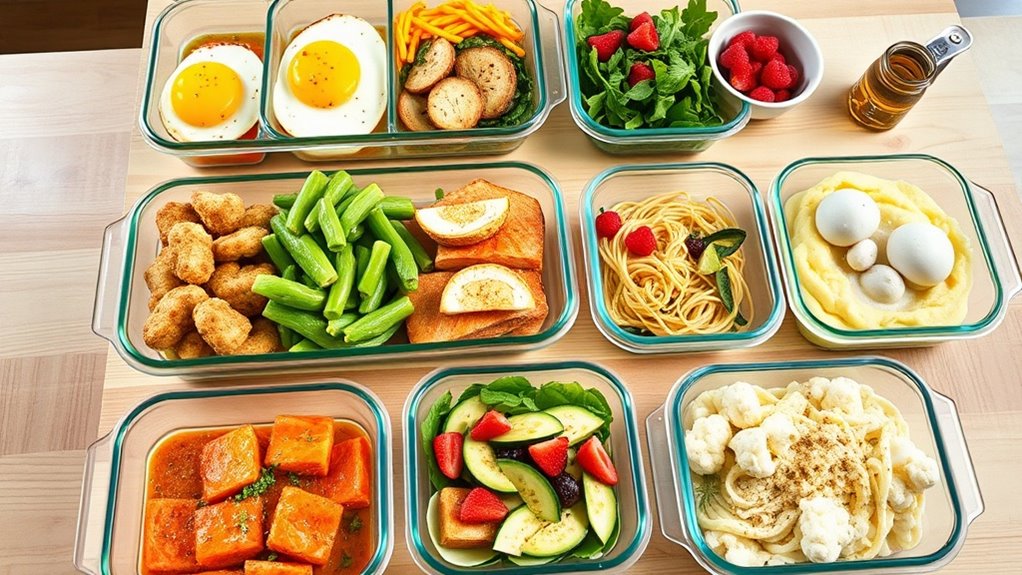
A keto meal plan for a week provides a practical framework to achieve sustained ketosis while meeting daily nutrition needs. You approach planning with a structured mindset, focusing on macronutrient targets, micronutrient adequacy, and meal timing that supports metabolic stability. Start by outlining protein, fat, and carbohydrate goals aligned with your body weight, activity level, and health status, then map these to a 7‑day template. Prioritize lean, fatty proteins, non-starchy vegetables, healthy fats, and small portions of berries or low-sugar dairy to preserve ketosis while preventing micronutrient gaps. You’ll want to anchor meals with a consistent protein source and rotate fats to reduce palate fatigue, keeping total daily carbs within your individualized ceiling, typically 20–50 grams net carbs.
To execute this plan, begin with a precise shopping framework. Create a grocery list that categorizes items by section, minimizing impulse buys and supporting grocery budgeting. Favor whole foods over processed substitutes, and quantify portions to anticipate weekly needs. You’ll track staples like eggs, oily fish, avocados, olive oil, nuts, seeds, leafy greens, cruciferous vegetables, and fermented foods, ensuring you maintain electrolyte balance with salt, potassium, and magnesium. When selecting dairy, choose full‑fat, unsweetened options to enhance satiety and fat intake without excessive carb exposure. You’ll monitor labels for hidden carbohydrates and starches, and you’ll favor salt‑forward seasonings to reduce dependence on high‑carb condiments.
In terms of meal structure, you’ll design two to three core meals per day with optional snacks limited to small portions if needed for hunger or activity recovery. For each day, assign a protein portion, a fat source, and non‑starchy vegetables, then couple with a consistent hydration plan and predictable timing to minimize insulin fluctuations. Your plan should incorporate taste testing during the early days to confirm palatability without compromising nutrient targets; adjust seasonings or texture through herbs, spices, or cooking methods rather than increasing carbohydrate loads. This practice supports adherence while preserving ketosis.
Evidence supports iterative optimization: taste testing can reveal preferences that improve long‑term adherence, and grocery budgeting helps prevent waste and overspending. Record-keeping is essential—log meals, portions, and any deviations from macros. If a meal repeatedly exceeds carb limits, simplify by swapping in more greens and a lean protein while reducing high‑carb add-ons. Maintain flexibility to accommodate social events or travel, substituting compatible foods without derailing ketosis. You’ll reassess weekly, focusing on mood, energy, and cognitive clarity as practical indicators of metabolic response, refining your plan to sustain ketosis, meet nutrient needs, and support daily functioning.
Commonly Asked Questions
Can I Customize Macros for My Activity Level?
Yes, you can customize macros for your activity level. Your approach should involve evidence-based activity adjustments, tailoring fat, protein, and carb targets to energy expenditure and recovery needs. Start with a baseline, then monitor RPE, heart rate, and performance. If you train intensely or long hours, increase protein modestly and adjust fats to meet energy demand without compromising ketosis. Reassess weekly, and align macros with measured activity changes and goals.
How to Handle Dining Out on Keto All Week?
Dining out on keto all week is doable with precise choices and planned flexibility. You’ll compare menus like a clinician: look for lean proteins, nonstarchy veggies, and healthy fats, avoiding breaded bases and sugary sauces. Use dining out tips to request substitutions and portions. Weekly keto options include grilled chicken, salmon salads, omelets, and bunless burgers. Track macros, hydrate, and adjust portions to maintain ketosis while enjoying diverse meals. Evidence-based, practical, and patient-centered guidance.
Are Keto Supplements Necessary for Weekly Plans?
Keto supplement necessity is not universally required for a weekly plan; most people can meet needs with whole foods. If you’re restricting carbs or tracking macros tightly, consider targeted options like electrolytes or magnesium to support balance. Evaluate your intake first, then tailor use. Your weekly plan customization should reflect energy, workouts, and medical history. Rely on evidence-based guidance, monitor symptoms, and adjust rather than assume supplements are essential.
What if I Experience Keto Flu Midweek?
If you experience keto flu midweek, start at once with hydration and electrolytes. Prioritize midweek electrolyte balance by replacing sodium, potassium, and magnesium through broths, electrolyte drinks, or supplements as advised. You may also ease symptoms with steady glucose relief from small, keto-friendly carbs if needed, and ensure adequate sleep. Evidence supports adjusting fluids, electrolytes, and pacing your fat intake; seek clinical guidance if symptoms persist beyond 1–2 days, or worsen.
Can I Mix Meal Prep With Ready-Made Foods?
Yes, you can mix meal prep with ready-made foods. Coincidences aside, it’s about aligning macros and timing. Start by mixing mealprep with ready-made foods, then customize macros to fit your day. Consider dining out occasionally, choosing keto-suitable options. Use keto supps only if needed, monitor for keto flu, and adjust hydration and electrolytes. Track portions to avoid over/under. This evidence-informed approach maintains consistency while minimizing disruption to your keto plan.