
A coincidence doubles as a signal: you’ll save money on keto once you lock in a core, affordable protein plan. You’ll want to focus on eggs, bone-in chicken thighs, and canned fish, plus bulk fats and budget-friendly veggies, then compare unit prices and use loyalty programs to maximize value. Keep to 1–2 weekly trips and rely on leftovers to stretch each dollar, but the key crossroad is choosing a dependable weekly rotation—the method that could change everything.
Important Facts
- Build around affordable proteins (eggs, canned fish, bone-in thighs) and bulk-buy to maximize protein per dollar.
- Prioritize fats in bulk (olive oil, coconut oil) and budget-friendly additions like avocado when on sale.
- Choose keto-friendly produce that lasts (leafy greens, cabbage, broccoli) and use frozen options to reduce waste.
- Plan meals weekly with a core set of ingredients, use store ads, and compare unit prices, not package prices.
- Track weekly spend vs. meals, reuse ingredients across dishes, and favor leftovers to minimize waste.
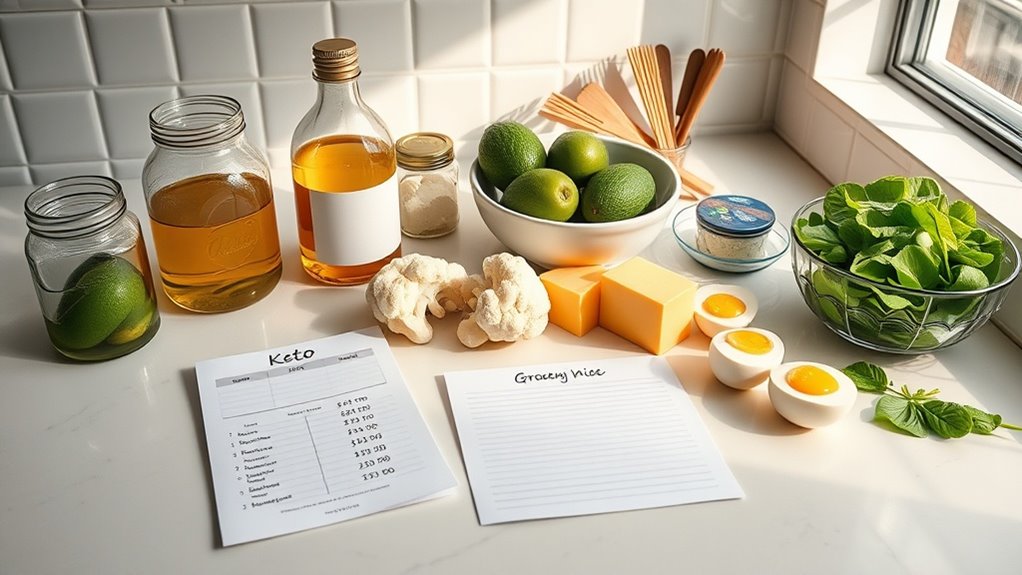
Want to eat keto without breaking the bank? You can build a practical grocery list by focusing on solid options that supply fat, protein, and fiber without costing a fortune. Start with staple proteins that stay affordable: eggs, canned fish, and bone-in chicken thighs often beat pricier cuts in price-per-gram of protein. Use bulk sourcing when possible to lock in lower unit costs, and keep a simple rotation to avoid waste. For fats, choose economical choices like olive oil in larger bottles, and avocado when in season or on sale; fats carry calories efficiently, supporting ketosis without draining your budget. When it comes to produce, choose low-cost, keto-friendly vegetables such as leafy greens, cabbage, cauliflower, broccoli, and zucchini. Frozen vegetables can be cheaper than fresh and have similar nutrient profiles, so don’t overlook them for bulk meals. For dairy, plain Greek yogurt, hard cheeses, and cream can fill multiple meal roles and stretch your budget when used strategically. Track sales and compare unit prices rather than package prices to maximize value per gram or per serving.
To avoid impulse buys, plan meals around a core set of ingredients you already know you’ll use. Build a weekly menu that anchors on proteins, a couple of fatty sides, and a few fibrous veggies. Then create a shopping list that emphasizes budget friendly swaps and bulk sourcing. Budget friendly swaps might mean swapping pricier cuts for bone-in wings or thighs, or replacing cashews with cheaper nuts like almonds in measured portions. Include pantry staples such as unsweetened almond milk, salted butter, and coconut oil, so you can cook without frequent shopping trips. For flavor, rely on dried herbs, spices, and cost-effective condiments rather than premium specialty ingredients.
A practical approach to savings is to shop once or twice weekly with a focused list, avoiding stray items that creep into carts. Match your list to planned meals and the stores’ weekly ads, and use store loyalty programs for additional discounts. When you see a deal, consider how many meals you can make with that item rather than just buying it for a single dish. If you’re unsure about quantities, aim for conservative portions and plan for leftovers. Bulk sourcing doesn’t just lower prices; it also reduces packaging waste and trip frequency, making your routine more efficient. For perishables, buy smaller quantities more often or portion and freeze singles to prevent waste. Finally, keep a simple tracking system—a one-page tally of weekly spend versus intake—to refine your list over time, so you continuously optimize keto adherence and budget. Your grocery list should be evidence-based, precise, and practical: accurate prices, planned meals, and repeatable routines that help you stay in ketosis without overspending.
Commonly Asked Questions
How Can I Stock Keto Staples on a Tight Budget?
Yes—you can stock keto staples on a tight budget by prioritizing budget friendly keto items and smart shopping. Start with discount store shopping for fats like oil and butter, eggs, canned fish, and frozen vegetables. Choose affordable proteins, watch unit prices, and buy in bulk when sensible. Compare price per gram of carbs and fats, use seasonal produce, and plan meals. Track costs, avoid fancy brands, and rotate staples to stay budget conscious.
Which Stores Offer the Best Keto-Friendly Discounts?
You’ll often find the best keto discounts at stores with strong store loyalty programs, price matching, and seasonal sales. Look for retailers that reward bulk buys and offer price matching on staples like nuts, meats, and oils. Compare weekly circulars, use loyalty coupons, and stack seasonal promos with bulk buys for maximum savings. Prioritize stores that advertise price matching, then leverage bulk purchases during peak seasonal sales to maintain keto standards on a budget.
Are Non-Perishable Keto Items Cheaper Long-Term?
Non-perishable keto items are cheaper long term if you shop smart and stock up on sales. You’ll realize substantial long term savings by buying in bulk, choosing lower-cost brands, and prioritizing real-food staples. Some objections say freshness matters, but non-perishable keto items maintain quality and safety when stored properly. You’ll benefit from comparing unit prices, using coupons, and avoiding impulse buys, ensuring non perishable keto remains cost-efficient over time.
How to Read Labels to Avoid Hidden Carbs and Costs?
Reading labels helps you avoid hidden carbs and extra costs. Look for total carbohydrates per serving, sugar, and starch sources; beware sneaky sweeteners and maltodextrin. Choose products with simple ingredients, fiber-rich options, and clear serving sizes. Stock staples like olive oil, eggs, and plain yogurt to stay budget-friendly. Compare unit prices, buy in bulk when possible, and favor budget friendly keto foods with longer shelf lives. Use serving sizes to portion portions accurately and minimize waste.
Can I Meal-Prep to Reduce Weekly Grocery Spend?
Meal prep is your smart savings tool: yes, you can meal-prep to reduce weekly grocery spend. You’ll cut impulse buys, bulky waste, and repeated shopping trips. Benefits include portion control, consistent macros, and faster weeknights. Use budgeting hacks like batch cooking on sale proteins, freezing portions, and a simple rotation to avoid boredom. Evidence-based, precise: plan, shop seasonal, store properly, and track costs. Meal prep benefits accumulate into steady, wallet-friendly meals.