
Like a simple compass that points toward balance, you can track carbs with a straightforward plate method. You fill half your plate with non-starchy veggies, a quarter with whole grains or starchy carbs, and a quarter with lean protein, then add a palm-sized portion of extra carbs as needed. Let activity steer targets—more steps or workouts mean a touch more carbs, less activity trims back. A two-step check per meal and a light weekly log keep it practical, not perfection-driven, and that’s how you stay consistent.
Important Facts
- Use the Simple Plate Method: half non-starchy vegetables, one quarter whole grains or starches, one quarter protein, plus a palm-sized carb target per meal.
- Adjust carbs by daily activity: more active days allow a bit more carbs; less active days pull back slightly.
- Follow a two-step meal check: balance the plate, then ensure foods align with goals using mostly unprocessed carbs.
- Keep minimal logging: optional weekly review of portions and how energy and performance feel, not a daily tally.
- Pair carbs with protein and fiber, stay hydrated, and prioritize unprocessed carbs for steady energy and sustainable balance.
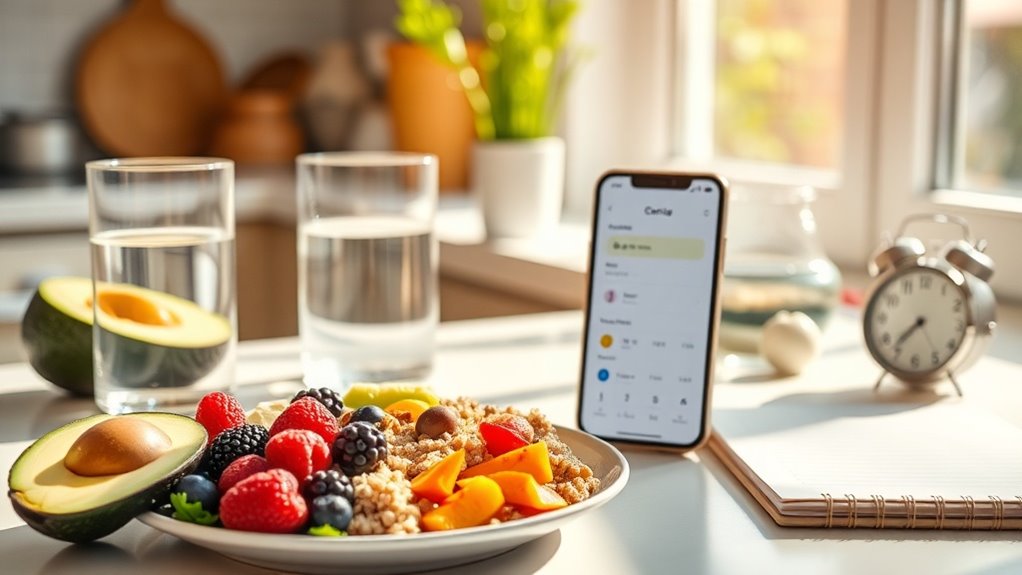
Wondering how to keep daily carb tracking simple without turning your meals into math class? You’re not alone. The goal is steady, sustainable habits, not perfect counts. Start with a practical mindset: place carbs where they matter most—quality, timing, and portion size—without turning every bite into a spreadsheet. A straightforward approach works best when you build from familiar patterns and small tweaks you can repeat daily.
Keep carbs simple: focus on quality, timing, and portions for sustainable meals.
Think in terms of a simple plate. Visual cues beat calorie math every time. Use a simple plate as your anchor: half non-starchy vegetables, one quarter whole grains or starchy carbs, and one quarter protein. This structure naturally limits portions and shapes meals around whole foods that provide steady energy. It also makes it easy to estimate carbs without logging every gram. If you want a quick heuristic, aim for a palm-sized portion of carbohydrates at most meals, adjusting up or down based on activity, hunger, and goal.
Walking macros—your daily movement targets—can guide your carb balance without beeping at you all day. On more active days, you’ll tolerate a bit more carbohydrate, especially around workouts. On lighter days, you’ll pull back a notch. The key is consistency with a loose framework, not perfection with every meal. You don’t need to tally every carb; you just need a stable pattern you can repeat.
Adopt a two-step check before eating: first, is the plate balanced? If yes, you’ve likely hit a reasonable carb target for that meal. Second, does the food choice support your goals? When you focus on mostly unprocessed carbs—fruits, vegetables, legumes, whole grains—you’ll naturally hit a reasonable range without tracking. If you’re unsure, revert to the plate method or a smaller “swap-in” option: swap white bread for whole-grain, yogurt for sugar-laden varieties, or fruit for dessert-heavy choices.
If you’re aiming for more structure, use a minimal log once per week to review trends, not every day. Note average portions, how you felt, and performance across workouts. A quick glance can reveal if you’re drifting toward excess or shortchanging yourself. The aim is awareness, not obsession. When your routine becomes automatic, you’ll feel more in control and less overwhelmed.
Protein and fiber matter here, too. They slow digestion, improve satiety, and stabilize energy, making carbs feel more predictable. Pair carbs with protein and fiber at meals to blunt cravings and avoid spikes that leave you chasing quick fixes later. Hydration and sleep influence appetite as well; their role in appetite regulation means you’ll crave fewer unnecessary carbs when you’re rested and well-hydrated.
In the end, tracking carbs isn’t about punishment or perfection. It’s about a reliable framework—walking macros and a simple plate—that keeps choices simple, sustainable, and effective. You’ll stay consistent, feel steadier, and still enjoy meals without overthinking.
Commonly Asked Questions
Can I Track Carbs Without Counting Calories?
Yes, you can. You don’t need to count calories to track carbs. Start with a carb tracking mindset: log meals by roughly estimating portions and noting carb-heavy foods. Use simple tracking methods like a quick plate method or a basic app entry, focusing on strength of bowls and portions rather than perfection. Stay practical, evidence-based, and consistent; refine estimates over time. This keeps you mindful without calorie obsession and supports steady progress.
Is Fiber Counted Toward Daily Carbs?
Yes, fiber counts toward daily carbs, but with nuance. Fiber’s impact varies: soluble fiber can modestly raise grams, while insoluble often passes through with minimal starch-like effect. Track total carbs, but note miscount pitfalls: some labels exclude fiber, and certain products blend fiber with sugar alcohols. If you’re aiming for accuracy, subtract net fiber (total minus fiber) for many planning goals, yet respect regional labeling. Use fiber as a stabilizing symbol, not a trap.
How Strict Should Daily Carb Targets Be?
You should aim for a reasonable range rather than a fixed number, balancing precision with daily flexibility. Set a carb target rigidity that matches your goals, activity, and metabolic response, then loosen it on training days or social occasions. Track trends, not perfection, and adjust by a few grams as needed. Stay evidence-based: prioritize nutrient-dense carbs, monitor energy, and keep flexibility available to maintain long-term adherence.
Do Chewing Gum or Beverages Count Carbs?
Chewing gum or beverages do count carbs, though impact varies. Gum often has small amounts; sugar-free options still contribute trace carbs, while regular gum adds more. Beverage carbs depend on the drink—sodas and juices spike quickly, while water, black coffee, or unsweetened tea add little. If you’re tracking, note gum impact and beverage carbs in your daily total, and adjust others accordingly. Stay practical: read labels, log accurately, and don’t let small sources derail your plan.
Can I Track Carbs Offline Without Apps?
Yes, you can track carbs offline without apps. Try offline tracking methods like a simple paper log or a notebook you keep in your kitchen. Record meals, portion sizes, and estimated carb grams, updating totals at each meal. Use a simple template: meal, carbs, running total. Review weekly to spot trends. A paper log is private, portable, and evidence-based for practical, consistent tracking without screens.