
Like a seasoned navigator who charts hidden currents, you’ll start with total carbs and fiber to net carbs, then flag sugar alcohols’ impact. You’ll assess fat quality (prefer MUFAs/PUFAs, avoid palm oil and hydrogenated fats) and confirm protein per serving fits your goal. Watch for hidden calories from sweeteners, consider serving size, and log sodium plus micronutrients to maintain balance and satiety. The rest will depend on what those labels reveal about your daily plan.
Important Facts
- Prioritize net carbs: subtract fiber from total carbs and track sugar alcohols, noting their variable impact on your blood sugar.
- Scrutinize fat quality: favor monounsaturated and polyunsaturated fats from real foods; avoid palm oil and hydrogenated fats.
- Verify protein targets: ensure grams per serving fit daily protein needs and consider amino acid completeness and meal distribution.
- Check sodium and micronutrients: watch for high sodium, allergens, and notable micronutrient content that affects ketosis.
- Consider serving size accuracy: account for label rounding, multiple servings, and actual consumption to keep calories, net carbs, and fat in check.
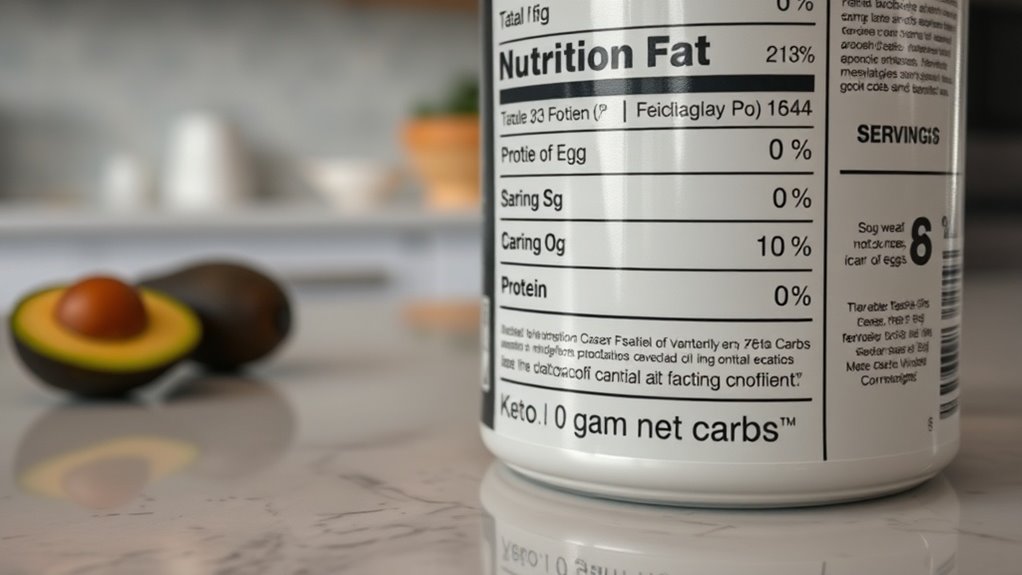
Reading nutrition labels like a keto pro starts with setting clear goals: keep net carbs low, prioritize fats from quality sources, and verify protein fits your daily targets. You approach labels with purpose, focusing on net carbs, total calories, and protein grams, since these components steer your daily plan. Calorie counting isn’t about overeating restriction alone; it supplies context for portions, energy balance, and metabolic needs. You’ll assess each serving to ensure your daily targets stay aligned with your macro goals, while staying mindful of hidden calories from sweeteners, alcohols, and processing aids.
Reading nutrition labels like a keto pro keeps net carbs low and fats quality-driven.
When you examine fat, you don’t just skim the total. You evaluate fat sources, looking for monounsaturated and polyunsaturated fats from real foods over highly processed oils. Quality fat matters on keto, because it influences satiety, inflammation, and metabolic signaling. You check the label for the ratio of saturated to unsaturated fats and prefer sources like olive oil, avocados, nuts, seeds, and fatty fish when they fit your serving size. If a product relies heavily on palm oil or hydrogenated fats, you weigh the tradeoffs and often skip it. You also verify the fat per serving aligns with your plan, since some packaged items contain multiple serving portions per container, multiplying fat grams and calories.
Protein intake supports maintenance and ketosis stability, so you confirm the grams per serving fit your daily protein target. You compare protein quality indicators, such as amino acid completeness, where possible, and consider how often you’ll consume the item across the day. A protein-heavy snack might be appropriate if it helps you meet your goal without pushing you into excess calories. You’re cautious about protein from ultra-processed sources, recognizing that whole-food options typically offer better micronutrient profiles and fewer additives that could impact digestion or insulin responses.
Carbohydrate counting remains central. You identify total carbs and fiber, calculating net carbs by subtracting fiber from total carbs, since fiber isn’t digested the same way. If the product lists sugar alcohols, you understand their variable impact on blood glucose and personal tolerance; some keto plans tolerate certain amounts, others avoid them entirely. You prioritize items with lower net carbs, but you also consider serving size, cancellations in label rounding, and how often you’d actually eat that item.
Sodium, micronutrients, and potential allergens get quick checks to avoid surprises that could derail a planned meal. You document your findings mentally or in a simple log, so future shopping becomes faster and more precise. With consistent practice, you’ll reduce impulse picks and choose options that align with your fat sources, calorie counting, and net-carb targets. The aim isn’t perfection; it’s reliable decision-making that keeps you in nutritional ketosis while supporting energy, satiety, and overall health.
Commonly Asked Questions
Do All Carbs Count Toward Keto Goals the Same Way?
Yes, they don’t all count the same. In keto terms, total carbs aren’t equal to net carbs. You’ll focus on net carbs, which means subtracting fiber and certain sugar alcohols when appropriate. This is where carb counting and fiber nuances matter: some fiber isn’t digestible and won’t spike insulin, others may. Track your intake carefully, monitor your body’s response, and adjust. Stay precise, evidence-based, and consistent with your individualized keto goals.
Is Sugar Alcohol Impact Different From Regular Carbs on Keto?
Sugar alcohols can impact ketosis differently than regular carbs. Their effect varies by type and amount, but many cause a smaller rise in blood sugar and insulin, helping you stay closer to ketosis. You’ll want to monitor total carbs, not just sugars, and consider net carbs if your plan uses them. Calorie counting can help with overall keto goals, but focus on the quality and timing of intake to maintain ketone production.
How to Treat Fiber in Nutrition Labels for Keto?
You should treat fiber on nutrition labels for keto by considering its net effect and labeling ethics. Fiber labeling often isn’t counted as net carbs, so you’ll subtract it from total carbs if your plan allows, but check your source. Be precise about labeling ethics: rely on declared fiber grams rather than assumptions, and note soluble versus insoluble types when relevant. This helps you optimize keto decisions while staying transparent and consistent.
Can Artificial Sweeteners Affect Ketosis or Appetite?
Some artificial sweeteners can affect ketosis or appetite, but it varies by type. You’ll often see zero or few calories, yet certainSugar alcohols or impact on gut hormones may mildly influence ketosis and appetite for some people. You might worry about triggers, but evidence suggests most non-nutritive sweeteners don’t derail ketosis when used in moderation. Focus on your own response: monitor how artificial sweeteners influence ketosis appetite and adjust use accordingly.
Should I Ignore Calories on a Keto Diet?
Ignore calories on a keto diet isn’t a universal rule. You should consider total energy balance and satiety, because weight changes matter more than per-item numbers for ketosis. The impact of artificial sweeteners is usually minimal on ketosis, but they can affect appetite for some people. Focus on whole foods, fiber, andMacros. Track trends, not perfection. If you notice cravings or plateaus, adjust intake or frequency of sweeteners, not your entire calorie plan.