
Last weekend you treated yourself to a few higher-carb meals, and now you’re wondering how to get back into ketosis quickly. You can restart by reasserting steady wake times, light activity to deplete glycogen, and a deliberate pattern of fats with modest protein. Hydrate well and check electrolytes, monitor morning ketone if available, and keep your routine simple when plans slip. If a meal slips again, just reset and move on—there’s a practical path ahead that keeps you on track.
Important Facts
- Acknowledge the slip, then recommit to consistent routines rather than perfection to regain ketosis faster.
- Prioritize hydration and electrolyte balance (sodium, potassium, magnesium) to support kidney function and metabolic shift.
- Restart with deliberate meal timing and low net carbs, focusing on steady fat oxidation and modest protein at each meal.
- Use light activity (walk or light resistance) to deplete glycogen and support ketosis without stressing the body.
- Monitor progress quietly (morning ketones if available, energy, clarity) and promptly resume routine after any slip.
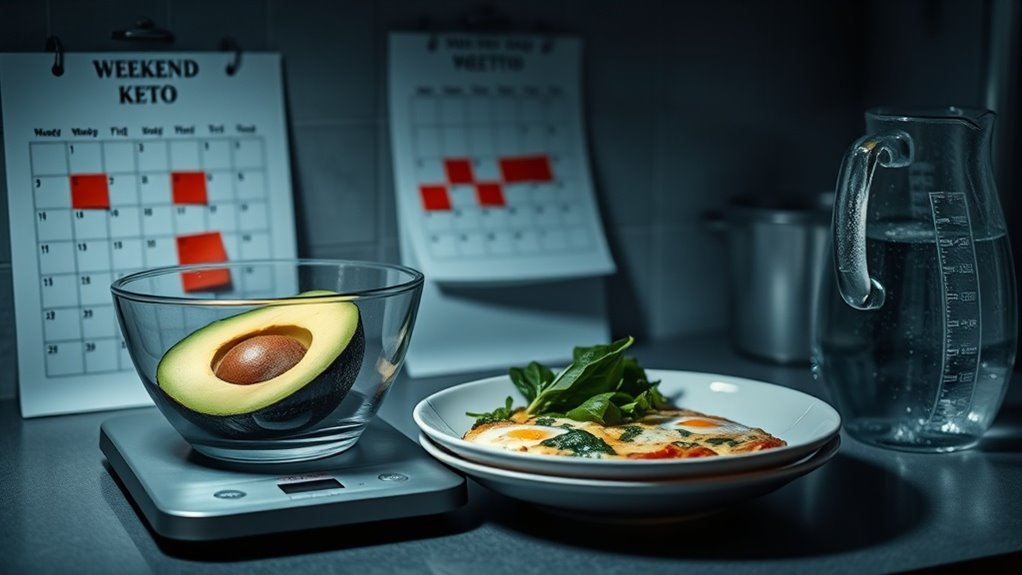
Ever felt like your weekend derailment knocked you out of ketosis and left you wondering where to begin? You’re not alone, and you don’t have to spin your wheels. The path back is about practical steps you can follow without overhauling your life. Start with a clear plan, not guilt, and you’ll get traction quickly.
Ever felt a weekend derailment knock you off ketosis? Start with a practical, guilt-free plan to regain momentum.
First, assess where you stand. If you’ve eaten high-carbohydrate foods, your glycogen stores are likely topped up for the moment. That means the initial barrier isn’t just fat oxidation but reducing insulin activity and resetting your metabolism toward ketosis. Acknowledge the setback, then shift to precise actions. Focus on consistency over perfection, because small, durable changes outperform dramatic, fleeting efforts.
A core component is recovery strategies that support metabolic shift. Prioritize hydration to aid kidney function and help manage potential electrolyte imbalances from low-carb dieting. Add sodium, potassium, and magnesium as needed, especially if you’ve experienced headaches, fatigue, or cramping. Use honest self-check-ins: a morning ketone reading, if you have a meter, can guide you, but don’t panic if it lags—your body may take a day or two to fully transition.
Meal timing plays a practical role. Some people benefit from a shorter eating window, while others prefer three meals with modest carbs at lunch or dinner to prevent energy crashes. The objective isn’t starvation; it’s aligning your meals with steady fat oxidation. Consider a temporary emphasis on protein at each meal to support satiety and preserve lean mass, while keeping carbs low enough to avoid reigniting a strong insulin response. If you’re hungry between meals, a small fat-containing snack can curb cravings without derailing ketosis.
Your next steps are structured but flexible. Restart your week with a clear routine: same wake time, consistent workouts, and deliberate meal timing. A light resistance session or brisk walk can help deplete glycogen more efficiently than passive rest, but avoid overtraining, which can spike cortisol and stall progress. Keep fats your primary energy source, with moderate protein and minimal net carbs. Focus on foods you tolerate well, not exotic experiments, to maintain adherence.
Track progress with quiet cues: morning ketones, energy levels, mental clarity, and physical performance. If you miss a meal or slip, return to your routine promptly—don’t dwell on the stumble. Emphasize recovery strategies daily, not just immediately after the slip. Hydration, electrolytes, adequate sleep, and a predictable meal rhythm support momentum.
In practice, you’ll likely see a return to ketosis within a couple of days to a week, depending on your previous intake and activity. The key is consistency, not perfection. By prioritizing recovery strategies, calibrating meal timing, and respecting your body’s signals, you regain momentum and move toward your goals with steadiness and confidence.
Commonly Asked Questions
Can I Restart Ketosis Without a Full Reset?
Yes, you can restart ketosis without a full reset. You’ll focus on reversing effects from the weekend by tightening carbs, prioritizing fats, and hydrating well. Try quick tweaks like a 24–48 hour carb limit, intermittent fasting if appropriate, and deliberate protein intake to protect muscle. Sleep, stress management, and steady activity help. Track ketone signs and adjust. It’s practical, evidence-based, and empathetic: small, consistent changes can accelerate your return to ketosis.
Will a Cheat Meal Ruin My Ketosis Long-Term?
A crisp dawn over a quiet kitchen paints the scene: a cheat meal won’t ruin your ketosis long-term. You bounce back with discipline, sip water, and trim carbs until you’re back in fat-burning mode. Two word discussion idea, two word discussion idea: consistency matters. You’ll notice steady progress as your body re-aligns, not a collapse. It’s practical, evidence-based, and empathetic: trust the process, track your meals, and restart promptly after a lapse. You’ve got this.
How Quickly Can I Re-Enter Ketosis After a Slip?
How quickly you re-enter ketosis after slip depends on you, but you can restart soon. You can restart ketosis without a full reset by cutting carbs next day, staying hydrated, and adding exercise to help burn glycogen. Will a cheat meal ruin ketosis long term? Generally not, but consistency matters. Do I need to count macros strictly after a lapse? Not forever, but tracking helps. Is exercise enough to kickstart ketosis again? Yes, combined with carb reduction and patience.
Do I Need to Count Macros Strictly After a Lapse?
Yes, you don’t have to count macros strictly after a lapse, but pragmatic tracking helps. Think of your body as a compass; a small deviation won’t derail it, yet consistent bearings guide you home. You can reset with moderate carb restraint and daily fasting when needed. Counting macros briefly, plus a few days of deliberate meals, supports ketosis. Balance comfort and constraint, staying compassionate toward yourself while you restart with mindful, evidence-based choices.
Is Exercise Enough to Kickstart Ketosis Again?
Yes, exercise helps, but it’s not usually enough on its own. You’ll likely restart ketosis faster by pairing steady activity with mindful carb control and consistent fasting windows. Start with a brisk 30–60 minute workout daily, then tighten meals to fat-forward, lower carbs, and adequate protein. Two word discussion ideas1, two word discussion ideas2—use them to frame plans. Stay patient, monitor your body, and adjust intensity as you re-enter ketosis.