
If you’re aiming to curb cravings on a keto plan, smart snack picks pair protein and fiber to sustain you between meals. Think hard-boiled eggs with non-starchy veggies, a small portion of cheese with cucumber, or low-sugar Greek yogurt topped with nuts. Hydration matters too—water or unsweetened sparkling water, plus a splash of coffee or tea if you want. Plan portions, choose moderate fats like avocado, and you’ll feel steadier—yet you’ll notice something else pulling you toward your next bite.
Important Facts
- Prioritize protein-forward snacks with fiber from non-starchy veggies or nuts to boost fullness and curb cravings.
- Pair healthy fats with protein and fiber to slow digestion and stabilize energy levels.
- Use hydration and pre-snack fluids (water or unsweetened sparkling water) to avoid mistaken hunger signals.
- Plan and time snacks around meals to maintain steady ketosis and prevent impulsive high-carb choices.
- Keep portions small and intentional (eggs, cheese, Greek yogurt, avocado, olives, and a handful of nuts) to manage calories and insulin response.
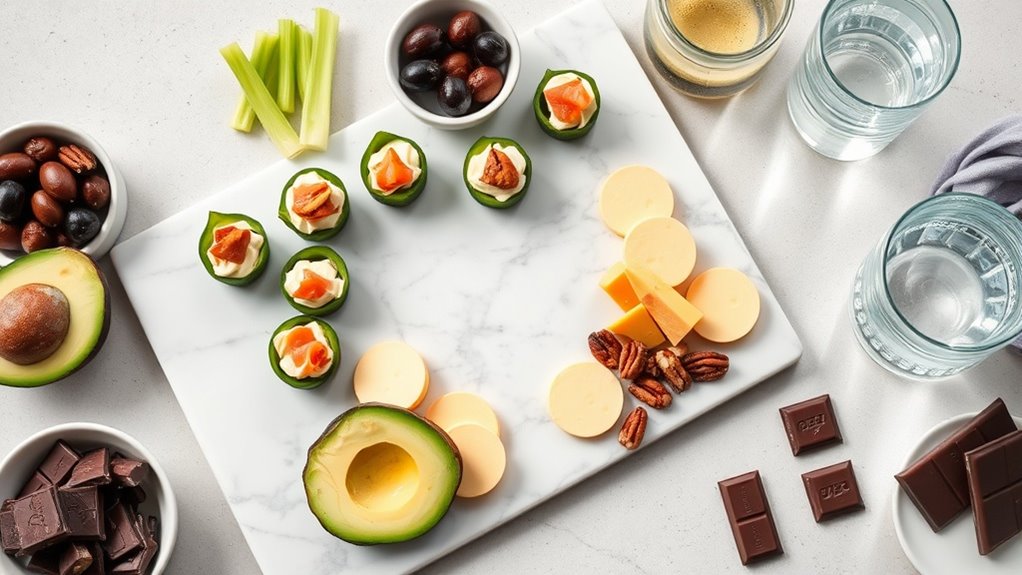
Craving control on keto starts with smart snacking. You’ll find that the right choices curb hunger without tipping you out of ketosis, and that means focusing on nutrients that support stable energy and steady blood sugar. Craving management isn’t about deprivation; it’s about predictable responses to meals, fluids, and small, deliberate bites. When you aim for steady intake, you reduce the urge for impulsive snacking later, which helps you stay on track without feeling deprived.
Craving control on keto starts with smart, balanced snacking that respects ketosis.
First, prioritize protein and fiber at each snack. A moderate portion of a protein source—think hard-boiled eggs, a small portion of cheese, or a Greek yogurt cup with low sugar—works with healthy fats to slow digestion. Pair it with fiber from non-starchy veggies or a few nuts to blunt post-meal glucose spikes. This combination supports craving management by providing lasting satiety, so you’re less likely to reach for sugary, high-carb options between meals. If appetite is strong between meals, consider timing adjustments rather than simply increasing quantity. Snack timing matters: a mid-morning bite can prevent the afternoon crash, while a small evening snack can prevent late-night cravings. Listen for your body cues and adapt the schedule to your energy pattern, not to social cues alone.
Hydration plays a quiet but powerful role. Sometimes thirst masquerades as hunger, especially when you’re in a ketogenic state. A glass of water or unsweetened sparkling water before snacking can prevent unnecessary bites. Caffeinated coffee or tea, plain or with a splash of heavy cream, can also support appetite control for many people, but watch for sleep disruption if you’re sensitive to caffeine late in the day. If you tolerate dairy, a small serving of cottage cheese or a keto-friendly yogurt can be a satisfying, low-carb option that reinforces craving management.
Fat choices should be intentional and measured. Avocados, olives, or a small serving of olive oil with vegetables deliver sustained energy, essential fats, and fullness. Nuts and seeds provide calories and texture, yet portions matter—keep to a handful to avoid excess calories that undermine ketosis. If you’re using fat bombs or bites, ensure ingredients remain clean and low in carbohydrates, with a balance that doesn’t spike insulin.
Finally, plan your snacks around meals rather than reacting to cravings. Build a simple, repeatable routine: protein-forward snacks with fiber, a hydrating beverage, and a predictable timing window. This approach strengthens craving management and minimizes snacking chaos. With deliberate snack timing and precise macro balance, you stay satisfied, energized, and reliably in ketosis throughout the day.
Commonly Asked Questions
How Many Keto Snacks Can I Eat per Day?
You can eat several keto snacks per day, but aim for 2–3 solid portions plus hydration and meals. Think of it like a lighthouse guiding you between cravings and satisfaction. How many keto snacks per day matters less than their quality and balance: sprinkle protein, healthy fats, and fiber, and watch total carbs stay within your target. Track portions, listen to fullness, and adjust based on activity and goals. Consistency beats sporadic grazing.
Do Keto Snacks Affect Blood Sugar Differently?
Yes, do keto snacks affect blood sugar differently. They can, because carb content, protein, and fat influence glucose response and insulin release. Low-carb, high-fat choices often produce a smaller or slower rise in blood glucose than high-carb snacks. Individual factors—metabolic state, activity, and insulin sensitivity—modulate this effect. Choose fiber-rich, non-starchy options, monitor your numbers, and adjust portions. If you have diabetes, consult your clinician to tailor guidance.
Are Store-Bought Snacks Keto-Safe for Beginners?
Store-bought snacks can be keto-safe for beginners, but you must read labels carefully. You’ll want options labeled “keto” or low net carbs, with minimal added sugars and healthy fats. Start with beginner friendly picks like simple pork rinds, cheese sticks, or nuts in modest portions. Watch for hidden carbs in bars or must-avoid ingredients. If in doubt, compare total carbs to servings and choose products with transparent ingredients. Stay vigilant, stay informed, stay consistent.
Can I Snack on Keto While Intermittent Fasting?
Yes, you can snack on keto while intermittent fasting. During your eating window, aim for 1–3 keto snacks per day, focusing on protein, healthy fats, and fiber to curb cravings. Can I snack? Yes, but keep portions small and choose nutrient-dense options to minimize insulin spikes. Align your snacks with your fasting schedule so you don’t break your fast prematurely. Track how you feel and adjust can I snack timing based on energy and hunger cues.
What Minerals Might I Miss With Keto Snacking?
When you snack on keto, you might experience mineral depletion if your intake shifts away from electrolytes and minerals. You could miss potassium, magnesium, sodium, and trace minerals, affecting energy and cramp risk. To protect electrolyte balance, pair snacks with minerals-rich foods and consider a targeted supplement if needed. Track intake, hydrate consciously, and adjust as labs or symptoms guide you. You’ll sustain clarity, precision, and steady energy without derailing ketosis.