
Brace yourself: keto breakfasts that actually stick don’t require rocket science, just steady structure. You’ll want a protein anchor with a non-starchy veg or healthy fat to curb cravings and keep you powered till midday. Start with three simple templates—eggs with avocado, full-fat yogurt with chia and berries, or a veggie omelet with cheese—and tailor portions to about 20–40 g protein per meal. Set a daily cue, track two weeks, and tweak portions so meals stay practical and satisfying, not repetitive.
Important Facts
- Start with two anchors for keto breakfast: a protein source and a non-starchy veggie or fat to boost fullness and stabilize blood glucose.
- Use three rotating breakfast templates to maintain variety while hitting 20–40 g protein per meal.
- Shop smart by sticking to the perimeter, using smart inner-aisle items, and reading labels to avoid hidden carbs.
- Plan energy balance across the day, using meals to bridge to lunch and adjust for training or non-training days.
- Build consistency with a simple routine, tracking satiety and cravings, and tweaking portions or templates as needed.
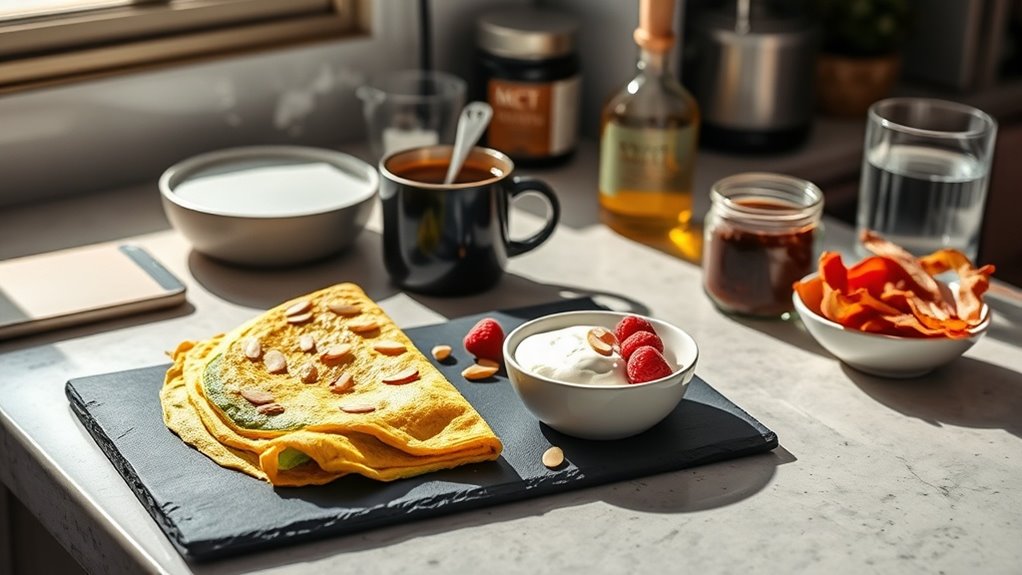
Starting a keto breakfast habit can set a steady tone for the day, helping you start with steady energy and fewer cravings. You’ll find that consistency matters more than perfection, so aim for a reliable routine you can repeat even on busy mornings. Begin by outlining two anchors: a protein source and a non-starchy veggie or fat source. Protein stabilizes blood glucose and supports fullness, while healthy fats keep you satiated until your next meal. Practicality beats perfection, so choose options you actually enjoy and can prepare quickly.
Starting a keto breakfast sets a steady, craving-free tone with a simple two-anchor routine.
To build momentum, integrate meal planning into your week. Decide three breakfast templates you can rotate, such as eggs with avocado, full-fat yogurt with chia and berries, or a veggie omelet with cheese. Planning reduces decision fatigue and helps you stick to macros without daily overwhelm. When you draft these templates, estimate portions that align with energy balance goals—protein around 20–40 grams per meal, fats from whole-food sources, and minimal carbohydrates from non-starchy vegetables. Keep a running list of ingredients that you actually use, so your shopping trips stay efficient and focused.
Grocery hacks save time and money, and they’re worth adopting early. Shop the perimeter for fresh meats, eggs, dairy, and produce, then visit the inner aisles for smart additions like olives, nut butters, and unsweetened dairy. Buy frozen vegetables to avoid waste, and stock shelf-stable items in case you misjudge a grocery trip. Read labels to avoid hidden sugars and excessive carbs, and opt for products with minimal ingredients. When possible, buy in bulk for staples like almonds, walnuts, and chia seeds, but only if you’ll actually use them before they spoil. Rotate protein sources (eggs, sausage, canned salmon) to prevent flavor fatigue and keep meals satisfying.
Think in terms of energy balance across the day, not just calories. A satisfying breakfast should bridge hours until lunch, reducing cravings and snack impulse. If you train in the morning, you may want a modest post-workout boost with a protein smoothie or a couple of new eggs. If you skip workouts, you can increase vegetables and fats slightly to maintain fullness without overwhelming your system. Use flavor pairing to keep meals appealing: pair salty with creamy, or citrus with richness. For example, eggs with avocado and a squeeze of lime offer bright contrast, while spinach with feta and olives adds a Mediterranean note.
Consistency builds habit, so set a routine cue—podcast time while you cook, or a specific mug for coffee with two tablespoons of cream. Track progress for a couple of weeks, noting satiety, energy levels, and cravings. If mornings feel off, reassess portions and macros, tweak seasonings, or swap a template. With deliberate meal planning, practical grocery strategies, mindful energy balance, and thoughtful flavor pairing, your keto breakfast routine can become a reliable, enjoyable part of everyday life.
Commonly Asked Questions
How Soon Will I See Results on Keto Mornings?
You’ll start noticing changes in a few days to a couple of weeks, depending on your body and consistency. In mornings, you’ll feel steadier energy as your body shifts to fat-burning. Two word discussion idea1, two word discussion idea2 show up as you track meals and sleep, keeping you accountable. Evidence suggests gradual fat loss and improved appetite control with keto breakfasts. Stay hydrated, measure macros, and adjust slowly for sustainable results.
Can I Eat Fruit With a Keto Breakfast?
Yes, you can eat fruit with a keto breakfast, but choose smartly. Opt for low-sugar options like berries in moderation to stay carb-conscious. Pair fruit with protein or fats to slow glucose impact. When evaluating fruit options, track portion sizes and total daily carbs. Focus on carb conscious choices such as berries, avocado-topped yogurt, or a handful of olives. This evidence-based approach supports adherence while still delivering micronutrients.
What if I’M Not Hungry in the Morning?
If you’re not hungry in the morning, skip a full meal and ease into a morning routine with a light option. Try a small protein smoothie, yogurt, or a few eggs later in the morning. Hydration helps curb appetite and supports ketosis. Focus on consistency, not perfection, and listen to your body. Keep a plan for when hunger returns, and adjust timing gradually so your morning routine feels sustainable, not forced.
Are Coffee or Tea Breaking My Keto Fast?
Coffee or tea can technically break a fast only if you’re strict about caloric or insulin responses; black coffee and plain tea are usually negligible, but add-ons matter. Coffee fasting and tea impact depend on amounts and additions. If you’re aiming for true fasting, skip sugar, milk, or creamer. Stick to small, unsweetened servings to maintain ketosis and appetite control while you test your own tolerance and energy levels.
How Do I Handle Cravings After Breakfast?
Cravings after breakfast pass when you use cravings management tactics and solid post breakfast strategies. Start with protein-rich options to stabilize blood sugar, sprinkle fiber, and stay hydrated. Set a brief cognitive check-in: rate urge intensity and time to next meal. If cravings hit, switch to a hot tea or coffee, a small protein snack, or a quick walk. Track patterns to refine your routine, and gradually extend fasting windows only when comfortable.